In a nutshell
- 📰 Why it works: Newsprint’s cellulose fibres give gentle micro-abrasion and high absorption, while stable inks aid polish for a streak- and lint-free finish.
- ⚡ One-minute method: Crumple a sheet, mist glass with 1:1 white vinegar and water, wipe in circles then figure-eights, finish with vertical/horizontal passes, buff; spot-treat with isopropyl alcohol.
- 🚫 What to avoid: Skip tinted films, acrylic/polycarbonate, glossy magazines, fresh paint, and direct sun; test edges for ink transfer and treat unknown coatings gently.
- 🌱 Eco and budget wins: Reuses newspaper, cuts paper towel waste and chemical reliance; microfibre is a safe alternative for coated or delicate surfaces.
- 🛠️ Pro tips: For heavy grime, squeegee first, then finish with newsprint or microfibre; use a fine mist—not a soak—to prevent streaks and speed drying.
There’s a humble secret in British homes that professional window cleaners rarely admit: yesterday’s paper can outperform today’s pricey sprays. Done right, the newspaper trick turns smudgy panes into dazzling glass in well under a minute. No lint, no streaks, no fuss. The science is simple, the cost is negligible, and the method is oddly satisfying. You crumple, you swipe, you polish. That’s it. The magic lies in how inked paper interacts with moisture, lifting grime while gently burnishing the surface. If you’ve ever wondered why microfibre sometimes leaves haze, or why towels shed fibres, this quick method may be your new favourite.
Why Newspaper Works on Glass
The success of newspaper on glass comes down to three forces: texture, absorption, and chemistry. Newsprint is made from cellulose fibres that are just coarse enough to provide micro-abrasion, but not so harsh as to scratch standard window glass. That faint roughness helps shear off greasy fingerprints and traffic film. Meanwhile, the fibres wick away dilute grime, preventing the watery smears you often see with cloths. The trick relies on dry-to-damp friction, not soaking, which is why a single sheet can cover a surprising area.
The ink plays a supporting role. Modern UK papers tend to use stable, low-smudge inks that behave like a ultra-fine polishing compound, tightening the final sheen. Contrary to myth, the ink isn’t “coating” the pane; it’s helping the fibres glide while disrupting oil films that cause streaks. You’ll get a lint-free finish without the fuzz streaks that some tissues or paper towels leave behind.
One caveat: not all paper is equal. Avoid glossy magazines and coloured inserts, which can transfer dye and smear. Old-fashioned, matte newsprint is perfect. If the sheet feels slick, skip it. Use ordinary black-and-white newsprint for the quickest, cleanest shine.
Step-by-Step: The One-Minute Shine
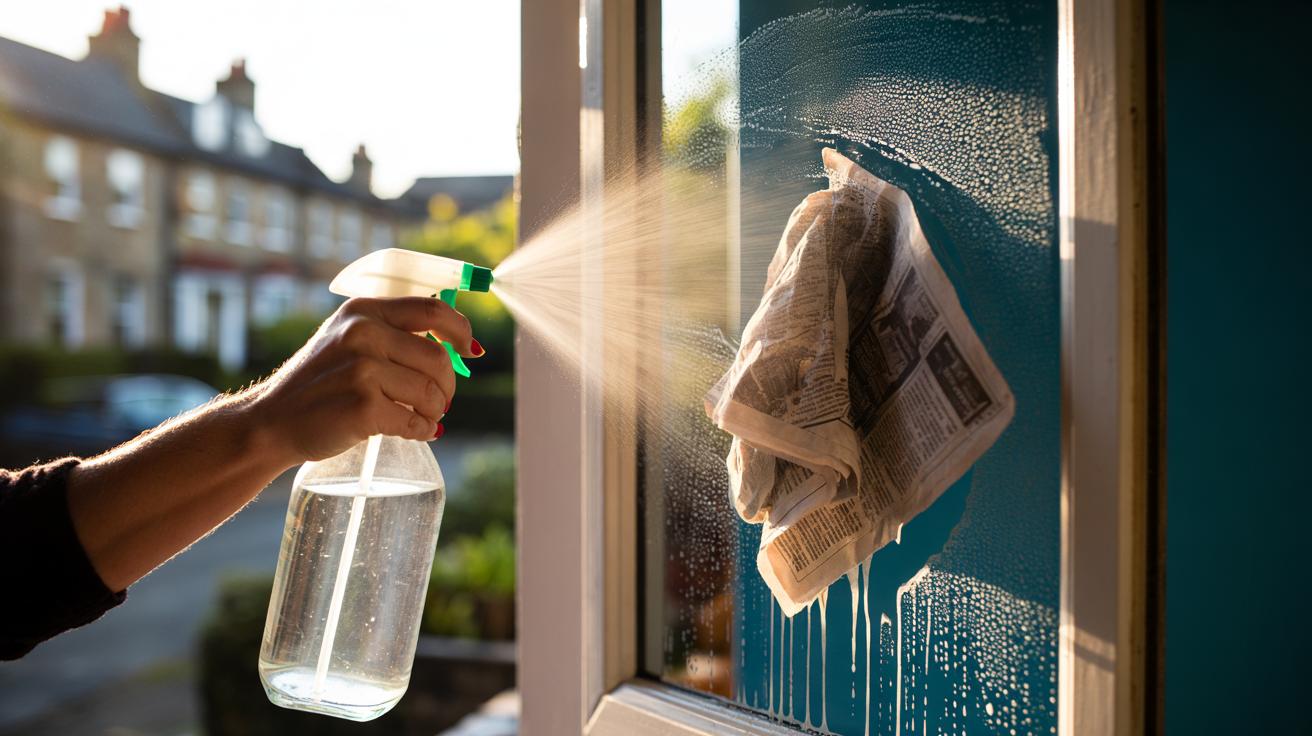
Preparation is minimal. Tear out a full newsprint sheet and crumple it tightly into a ball; this creates edges that scrub and faces that polish. Lightly mist the pane with a 1:1 mix of white vinegar and water, or use a shop-bought glass cleaner. For grimy exterior panes, add a drop of washing-up liquid to your spray. Work fast; keep the paper moving. Speed matters because a semi-dry paper edge lifts wet residue before it dries back as streaks.
Start with a brisk circular wipe to break the dirt’s surface tension, then switch to a figure-eight motion across the centre. Finish with vertical passes, followed by a few horizontal strokes along the edges and corners where drips hide. Flip the paper to a clean face and give a final buff. That’s the polish. Windows under shoulder height can be done in 30–40 seconds; larger panes in about a minute. For sticky spots—bird marks, sap—a quick dab of isopropyl alcohol on the paper cuts through instantly, then buff dry. Do not over-wet; a fine mist beats a heavy spray every time.
What to Avoid and When Not to Use Newspaper
Glass is robust, but not every surface is fair game. Do not use newsprint on tinted film or aftermarket privacy films, where abrasives and ink can mar the coating. Likewise, skip it on acrylic and polycarbonate (greenhouses, some conservatory panels, shower screens) because their softer surfaces scratch easily; use a soft microfibre cloth with a plastic-safe cleaner instead. If your windows have decorative leading or delicate putty that’s flaking, be gentle—aggressive rubbing can dislodge debris onto the pane and create drag marks.
Watch the ink. While modern inks rarely transfer, some very fresh or heavily printed pages can smudge on bright frames. Test a corner first. Avoid glossy supplements; they smear. Don’t press hard on “low-e” interior coatings exposed on certain specialist units—while most are sealed, some heritage or bespoke installations have vulnerable layers; follow the manufacturer’s care notes. When in doubt, treat unknown surfaces as coated and opt for a soft cloth.
Safety still counts. Open a window for ventilation if you use alcohol-based cleaner. Wear light gloves if you have sensitive skin, as vinegar solutions can be drying. And resist the urge to clean in direct sun; fast evaporation is what causes the streaks you’re trying to avoid. Choose shade or a cool part of the day for the sharpest results.
Eco-Friendly and Budget-Savvy: Costs, Times, and Alternatives
Here’s the quiet win: reusing newspaper is cheap, effective, and kind to the planet. You’re upcycling something you already have, sidestepping single-use paper towels and reducing reliance on chemical-heavy sprays. A splash of vinegar and water does the heavy lifting, while newsprint takes care of the polish. Small changes—like ditching disposables—compound into big household savings. For those who prefer reusable kit, a high-quality microfibre cloth remains an excellent option for touch-ups and coated surfaces.
| Method | Estimated Time (per pane) | Pros | Cons |
|---|---|---|---|
| Newspaper + Vinegar | 30–60 seconds | Streak-free, lint-free, ultra-low cost, upcycles waste | Not for films/plastics; ink may smudge on fresh paint |
| Microfibre Cloth | 45–90 seconds | Reusable, safe on coatings, good on frames | Can leave haze if cloth is over-wet or dirty |
| Paper Towels | 60–90 seconds | Convenient, widely available | Costly over time, can shed fibres, less eco-friendly |
For heavy grime, pair your chosen method with a rubber squeegee to remove the bulk, then finish with newspaper or microfibre for the final sheen. If you’re sensitive to vinegar’s odour, try a fragrance-free commercial glass cleaner or a drop of lemon in the mix. The goal is a quick, repeatable routine you’ll actually use, not a cupboard full of half-empty bottles.
In a world glutted with cleaning gadgets, the newspaper method is a reminder that simplicity often wins. A crumpled sheet, a light mist, a practiced polish—suddenly the view looks brighter, crisper, cleaner. The best part? It’s fast enough to do whenever fingerprints appear, so grime never gets a foothold. Small rituals keep homes calm and glass immaculate. Will you test the one-minute shine on your sunniest window this week, or do you have a secret trick of your own worth sharing with the nation?
Did you like it?4.4/5 (29)