In a nutshell
- 🧪 Abrasive lift from baking soda’s mild crystals disrupts soil–fibre bonds, boosting dust extraction without scratching common carpet fibres.
- 🧰 Apply lightly (about 10–25 g/m²), allow 10–20 minutes’ dwell, then vacuum in slow, overlapping cross-hatch passes; set brush height so bristles just kiss the pile and empty the bin promptly.
- 🌬️ Delivers better pickup, fresher odour control, and improved pile feel; a low-cost, dry method that reduces repeat strokes and mid-traffic dinginess.
- ⚠️ Use with restraint: fine powders can clog filters; check HEPA guidance, avoid silk/viscose, and keep pets and children away during dwell.
- 📊 Tailor to carpet type—synthetic, wool loop, or shag—with suitable brush settings and dwell times; patch-test first and adjust dosage to soil load.
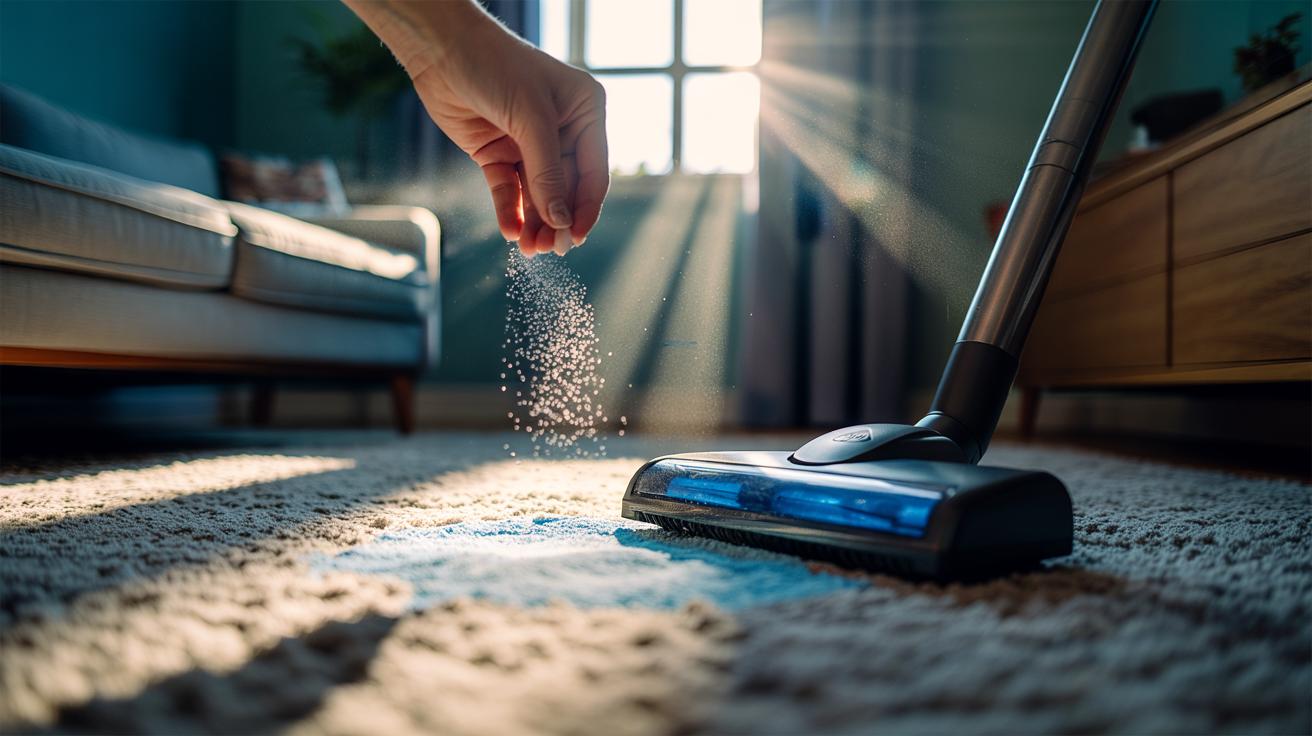
Sprinkling a light veil of bicarbonate of soda before you vacuum isn’t just a homespun hack; it’s a small lesson in household physics. Those tiny crystals create gentle friction where dust clings to carpet fibres, nudging stubborn grit and dander free so the cleaner can lift more on the first pass. The approach is simple. The effect is quietly transformative. Think of it as adding a micro-scrub to the cleaning cycle without water, soaps or downtime. Abrasive lift doesn’t mean scratching up your rug; it means coaxing embedded soil to the surface. Used correctly, baking soda enhances extraction, reduces odour, and leaves pile more responsive underfoot.
The Science of Abrasive Lift in Carpets
Household dirt is not uniform. It’s a blend of fine particles, skin flakes, pet dander, and oily residues that glue everything into the carpet’s pile. Vacuum airflow targets loose soils, yet bonded grime resists. Here is where bicarbonate crystals matter. Their edges are hard enough to disrupt adhesion between fibre and soil but soft enough not to scratch most synthetics or resilient wool. Imagine thousands of tiny wedges sliding between a fibre and a film of sticky dust. They shear, then the suction carries the freed particles away. Quick science in a domestic setting.
On a microscopic level, this is simple tribology: contact, friction, separation. As you walk the sprinkled carpet or gently agitate with a brush, the crystals roll and scrub, increasing the coefficient of friction where it’s needed. They also mop up trace moisture and oily films, reducing the “glue” that binds dust to fibres. Less adhesion means easier lift. In some homes, you’ll notice better “stand-up” in crushed pile because removed grit stops cutting the fibres’ tips. More debris removed per pass equals fewer repeat strokes and less wear over time.
There’s an electrostatic side note. Dry, fine powders can slightly alter surface charges within the pile, discouraging re-settling while you vacuum. That’s fleeting but helpful. Crucially, the crystals are water-soluble. Any trace left after vacuuming will not permanently load the carpet. The aim, however, is not to leave them behind. It’s to use them as a temporary, mild abrasive that breaks stubborn soil bonds and then gets whisked away by the machine.
How to Apply Bicarbonate of Soda for Maximum Extraction
Preparation first. Empty the bin or fit a fresh bag, check the pre-filter, and ensure the brushroll spins freely. Sprinkle a fine, even dusting of bicarbonate across the area. Work at roughly a teaspoon per square metre for light soil, a tablespoon for heavier traffic. That’s a guide, not a rule. Do not dump piles: excess powder can cake and challenge filters. For best results, allow 10–20 minutes’ dwell to loosen grime and tame odours, then vacuum in slow, overlapping passes east–west and north–south. Cross-hatching matters. So does tempo. Slow wins.
If your vacuum has adjustable height, set it so the brush just kisses the tips of the fibres. Too low, and you mash the pile and trap airflow; too high, and you barely touch the grit. On looped wool or delicate blends, switch off the beater bar and use suction only or a gentle turbo head. Always keep pets and children out of the room during application and dwell time. Finish by emptying the bin promptly. Fine powders love to cling inside cyclones and crevices. A clean machine breathes better next time.
For clarity, match method to carpet and cleaner using the guide below. Treat it as a starting point, then refine based on your room, soil load, and machine.
| Carpet Type | Dose (g/m²) | Dwell Time | Vacuum Notes |
|---|---|---|---|
| Low-pile synthetic | 10–20 | 10–15 min | Brushroll medium height |
| Medium/tufted | 15–25 | 15–20 min | Brushroll firm, slow passes |
| Wool loop | 10–15 | 10–15 min | Suction only or gentle turbo |
| Shag/long pile | 20–30 | 15–20 min | Turbo head, height raised |
Patch-test in an inconspicuous corner and adjust technique to suit the fibre and your vacuum’s airflow.
Benefits, Drawbacks, and Safety Considerations
The headline benefit is mechanical: abrasive lift pries loose what airflow alone leaves behind, improving visible cleanliness and feel underfoot. There’s also odour control because bicarbonate tempers acidic smells and absorbs trace moisture. Households with pets often notice an immediate freshness. Costs are low. No waiting for drying. No risk of sticky residues that re-soil. It’s a quick tune-up between deep cleans, especially useful on traffic lanes and by the sofa. Done right, you’ll see brighter tone, better pile recovery, and fewer gritty particles left to grind the fibres.
Yet restraint matters. Over-application can overload filters and mute suction, especially in bagless cyclones. Empty the bin after use and tap dust from pre-filters outdoors. HEPA owners should check the manual, as some manufacturers frown on fine powders. On delicate fibres—silk, viscose/rayon, certain art-silk blends—skip the trick and use professional dry compounds. For wool, keep dosing conservative and avoid aggressive agitation that can fuzz the scales. If your machine lacks a brushroll shut-off, choose a smooth-floor nozzle on loop piles to prevent pulls.
As for substitutes, avoid harsh minerals. Do not use diatomaceous earth or talc as a carpet additive—respirable dust risks outweigh any gain. Bicarbonate’s water solubility and mild hardness are the point. If you crave extra deodorising, mix a teaspoon of baking soda with a teaspoon of plain table salt for entry mats only, then vacuum promptly; the salt adds weight for grit lift. Still, the simplest path is best: a light dusting, a short dwell, slow passes, and a fast bin empty. Small dose, big payoff.
Used thoughtfully, bicarbonate of soda becomes a quiet ally to your vacuum, gifting extra bite without chemicals or fuss. It loosens what you can’t see, shrugs off stale odours, and helps carpets feel lively again. The method takes minutes, not hours, and respects the fibres you’ve paid for. Keep it light, keep it regular, and keep your machine breathing freely. Ready to try the technique on a hallway runner or that stubborn lounge patch this week—and what tweaks will you test to suit your carpet and cleaner?
Did you like it?4.4/5 (20)