In a nutshell
- 🧪 The science: citric acid dissolves limescale and soap scum, helps emulsify light oils, and boosts your detergent’s action; its pH 2–3 is potent yet gentle once diluted.
- ⚙️ Method: add 1–2 tablespoons fresh lemon juice in a dishwasher-safe cup on the top rack, or place half a squeezed lemon in the cutlery basket; use weekly in hard water, monthly otherwise; never fill the rinse-aid reservoir with juice and avoid mixing with bleach.
- 🧯 Materials and safety: best for glassware and stainless steel; avoid direct acid contact with aluminium and carbon steel knives, and limit exposure for silver-plated items; it won’t fix permanently etched glass.
- 🌿 Cost and sustainability: costs pennies, peel can be composted; use as an occasional booster, not daily; pair with quality detergent and, if needed, rinse aid, while keeping filters clean and salt set for water hardness.
- 🔁 Alternatives and expectations: food-grade citric acid powder (1–2 tsp in a cup) works similarly; white vinegar only occasionally due to rubber concerns; choose commercial descalers for deep cleans; expect brighter finishes and fewer spots, not miracles.
There’s a quiet kitchen trick that leaves glassware gleaming and steel interiors brighter: a squeeze of fresh lemon in the dishwasher. It’s simple. It’s inexpensive. And crucially, it’s gentle. The secret lies in the fruit’s natural acidity, which softens mineral deposits, loosens greasy films, and breaks the bond of stubborn soap scum without harsh chemicals. Used sparingly and in the right spot, lemon juice can supercharge your cycle and help banish cloudy residues. Below, we unpack the chemistry, the method, and the caveats. You’ll find practical steps, safety notes, and a clear-eyed look at cost and sustainability—so your “sparkling finish” is more than a promise.
The Science of Lemon Acidity in a Dishwasher
At the heart of lemon’s cleaning prowess is citric acid, a weak organic acid that behaves in clever ways during a hot wash. Limescale and tea scum are rooted in minerals such as calcium and magnesium salts. Citric acid donates protons that disrupt those mineral bonds, nudging them back into solution where they can be rinsed away. This is chemistry doing housework, not brute force.
Soap scum builds when fatty acids meet hard-water minerals. The acid reduces the alkalinity at the surface and undermines the scum’s structure, while heat and water jets finish the job. On greasy plates, acidity helps emulsify light oils, allowing detergent surfactants to do their best work. Think of it as a catalyst for your regular tablet or powder rather than a replacement.
In practice, lemon’s pH sits roughly between 2 and 3—potent enough to act, but, when diluted by rinse water, more forgiving than aggressive descalers. The result is a gentler route to shine, especially on glass where micro-films create that dull, foggy look. You’re not stripping surfaces; you’re dissolving the residue that masks their clarity.
Practical Method: Where, When, and How Much
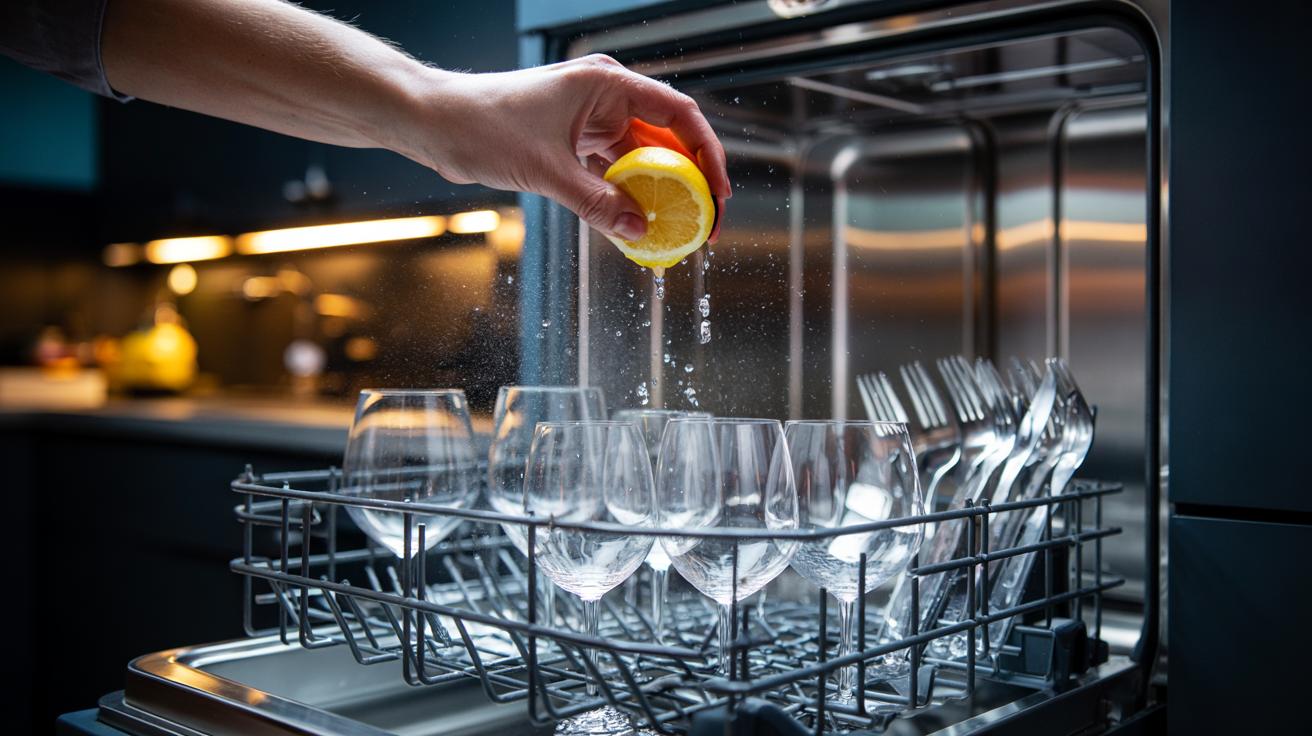
First, load as usual and use your normal dishwasher detergent. Then choose one of two delivery options. Place a small, dishwasher-safe cup with 1–2 tablespoons of fresh lemon juice on the top rack; or tuck half a squeezed lemon (seeds removed) upright in the cutlery basket. Both approaches release acidity gradually during the hottest parts of the cycle. A little goes a long way—avoid sloshing juice across racks or seals.
Run a standard hot programme. You’ll likely notice fewer spots on glasses and a crisper sparkle on stainless steel. For very hard water, repeat once a week; otherwise, use monthly as a finishing boost or before a dinner party. Lemon is not a wholesale substitute for rinse aid, but it can stand in occasionally or complement it when cloudiness creeps back.
Two crucial cautions. Do not mix acids with products containing chlorine bleach; keep things simple and separate. And avoid filling a dedicated rinse-aid reservoir with juice—those valves are designed for specific viscosities and may clog or degrade. Occasional, diluted exposure is typically fine for stainless steel interiors and gaskets, but daily dosing is unnecessary.
Materials, Safety, and The Finish You’ll See
The benefits show up most visibly on clear glass, polished cutlery, and the machine’s metal interior, where limescale and film scatter light. After a lemon-assisted cycle, water sheets more evenly; tiny droplets leave fewer marks as they dry. Expect better clarity, not a miracle cure for etched glass (which is permanent). If you live in a hard-water area, the visual upgrade can be striking.
Certain materials deserve care. Prolonged acid exposure can dull bare aluminium and disturb the patina on carbon steel knives. Silver-plated cutlery may tarnish faster in acidic conditions. Glazed ceramics and robust glassware are usually fine. If in doubt, keep sensitive items away from the lemon source or reserve the trick for glass-only loads. Smart placement is the difference between elegant shine and unintended blemishes.
| Item | Effect of Lemon Juice | Recommendation |
|---|---|---|
| Glassware | Reduces film and spotting | Ideal for occasional boost |
| Stainless steel interior | Dissolves light scale; brighter finish | Safe when used sparingly |
| Aluminium bakeware | Possible dulling/discolouration | Avoid direct contact |
| Carbon steel knives | Patina disturbance, potential spotting | Hand-wash preferred |
| Silver-plated cutlery | May accelerate tarnish | Limit exposure |
Cost, Sustainability, and Smart Alternatives
A lemon wedge is frugal and flexible. You can repurpose half a fruit after cooking, squeezing the last drops for your wash. The cost per cycle is pennies, and the peel can head to compost. For households keen on cutting synthetic cleaners, lemon offers a low-impact, high-reward tweak. That said, consistency matters: if hard-water marks persist, pair lemon with a quality detergent and, when needed, a dedicated rinse aid for long-term beading control.
Alternatives exist. Food-grade citric acid powder (about 1–2 teaspoons in a cup on the top rack) gives similar chemistry with predictable strength. White vinegar also fights scale, but repeated exposure isn’t ideal for some rubber components—avoid adding it to the rinse-aid reservoir and stick to occasional cup-on-rack use. Commercial descalers are precise and convenient when a machine needs a deeper clean.
Sustainability is about balance. Lemon shines as a targeted, occasional helper rather than a daily crutch. Use it when glass develops haze, after a holiday of heavy cooking, or ahead of guests. Keep cycles efficient, filters clean, and salt levels set for your water hardness. The result: less energy waste, fewer re-washes, and that crisp, camera-ready sparkle.
Used with intent, a squeeze of lemon is an elegant ally for clearer glass and a brighter machine—lean chemistry that’s kind to finishes when applied wisely. You’re not trading effectiveness for eco credentials; you’re borrowing a well-understood acid to solve a common kitchen gripe. Keep the dose small, the placement precise, and the expectations realistic. How will you test it at home—glass-only load for a side-by-side comparison, or a full dinner set to showcase your newly polished shine?
Did you like it?4.6/5 (27)