In a nutshell
- 🧪 Lemon’s citric acid shifts pH and chelates hard-water minerals, while peel-derived limonene dissolves oils, creating a slow overnight microemulsion that lifts grease.
- 🛏️ Step-by-step: blot excess, perform a colourfast test, apply 1:2–1:3 lemon-to-water (add a drop of mild detergent for synthetics), leave 6–8 hours, rinse, then launder—never tumble-dry until the stain vanishes.
- 🧵 Fabric rules: cotton/linen tolerate overnight; polyester benefits from a warm final wash; wool and silk need 1:6 dilution with short contact (≤1 hour/30 min), avoid sun, and rinse thoroughly (optional bicarbonate neutralise in hard water).
- 🍋 Beyond juice: pre-soften with lemon peel, use a pinch of fine salt for gentle lift, add vinegar only in a separate final rinse, and never mix acids with bleach.
- ✅ Payoff: a low-cost, gentle routine that cuts re-washing, preserves colour, and fits your night—simple chemistry, smarter dilution, consistent results.
Laundry procrastinators, rejoice. A sliced lemon and a little patience can turn last night’s pizza blot on your favourite tee into a clean slate by morning. While you sleep, compounds inside lemon quietly take apart oily residues, loosen soil, and soften the water that usually leaves dingy traces. It sounds like folk magic. It isn’t. It’s chemistry you can smell. Use it right and it’s gentle, cheap, and surprisingly consistent. Used carelessly, it can fade colours or roughen delicate fibres, so a clear method matters. Below, you’ll find the science, an overnight routine, fabric-specific guidance, and clever add-ons to make a citrus-powered clean your new low-effort habit.
Why Lemon Works on Grease
At the heart of lemon’s cleaning power is citric acid, a weak organic acid that does three big jobs. First, it changes the pH around the stain, helping to emulsify fats that would otherwise cling to fibres. Second, it chelates metal ions (think calcium in hard water) that make detergents sluggish. Third, it loosens mineral films that trap grime, so the morning rinse actually carries soil away instead of simply moving it around. This is why plain water often smears grease while lemon solution lifts it.
Lemon peel adds a second active: limonene, a natural solvent for oils. It’s the same terpene used in some commercial degreasers, just gentler and pleasantly scented. Over several hours it can penetrate the stain edge, nudge the oil to spread thinly, then help create a microemulsion that rinses clean. That slow penetration is key to an overnight treatment.
There’s also a fabric story. Cotton and linen tolerate acids well for short periods; synthetics like polyester hold oil tighter, but respond to time and slight warmth. Protein-based fibres (wool, silk) are more sensitive. Acid plus time can weaken them, so the method changes for those. Understanding these interactions keeps the trick safe and effective.
Overnight Method: Step-by-Step Guide
Start with a quick check. Blot excess oil with a paper towel; do not rub. Perform a colourfast test on an inside seam: dab diluted lemon (1:3 lemon to water), press for five minutes, then pat dry. No dye on the cloth? Proceed. Testing once saves a favourite garment.
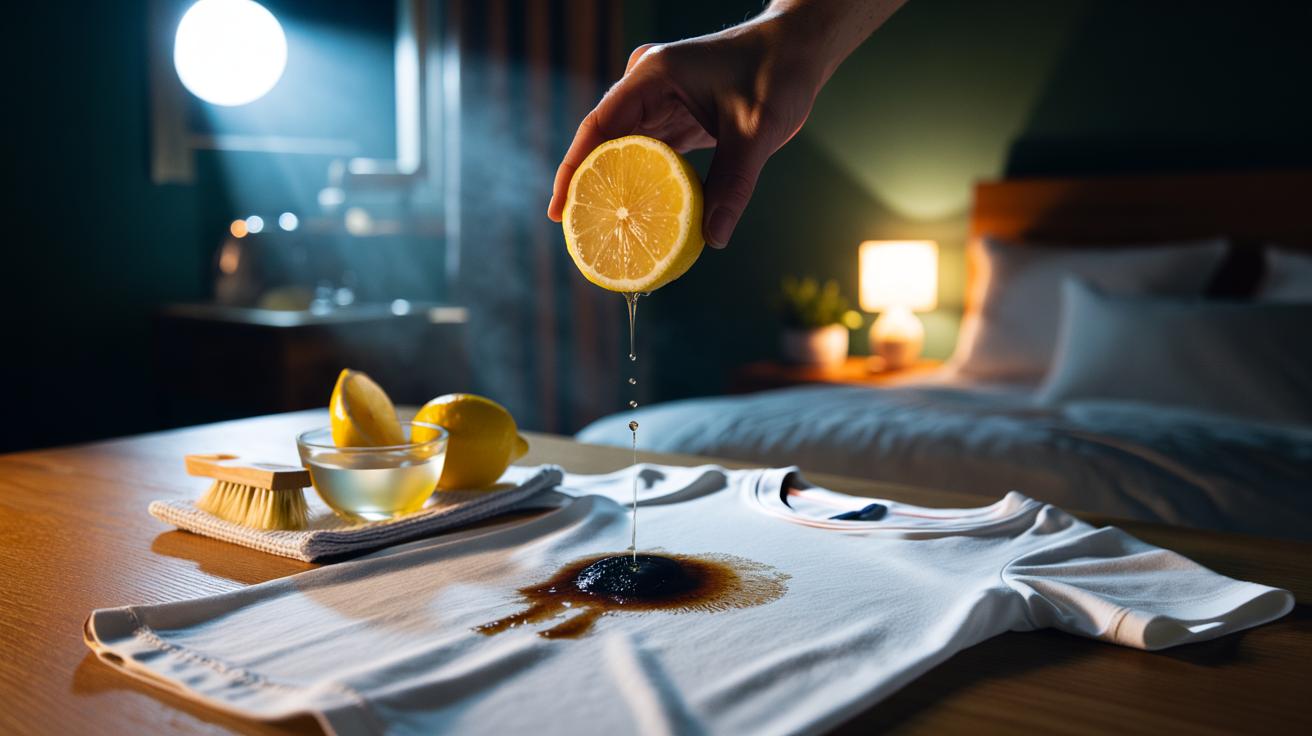
Mix your solution: fresh juice works best. For sturdy, washable fabrics, use 1 part lemon juice to 2–3 parts cool water. For synthetic sports tees, add two drops of a mild, fragrance-free washing-up liquid to aid surfactant action. Slide a clean towel under the stained area, then flood the spot with solution until damp but not dripping. Massage lightly from the outside edge inward with fingertips or a soft brush. Leave flat on a rack or plate, away from direct heat or sunlight.
Now, let time do the heavy lifting. Six to eight hours is ideal; overnight fits most routines. In the morning, rinse thoroughly with cool water, then launder as normal. Warm (not hot) wash improves release from synthetics. For stubborn marks, repeat once rather than scrubbing—overnight cycles are gentler. Never tumble-dry until the stain is gone. Heat can set residual oil permanently, defeating the chemistry you’ve banked while you slept.
Fabric-Safe Practices and Common Pitfalls
Delicate fibres demand caution. Wool and silk prefer a whisper of acidity: think 1:6 lemon to water, contact time under one hour, then a neutral rinse with cool water. Avoid metal trims, unsealed leather patches, or unstable dyes; acidity can tarnish or leach colour. And skip bright sun during treatment—lemon can mildly bleach, creating lighter halos on dark cottons. If in doubt, treat on the wrong side and keep the area small. Finally, residue matters. Any leftover acid can stiffen fabric; rinsing until the water runs neutral is non-negotiable. If your tap water is very hard, finish with a short rinse containing a teaspoon of bicarbonate of soda in a basin to neutralise, then rinse again with plain water.
| Fabric | Dilution (Lemon:Water) | Overnight? | Notes |
|---|---|---|---|
| Cotton/Linen | 1:2–1:3 | Yes (6–8 hrs) | Rinse well; avoid sunlight during dwell. |
| Polyester/Blends | 1:2 + 2 drops mild detergent | Yes (8 hrs) | Warm final wash helps release oils. |
| Wool | 1:6 | No (≤1 hr) | Blot only; reshape and dry flat. |
| Silk | 1:6–1:8 | No (≤30 min) | Test dye fastness; air-dry away from heat. |
Beyond Juice: Peels, Zest, and Partnerships
Don’t bin the peel. Rub the oily side of fresh peel gently over set-in grease before your diluted juice goes on; the limonene-rich film softens the spot without soaking the whole fabric. You can also steep strips of peel in warm water for 20 minutes to make a milder pre-wet for colour-prone garments. Small changes in solvent exposure can mean big differences in colour safety. For heavy kitchen splatters on aprons or tea towels, a tiny pinch of fine salt adds non-scratching mechanical lift when you massage the edge of the stain—think of it as a micro-exfoliant for cloth.
Lemon also plays nicely with existing habits. A short cold pre-rinse dislodges crumbs and thins oil; then lemon does its slow work. Enzyme detergents target proteins, not grease, so keep them for food stains with egg or dairy, and use lemon for the oily component. If your home has very hard water, adding a teaspoon of white vinegar to the final rinse (separate from the lemon stage) improves softness and clarity. Keep acids separate from bleach; never mix. The results are quietly impressive: less re-washing, cleaner hems, and clothes that smell like they’ve aired outdoors.
Lemon won’t replace every product in the cupboard, but it offers a reliable, low-cost way to tackle oily stains while you get on with life—especially if patience isn’t a problem during the night. The chemistry is simple, the routine repeatable, and the risks manageable with testing and smart dilution. Wake up, rinse, launder, done. Grease leaves, colour stays, and your wash day gets lighter. Will you try the overnight citrus method on your next stubborn spot, or adapt it with your own tweaks for the trickiest fabrics in your wardrobe?
Did you like it?4.5/5 (28)