In a nutshell
- 🍋 A humble lemon outperforms many kitchen degreasers, slicing through baked-on fat thanks to its natural acid and oils, while being low-cost, compostable, and pleasantly scented.
- 🧪 The science: citric acid breaks grease bonds and chelates minerals, while peel-derived d‑limonene dissolves oils; with bicarbonate it forms sodium citrate, boosting cleaning without harsh residues.
- 🛠️ Practical methods: use a lemon + salt scrub for pans and trays, a warm lemon spray for hobs, a lemon steam bowl for microwaves, and a lemon–bicarb paste for oven glass—always rinse and patch-test.
- ⚠️ Safety first: never mix lemon with bleach; avoid prolonged contact on marble, limestone, concrete, aluminium, and cast iron, and skip painted, lacquered, and screen-coated surfaces.
- 💷 Big wins: fewer bottles under the sink, kinder air quality, and a cheaper, effective routine that turns a simple fruit into a powerhouse against kitchen grease.
We spray, scrub, and soak. Shelves groan with brightly coloured bottles that promise to blitz the toughest grime. Yet the most effective degreaser in your kitchen might be sitting in the fruit bowl, quietly biding its time. The humble lemon slices through baked-on fat, sticky stove splatter, and greasy fingerprints with a speed and elegance that would make a chemist nod. Its secret isn’t magic; it’s chemistry anyone can use. A cut lemon, a pinch of salt, and a little heat will outshine many premium degreasing products—without fumes, stingy residues, or eye-watering price tags. Here’s how the fruit outperforms the bottle, and when to deploy it.
Why Lemon Beats Bottled Degreasers
At the heart of a lemon’s cleaning prowess is citric acid. With a pH of roughly 2, it breaks down the bonds that make grease cling to metal, glass, and ceramic. It chelates mineral deposits, undermining the stubborn film left by hard water, and loosens polymerised oil so it can be wiped away. The peel is rich in d-limonene, a natural solvent that dissolves fats in the same way many petroleum-based degreasers do, but without their harsh odour or residue. That’s two grease-fighting agents in one inexpensive fruit. In quick tests on stovetops and pans, a lemon half often clears smears faster than all-purpose sprays and does so with a brighter finish.
Commercial degreasers rely on synthetic surfactants and solvents. Effective, yes. But they can be too aggressive for delicate finishes and leave a film that attracts dust. Lemon’s advantage is its balanced cut: acid to disrupt, oil to dissolve, water to rinse. Used correctly, it’s kinder to lungs, cheaper per use, and entirely compostable. And the scent? Naturally clean, not cloying. For households seeking fewer bottles under the sink and more space in the budget, that’s hard to ignore.
How To Use Lemon For Stubborn Grease
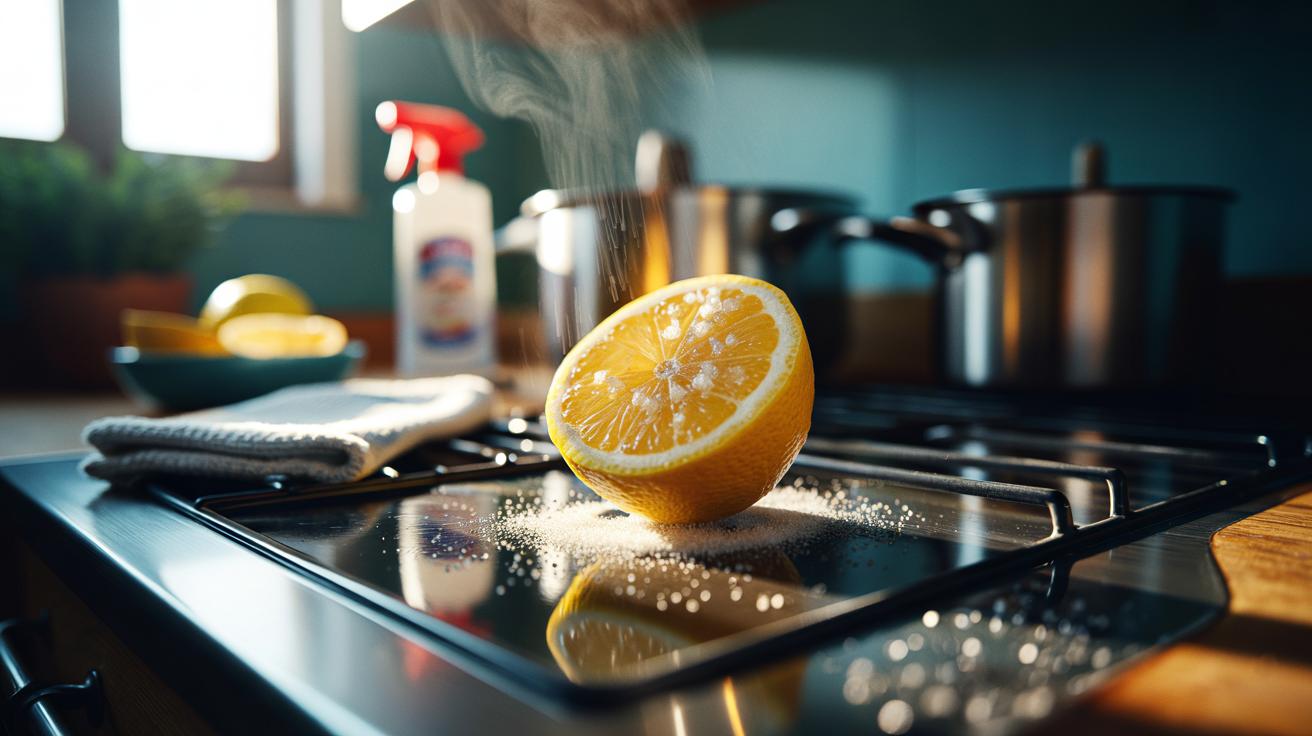
For pans and trays: Sprinkle coarse salt onto the greasy area, then scrub with a halved lemon, cut face down, like a scouring pad. The salt adds gentle abrasion; the juice lifts grime. Rinse with hot water. For burnt edges, let the lemon juice sit for five minutes before scrubbing. This simple duo—acid plus abrasion—removes baked-on fat faster than many cream cleansers.
For hobs and splashbacks: Warm the surface slightly by running a pan for a minute. Wipe off loose crumbs. Rub with lemon juice, then buff with a microfibre cloth. Stubborn spots respond to a 1:1 mix of lemon and hot water in a spray bottle, left to dwell for three minutes before wiping. Finish with a damp cloth to remove any sticky residue.
For microwaves: Place sliced lemon in a bowl of water. Microwave on high until steam forms (2–3 minutes). Leave the door closed for a minute to let condensation loosen grease. Wipe clean. This steam-soften method avoids heavy scrubbing and leaves a fresh scent.
For oven doors: Make a paste with bicarbonate of soda and lemon juice. Apply, leave for 10 minutes, then wipe with a warm, damp cloth. Avoid rubber seals and stone surfaces. Always patch-test on an inconspicuous corner and never mix lemon with bleach.
Smart Combinations: Salt, Bicarbonate, and Heat
Think of lemon as the lead actor in a small ensemble. Salt adds physical bite, boosting the cut without scratching steel or enamel. Bicarbonate of soda brings mild alkalinity; when it meets lemon juice, it fizzes, creating sodium citrate—a gentle builder used in detergents that helps keep loosened grime in suspension. And heat? It lowers oil viscosity so the acid and limonene can reach and lift it. Heat the surface, add the acid, then wipe: that simple sequence often halves the elbow grease required.
Here’s a quick guide to what works, where:
| Method | What You Need | Best For | Avoid On |
|---|---|---|---|
| Lemon + Salt Scrub | Half lemon, coarse salt | Pans, enamel trays, steel hobs | Soft plastics, lacquered wood |
| Lemon Steam Clean | Lemon slices, water, heat | Microwaves, fridges, tiles | Electronics, unsealed stone |
| Lemon + Bicarb Paste | Lemon juice, bicarbonate | Oven glass, greasy knurled knobs | Aluminium, natural stone |
Always rinse thoroughly to remove acid traces and polish dry to prevent streaks. And keep chemistry safe. Never mix acidic cleaners like lemon with chlorine bleach—dangerous chlorine gas can form in seconds.
When Lemon Is Not The Answer
There are limits. Acid can etch marble, limestone, and concrete, dulling their polish. On aluminium, prolonged contact may cause pitting. Cast iron shouldn’t be doused; it can strip seasoning and invite rust. Painted cabinets and lacquered surfaces can soften if lemon sits too long. Screens and anti-glare coatings? Avoid entirely. If you aren’t sure a surface is sealed, skip the lemon and choose a neutral cleaner.
For these cases, choose alternatives: a drop of mild washing-up liquid in warm water for finished wood and paint; a plain bicarbonate paste for enamel and porcelain; isopropyl alcohol for adhesive smears on glass and metal. If mineral scale complicates greasy buildup on taps, use white vinegar on a cloth (not sprayed), then wipe with soapy water to neutralise and protect chrome. The guiding principle is simple: match the chemistry to the surface. Lemon excels on tough kitchen grease, but the best cleaner is the one that preserves the finish you love—today and in five years’ time.
There’s a quiet satisfaction in outwitting grease with a fruit, a pinch of salt, and a warm cloth. It costs pennies. It smells bright. It works, quickly. Used with care, a lemon can replace a clutch of single-purpose sprays and leave your kitchen shining without the sting in your throat. If you try one change this week, make it this: keep a lemon by the sink, and reach for it before the bottle. What greasy nuisance at home are you most curious to tackle with a cut lemon first?
Did you like it?4.4/5 (28)