In a nutshell
- ⏱️ Use the Five-Minute Flow—collect, clear surfaces, wipe, floor scan, finish/reset—to create instant functional calm without perfectionism.
- 🧺 Deploy an anchor basket and fast speed sorting (paper, clothing, dishes, tech, toys); add a 48-hour rule, a donation tote, and the one-touch rule for rapid decisions.
- 👀 Prioritise visual planes (surfaces then floors) and small reset points so the room “reads” clean; finish with reward cues like fresh air, warm light, and a quick spritz.
- 🧰 Keep a handy micro-kit (cloth, spray, liners, hand vac) where mess happens to make the routine frictionless and repeatable, even on busy days.
- 👨👩👧👦 Establish a simple shared house rule—a five-minute room reset everyone joins—so clutter doesn’t return and tidiness becomes a collective habit.
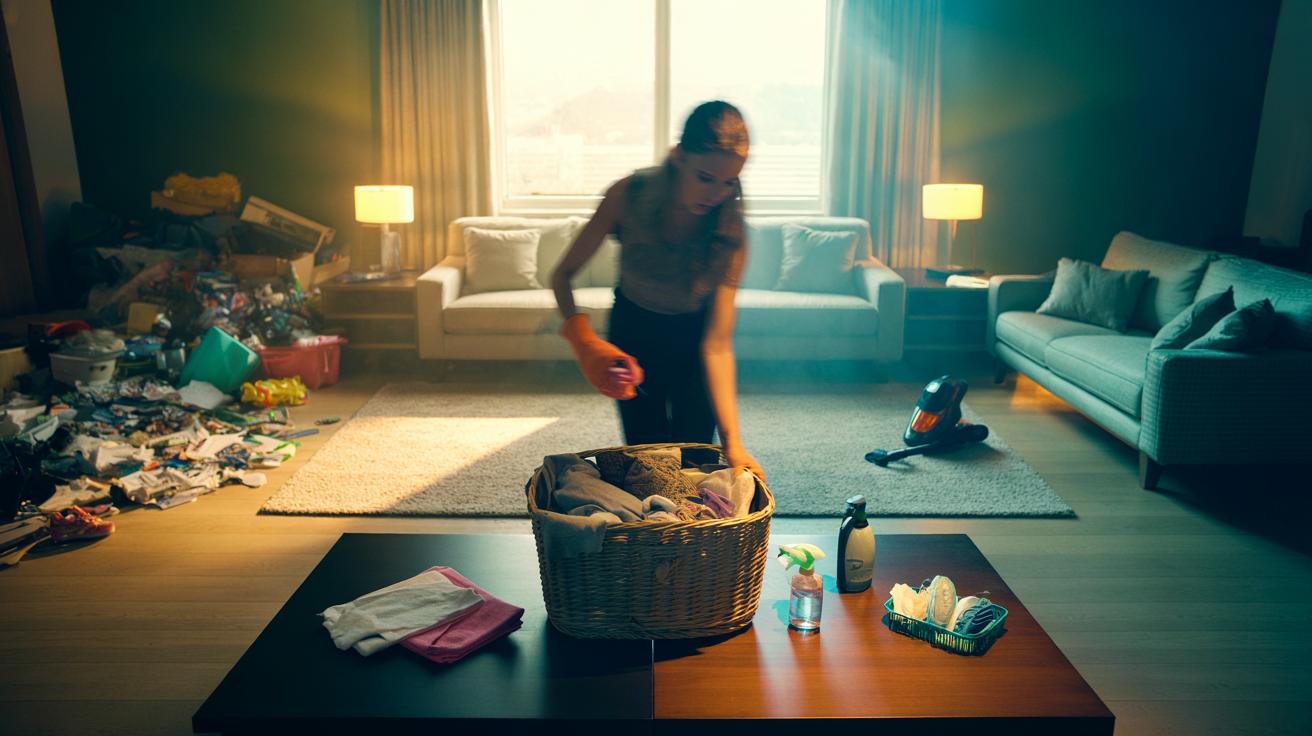
What if the difference between a frazzled morning and a calm one were just five minutes? The truth is surprisingly simple: small, deliberate moves beat heroic clean-ups every time. This fast routine turns clutter into order by leaning on speed sorting, visual resets, and a few low-effort micro-rules that stick. You won’t scrub skirting boards or empty wardrobes. You’ll make a room look, feel, and smell clean enough to breathe again. In five focused minutes, you can shift a space from stressful to supportive. And once you’ve felt that switch, you’ll want to press it again tomorrow, and the day after that.
The Five-Minute Flow That Calms Any Room
The “magic trick” is a sequence, not a scramble. You move in one loop, touching each category once, leaving the room with a visibly improved surface and a floor you can walk across without a sigh. Think of it like a tiny choreography: collect, clear, wipe, floor, finish. When you standardise the order, your brain stops negotiating and simply moves. Each minute carries a job with a hard stop. The constraint isn’t cruel; it’s the secret. Speed makes you decisive and discourages perfectionism’s delay tactics.
| Minute | Action | Why It Works |
|---|---|---|
| 1 | Grab-and-group clutter into one anchor basket. | Instant visual calm; decisions deferred to later, not avoided. |
| 2 | Clear the main visual plane (table, worktop, dresser). | Surfaces set the room’s “clean” signal to your brain. |
| 3 | Quick one-cloth wipe of those surfaces. | Shine and scent cue cleanliness without deep cleaning. |
| 4 | Floor scan: shoes to rack, laundry to bag, bins emptied. | Trip hazards gone; walking feels different, instantly. |
| 5 | Reset point: cushions straight, lights adjusted, window cracked. | Finishing ritual anchors the habit and the mood. |
Stick to the path. Don’t overthink the basket. Don’t detour to a drawer. Finishing is more powerful than perfect sorting. With repetition, this becomes muscle memory, and your room will “snap back” faster each day. The win is not spotless; it’s functional calm.
Speed Sorting and the Anchor Basket
Clutter is mostly items out of context. Return context fast, and you beat the mess. Enter the anchor basket—any medium tote or box that’s easy to carry and pleasant to see. During minute one, everything without a home goes in. Done. You’re not abandoning decisions; you’re sequencing them. Decision fatigue drops when you separate movement from judgement. Later, sort the basket in front of the TV or while a kettle boils. Set a 48-hour rule for the basket: if something lives there longer, it’s either homeless (assign a spot) or needless (donate or bin).
Next comes speed sorting. Use categories you can identify at a glance: paper, clothing, dishes, tech, toys, other. Fast passes beat careful piles. Dusty letter? Paper. Rogue cable? Tech. Missing sock? Clothing. The aim is not to perfectly file but to compress chaos into predictable, manageable streams. Add a small donation tote by the door. When the tote fills, it leaves the house on autopilot during your next errand. Removing the exit friction is what keeps homes from refilling with the same old stuff.
Finally, adopt the one-touch rule during the five-minute flow: if your hand is on it and you know where it goes, put it there now. If you don’t know, basket it. Binary choices sharpen speed. Binary choices protect your willpower.
Reset Points, Visual Planes, and Reward Cues
Homes that feel tidy have reliable reset points. Tie your five-minute flow to natural anchors—after breakfast, before leaving, before bed. You’re not finding time; you’re hitching a habit to time you already use. Consistency beats intensity, especially for domestic routines. Keep a micro-kit within reach of your busiest room: a microfiber cloth, a small multi-surface spray, spare bin liners, and a hand-held vac if you have one. When tools live where the mess happens, the routine survives busy days.
Then focus on visual planes. Humans read rooms horizontally: surfaces, then floors, then verticals. If your coffee table gleams and the floor is clear, the whole room “reads” tidy even if a corner looks lived-in. Plump cushions. Square the rug. Nudge furniture back into alignment. These tiny edits are theatre, not deceit; your brain wants clear sightlines. Add reward cues: crack a window for 60 seconds, switch a lamp to a warmer bulb, spritz a citrus or cedar scent. Cleanliness is a feeling as much as a fact.
For families or flatshares, create a two-line house rule: “Five-minute room reset after dinner. Everyone touches what they used.” Keep it visible, friendly, and short. Shared standards reduce silent resentment and keep the magic trick alive.
Five minutes won’t overhaul a loft. It will, however, change what tomorrow looks like when you walk into the room you need most. Start with one space, one basket, one loop. Notice how your shoulders drop when surfaces shine and floors open up. That sensation is your reward; protect it. From there, stack the habit onto school runs, train commutes, or bedtime. The room you reset tonight becomes the morning you keep. Where will you try the five-minute tidy-up magic trick first, and what tiny change will make it stick in your home?
Did you like it?4.4/5 (25)