In a nutshell
- 🧪 The science: tannins bind meat proteins, relax fibres, and tenderise fast without acid; the 10-minute window prevents bitterness and mushiness.
- ☕ How-to: Brew strong tea (2 bags/250 ml, 4–5 min), chill, season the liquid with 1–1.5% salt, marinate 8–10 minutes, then pat the steak bone-dry.
- 🥩 Pairing matters: Use Assam/Ceylon for flank/rump, balanced oolong for skirt/pork, lighter green tea for lean cuts, smoky Lapsang for lamb or ribeye.
- 🔥 Searing essentials: Dry surface, high heat, chase crust not grill marks; target 50–63°C internal depending on doneness; rest 5–7 minutes.
- ⚠️ Pro tips: Avoid over-soaking, add spices after the soak, use fresh tea for consistent tannin levels, and keep the marinade sugar-light to prevent burning.
It sounds like kitchen folklore, yet it’s rooted in chemistry: a humble teabag can transform a steak. Harness the natural power of tannins in tea and you can soften tough fibres, lock in juiciness, and set yourself up for a golden, sizzling crust. In just 10 minutes, a tea-based marinade can tenderise meat and elevate weeknight steaks into steakhouse territory. The method is inexpensive, quick, and surprisingly forgiving. It doesn’t drown meat in sweetness or acid. Instead, it teases proteins into better behaviour, then steps aside for the heat to do its magic. Here’s how the teabag trick works, why it’s effective, and how to use it without overdoing it.
What Tannins Do to Meat
Tea is rich in polyphenols—notably tannins and catechins—that bind to proteins. In meat, those interactions gently loosen the way muscle fibres cling together, making it easier for heat to slide between strands, soften connective tissues, and keep moisture where you want it. The result: a steak that cuts cleaner and chews silkier. Think of tannins as a temporary scaffolding that coaxes fibres to relax, so searing finishes the job without squeezing out precious juices. Unlike heavy acids, tea is subtle; it changes texture without turning surfaces mushy when used briefly.
There’s also flavour at play. Black teas bring malty depth; oolongs add roundness; greens offer a faint grassy lift; smoked teas whisper campfire. Crucially, a 10-minute soak is enough to deliver structural benefits without dominating taste. Go longer and you risk a dry, squeaky bite or a bitter edge. Short contact time is the secret that makes the teabag trick reliable. And because tea is aqueous and low in sugar, it won’t burn or blacken prematurely on hot cast iron.
How to Make a 10-Minute Tea Marinade
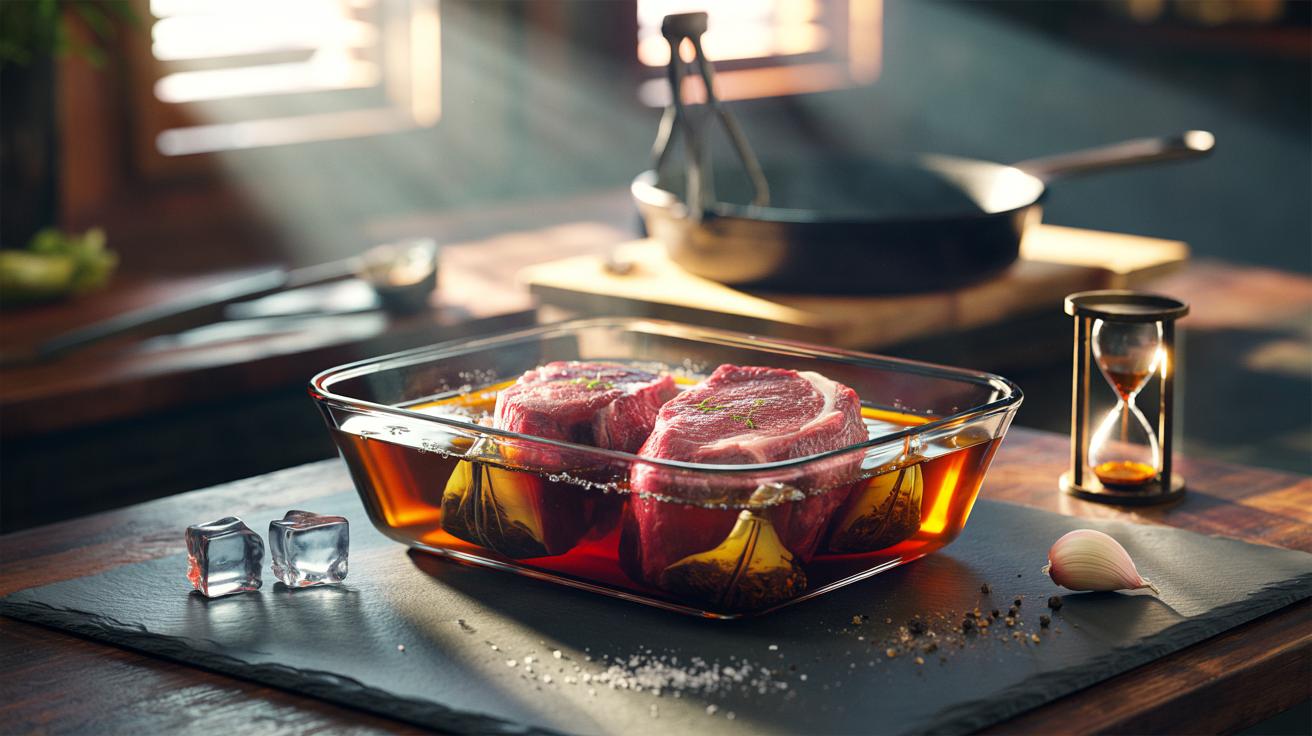
Boil a kettle. Steep 2 strong teabags (or 2 teaspoons loose leaf) per 250 ml water for 4–5 minutes; you want a robust infusion rich in tannins. Remove the bags, then chill fast: add a handful of ice or set the cup over a cold-water bath. Submerge your steaks in a shallow dish with just enough tea to cover. Add 1–1.5% salt by weight of the tea (10–15 g per litre) to season through. Optional: a pinch of brown sugar for balance and a cracked clove of garlic for aroma. Do not exceed 15 minutes of marinating—ten is ideal.
Lift the steaks, pat absolutely dry with paper towels, and rest uncovered for 5–10 minutes while you heat your pan or grill. This pause lets surface moisture evaporate and brings the meat closer to room temperature, priming it for a fierce sear. Dry exterior equals better crust and a louder Maillard chorus. If you want spices, add them now, not in the tea, to avoid bitterness. A thin film of neutral oil helps conduction on stainless steel; cast iron often needs none beyond residue.
Choosing the Right Tea and Cut
Not all teas or cuts behave the same. Beef benefits most, especially lean, muscular steaks such as flank, skirt, bavette, and rump. Sirloin and ribeye also respond well, becoming more yielding without losing bite. Lamb leg steaks gain tenderness with minimal flavour clash. Pork chops? Yes—keep the soak closer to 8 minutes. For tea, black varieties such as Assam or Ceylon deliver straightforward strength; Lapsang Souchong adds smoke; oolong is balanced; green tea is lighter and can tip bitter if over-steeped. Flavoured blends like Earl Grey add citrus perfume, but use them gently.
| Tea Type | Relative Tannin | Flavour Impact | Steep Time | Best For |
|---|---|---|---|---|
| Assam/Ceylon | High | Malty, bold | 4–5 min | Flank, rump, sirloin |
| Oolong | Medium | Rounded, toasty | 3–4 min | Skirt, bavette, pork |
| Green | Medium–Low | Fresh, grassy | 2–3 min | Lean steaks, pork |
| Lapsang | Medium | Smoky, resinous | 3–4 min | Lamb, ribeye |
| Earl Grey | High | Citrus aroma | 3–4 min | Quick 8–10 min soaks |
Use fresh tea for consistent tannin levels and avoid re-used bags, which extract unevenly. If you’re sensitive to bitterness, shorten the steep time or cut the soak to 6–8 minutes. Remember: this is a prelude to cooking, not a sauce; flavours should whisper, not shout.
Grilling, Searing, and Seasoning After the Soak
Heat is the headline act. Bring a cast-iron pan to shimmering or set a grill to high, aiming for a clean grate. Salt again lightly, then pepper. You can brush with a neutral oil if your pan demands it. Lay the steak down and leave it alone until a deep brown crust forms—about 90 seconds to 2 minutes per side for thinner cuts, longer for thick. Crust matters: it traps juices and delivers the savoury fireworks you expect. Don’t chase grill marks; chase colour. Flip once or twice; frequent flipping can actually promote even cooking.
Target internal temperatures: 50–52°C for rare, 54–57°C for medium-rare, 60–63°C for medium. Rest 5–7 minutes on a warm plate; juices redistribute, fibres relax further, and the tea’s gentle work becomes unmistakable. Finish with a knob of butter, chopped herbs, or a dash of soy for umami. If you crave glaze, brush a teaspoon of reduced pan juices right at the end. Patience here is everything; rushing from pan to plate squanders the tenderness you’ve just engineered.
There’s beauty in the simplicity of this trick. A pantry staple, a brief soak, and a hot pan—suddenly, tougher steaks feel indulgent, flavours are cleaner, and weeknight cooking gets faster. Ten minutes of tea gives you more margin for error and a better mouthfeel without masking the meat. Once you’ve nailed the basics, try blending teas—oolong with a touch of lapsang, or green with a whisper of jasmine—and match them to different cuts. Which tea-and-steak pairing will you test first, and what will you tweak to make it your signature?
Did you like it?4.5/5 (21)