In a nutshell
- 🔬 Baking soda (sodium bicarbonate) neutralises acidic odours via mild acid–base reactions, often releasing CO₂, while its porous grains adsorb lingering molecules for fast, real deodorising.
- 🌬️ Corners, cupboards, and low-flow “dead zones” trap smells; placing shallow, wide dishes there intercepts odour plumes, with added airflow boosting contact and speeding freshness.
- ⏱️ Quick onset, lasting effect: rapid neutralisation lowers the partial pressure of volatiles within hours, while ongoing adsorption–reaction cycles maintain odour control for weeks.
- 🧭 Practical setup: use 2–4 tbsp in a wide dish (fridge, rooms), dust textiles briefly then vacuum, and deploy dual heights in kitchens or shoe spaces for heavier and lighter compounds.
- 🧪 Safety and strategy: avoid mixing with vinegar for deodorising (it kills the buffering), refresh by stirring or replacing monthly, and keep away from aluminium surfaces, pets, and children.
Baking soda has a reputation that borders on folklore, yet its effectiveness is rooted in hard, observable chemistry. Sprinkle it in the fridge. Park a jar in a smelly corner. Dust it over a rug. The result is the same: sharp odours fade, the air feels cleaner, and the effect endures. The question is not whether baking soda works but why it works so quickly and lasts so long. In homes and workplaces across the UK, this humble white powder quietly neutralises sour, musty, and acidic aromas that hang in the air. Here’s the science, the strategy, and the simple setups that lock in lasting freshness.
What Makes Baking Soda a Deodorising Powerhouse
At its core, baking soda is sodium bicarbonate (NaHCO₃), a mild, amphoteric compound that reacts with both acids and, to a lesser degree, strong bases. Many household odours are acidic—think butyric acid from spoiled dairy, acetic acid from vinegar spills, and sulfurous notes from bacterial metabolism. Sodium bicarbonate neutralises these molecules, forming salts and water, and in many cases releasing carbon dioxide, which diffuses away. This chemical conversion removes the odour at its source rather than masking it.
But chemistry is only half the story. Baking soda’s particles are irregular and microporous, providing a surprisingly large surface area for contact with airborne molecules. That fosters gentle adsorption—temporary binding of odour compounds—alongside the neutralising reactions. In slightly damp environments, a thin film of moisture forms on each grain, acting like a microreactor where odorous acids meet bicarbonate efficiently. This dual action—adsorb, then neutralise—explains why smells soften fast, often within hours.
pH also matters. A saturated solution of sodium bicarbonate sits around pH ≈ 8.3. On surfaces, that mild alkalinity tames acidic volatiles without harshness or residue. The result is a safe, everyday buffer that targets the kinds of smells most homes actually face.
From Corners to Cupboards: Where Smells Hide
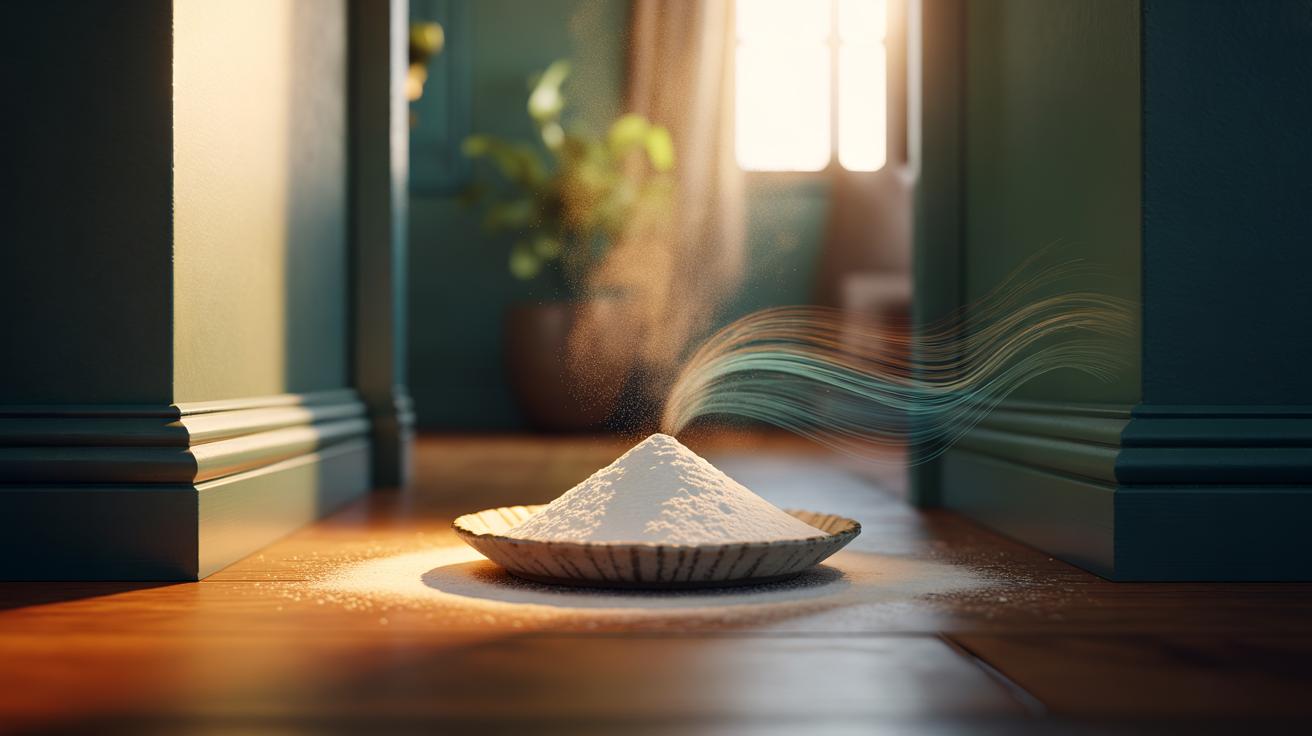
Stale odours often lurk in low-flow “dead zones”—the corners of rooms, behind sofas, the back of wardrobes, under sinks. These areas trap humidity and airborne acids; odour molecules persist because the air exchange is weak. Place an open bowl of baking soda where air settles, and you intercept the stream at the very point of accumulation. It’s not magic. It’s airflow physics. Corners collect what the room circulates poorly; that’s where targeted deodorising works hardest with the least powder.
Kitchens, utility rooms, and shoe cupboards respond well to a two-tier approach: a small open dish at floor level to catch heavy, less volatile molecules, and another on a shelf to reach lighter compounds. In bins and nappy caddies, a sprinkle beneath the liner arrests acidic whiffs before they rise. Refrigerators benefit from a wide-mouth jar for maximal surface exposure; carpets and pet areas respond to a light dusting followed by a thorough vacuum after 30–60 minutes. Small setups, smart placement, big gains.
For damp-prone corners, pair baking soda with airflow: crack a vent, open a door, or angle a fan to gently send air past the powder. You amplify contact, speed neutralisation, and widen the deodorising “zone of effect.”
How Long-Lasting Freshness Locks In So Quickly
Speed first: when an acidic odour plume meets sodium bicarbonate, reaction kinetics are immediate. Molecules that would otherwise linger at the nose’s threshold collide with the powder’s surface, are adsorbed, and—if acidic—neutralised. That reduces the partial pressure of the offending volatiles, pulling more from the air until an odour-light equilibrium is reached. Within hours, the room crosses a perceptual tipping point: from noticeable whiff to background neutral.
Longevity next: baking soda doesn’t just “fill up.” It cycles. Adsorbed molecules can be displaced by moisture and then neutralised in situ, regenerating binding spots. The powder also works passively, day after day, because indoor odours trickle—not surge—from sources like fabrics, drains, and food residues. Slow saturation means a small dish can stay effective for weeks, especially in drier rooms. When humidity rises, the microreactor film is renewed; when it falls, the surface dries and remains ready for the next wave.
| Odour Source | Main Compounds | Baking Soda Action | Onset | Refresh Interval |
|---|---|---|---|---|
| Fridge | Acids, sulfur notes | Neutralise + adsorb | 3–12 hours | 1–2 months |
| Carpets/Shoes | Fatty acids, amines | Adsorb, then react with acids | 1–24 hours | After each clean |
| Bins/Caddies | Organic acids | Immediate acid-base neutralisation | Minutes–hours | 1–4 weeks |
| Damp Corners | Musty VOCs | Adsorb; aids dryness | 6–24 hours | 2–6 weeks |
Practical Setups, Quantities, and Safety
Think surface area, not piles. For a standard room, 2–4 tablespoons of baking soda in a wide, shallow dish creates an active interface with the air. In a fridge, go wider rather than taller—jam jars work, but a ramekin or open tin performs better. Replace or “reactivate” every month by stirring to expose fresh surfaces; for stubborn cases, refresh entirely. If odours return quickly, double the stations rather than the dose at a single point.
For textiles, scatter a fine, even dusting, leave for up to an hour, and vacuum thoroughly. In shoes, a teaspoon in a breathable sachet tucks neatly and avoids residue. Avoid wet slurries on aluminium (risk of dulling) and keep powder dry around delicate electronics. Baking soda is generally safe, but store away from curious pets and children; ingestion in large quantities is not advised.
Do not mix indiscriminately with acids like vinegar during deodorising. The fizz is satisfying, but once carbon dioxide is spent, you lose much of the ongoing buffering capacity. Keep acid reactions for active cleaning jobs; for air care and textiles, dry powder outperforms. Consistency—small amounts, well placed, regularly refreshed—wins.
Baking soda’s quiet genius lies in a simple trio: surface contact, gentle chemistry, and smart placement. It tames acidic volatiles quickly, then keeps working as odours trickle back, stabilising the space at a cleaner-smelling equilibrium. In corners, cupboards, and fridges, the method is the same but the scaling shifts—shallow dishes, wider exposure, measured refreshes. Add airflow, mind humidity, and treat fabrics with patience. Long-lasting freshness isn’t a fragrance; it’s a reset of the room’s chemistry. Where will you place your first dish, and what hidden corner might surprise you most when the air finally clears?
Did you like it?4.6/5 (23)