In a nutshell
- 🍌 The banana peel works because its natural oils, waxes, and sugars act as mild emollients, instantly reviving dull leather with a soft, temporary shine on smooth, sealed finishes.
- 🧽 Simple method: dust first, test spot, rub gently with the peel’s inside, wait 60–120 seconds, then buff with microfibre; two light passes are usually enough—less is more.
- ⚠️ Best for shoes, belts, and bags; avoid suede, nubuck, and porous aniline (may darken). Skip steering wheels and motorbike seats to prevent dangerous slickness; be cautious on vegan leathers.
- ⏱️ Expect results in 3–7 minutes with a soft, natural finish that lasts about 1–3 days under light use; add a thin neutral polish afterward if protection is needed.
- 🌱 A quick sustainability win: upcycling food waste, cutting packaging, then composting the peel—yet it’s not a substitute for periodic leather conditioner when deeper care is required.
There’s an everyday fix hiding in your fruit bowl. The humble banana peel can coax a tired handbag, scuffed brogue, or dulled belt back to life, delivering a soft gleam in mere minutes. It’s not magic; it’s chemistry. The peel’s natural oils and waxes act as a swift, plant-based polish, smoothing out minor marks and refreshing leather without harsh solvents. Used sparingly and correctly, the effect is instant, tactile, and surprisingly durable for a quick tidy-up. It won’t replace a full conditioning routine, but for commuters, parents, and thrifty households, it’s a small act of restorative care that punches above its weight.
Why Banana Peels Work on Leather
Banana peels carry a cocktail of lipids, natural waxes, and trace potassium that interact beautifully with finished leather. Those lipids behave like mild emollients, softening the topcoat and helping to fill microscopic scuffs. Waxes add slip and a whisper of sheen. Meanwhile, gentle sugars and polysaccharides contribute to a light, glossy film once buffed. The warmth of your hand and the friction of rubbing mobilise these oils, allowing them to spread evenly across the surface. Unlike aggressive polishes, the peel’s moisture evaporates quickly while the oils remain, so the surface feels nourished rather than wet.
This is a temporary glow, not a deep treatment. Commercial creams often contain balanced conditioners and UV inhibitors; the peel doesn’t. Yet the effect is clean and quick: it rounds off sharp edges on micro-abrasions, slightly deepens colour, and brings back the soft reflectivity associated with well-kept leather. Crucially, it works best on sealed, smooth-finished items—think dress shoes, belts, satchels. Highly absorbent leathers may darken. For everyday maintenance between proper conditioning sessions, the banana-peel polish is a nimble, no-fuss ally.
Step-by-Step Method for a Quick, Safe Shine
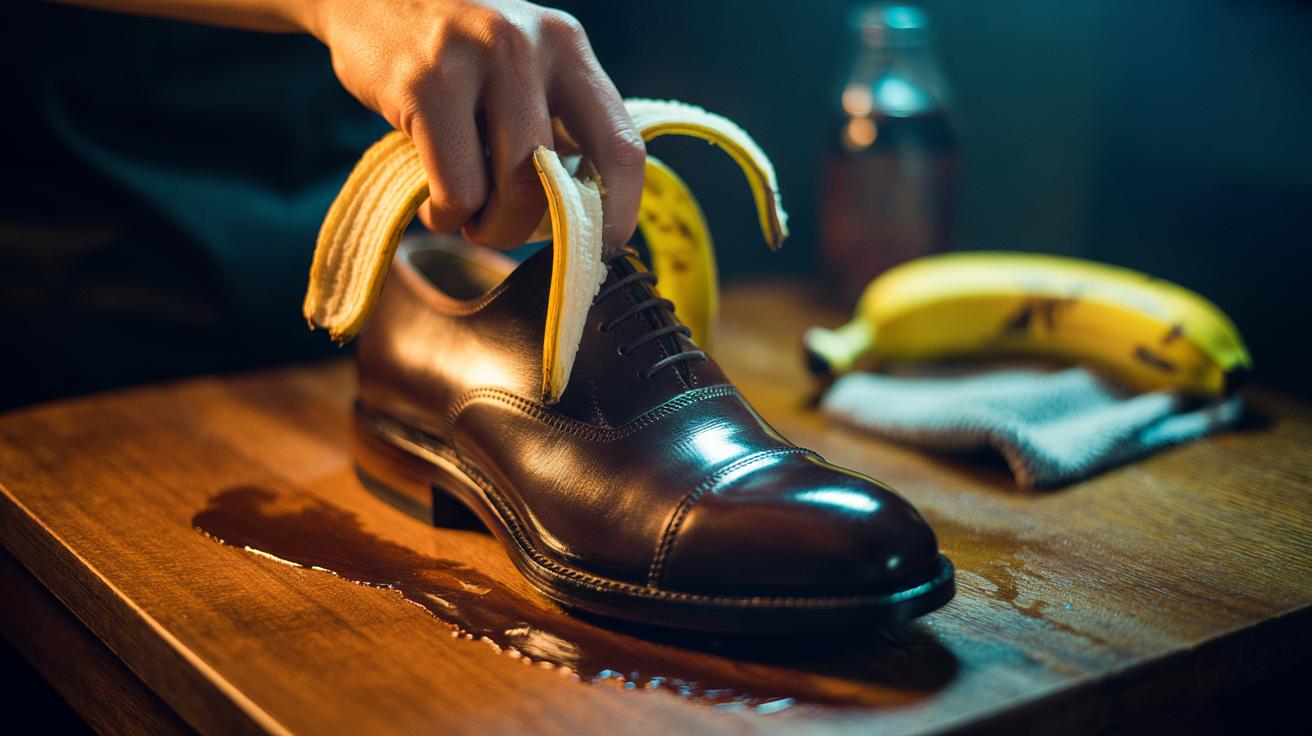
First, assemble a ripe banana, a clean microfibre cloth, and a dry brush. Brush away grit; dust is the enemy of shine. Select the inside of the peel—this is your polish pad. Always test on a discreet area and wait two minutes. If the colour holds and the finish improves, proceed. Using small, light circles, glide the peel over the leather, covering an area the size of your palm before moving on. Do not press hard around seams or stitching. Leave the faint film to settle for 60–120 seconds, then buff briskly with the cloth until any tackiness disappears and the glow appears.
Two passes are often enough. For stubborn dullness, repeat once after five minutes. Finish with a dry buff to set the shine. If you’re preparing shoes for weather or heavy wear, a touch of neutral cream polish afterward adds protection without defeating the peel’s quick polish. Less is more: over-application can leave residue that attracts dust. Expect a clear, soft lustre in under five minutes on average, depending on the leather’s condition and size.
| Best For | Avoid | Time Needed | Finish | Longevity |
|---|---|---|---|---|
| Smooth, finished leather shoes, belts, bags | Suede, nubuck, raw aniline, steering wheels | 3–7 minutes | Soft, natural shine | 1–3 days of light use |
Risks, Limits, and When to Use Alternatives
There are boundaries. Do not use on suede or nubuck—the moisture and sugars will matt the nap. Highly porous aniline leather may darken; test, then decide. Sugars can create a faint tack if you skip the final buff, especially in humid rooms. Overzealous rubbing can push residue into stitching, leading to discolouration along seams. For safety, avoid vehicle steering wheels and motorbike seats; any added slickness is a hazard. Vegan leathers (PU, PVC) sometimes accept a light peel wipe, but plastics can streak—use a dedicated cleaner if in doubt.
Remember, this isn’t a substitute for a periodic conditioner with balanced pH and protective agents like beeswax or carnauba. If your leather feels dry, creased, or sun-faded, reach for a proper cream or balm and reserve the banana trick for cosmetic quick fixes. Persistent stains need specialist treatment. When longevity, water resistance, or colour correction are priorities, choose established leather-care products and use the peel only as a stopgap. Think of it as the journalist’s emergency kit: fast results for broadcast, followed later by a full professional routine.
Eco-Friendly Upcycling With Quick Results
There’s a sustainability dividend to this homespun polish. You’re upcycling food waste, cutting plastic-packaged consumables, and getting a transportable solution that’s ready whenever the fruit bowl is. The carbon footprint is effectively embedded in your snack, not a new product. For households leaning into zero-waste habits, the banana peel turns into a tidy, circular moment: shine the shoe, then compost the rest. It’s a small switch with outsized psychological impact—care for your belongings and they last. Students, travellers, flat-sharers: it’s a quiet, practical win.
Practical notes keep it clean. Work over newspaper if you’re fussy about surfaces. Wipe away any faint residue before storing the item to avoid dust cling. Ventilate to let the faint fruity odour dissipate. If you crave a deeper gloss, layer a thin coat of neutral wax after buffing; the peel prep often improves adhesion. In an age of fast fashion and short attention spans, this is a tactile ritual—hands, cloth, peel—that reconnects us with maintenance. Circular economy thinking, at pocket-money cost.
In a world crowded with specialist bottles and sprays, the banana peel stands out for speed, thrift, and a touch of ingenuity. It won’t re-dye scuffed toes or repair cracked uppers, but it will restore a pleasing sheen when you’re heading out the door and time is short. Test, polish, buff—done in minutes. Consider it your gateway to better leather care rather than the final word. Which piece in your wardrobe will you try first, and what other everyday items might surprise you with their quiet, restorative power?
Did you like it?4.7/5 (27)