In a nutshell
- 🧊 Use a single ice cube and gentle heat to create steam that rehydrates dry cakes and pies, reviving texture and aroma in minutes.
- 🧪 The method counters starch retrogradation, reintroducing controlled moisture so the crumb relaxes without turning soggy.
- ⏱️ Practical steps: oven at 150°C with a foil tent for whole cakes (5–8 min); microwave slices at 30% power with a cube under a bowl (20–30 sec); pies steam in the oven with the cube on the tray, not the pastry.
- ✨ Pro tweaks: flavour cubes (vanilla, citrus, espresso), use a two-step rescue—steam first, then a light syrup on cut surfaces—to restore both tenderness and brightness.
- ⚠️ Safety smarts: keep ice off the bake, avoid perfumed freezer ice, watch high-sugar glazes, and discard bakes that smell off—this technique revives texture, not spoiled food.
Every baker knows the heartbreak: a beautiful sponge that tastes like sawdust, a pie that snaps rather than sighs. Here’s the unexpected fix that’s racing through home kitchens and professional bakeries alike. Use an ice cube. No gimmicks, no syrups, no sticky glazes. Just frozen water and a touch of heat, creating gentle steam that slips back into parched crumbs and stiff pastry layers. This tiny cube can revive bakes in minutes, returning tenderness, aroma, and that just-baked sheen you thought was gone. It sounds like magic. It’s simply science you can taste.
The Science Behind the Ice Cube Rescue
When cake goes dry or pastry toughens, it’s not a lost cause—it’s starch retrogradation at work. Starches in flour crystallise as they cool, squeezing out water and turning a once-soft crumb into something dull and tight. The answer isn’t sugar or fat alone. It’s moisture, reintroduced in a controlled way so the crumb can relax and the aroma compounds wake up again. That’s exactly what an ice cube delivers: a slow release of water vapour that penetrates the structure without soaking the surface.
Heat matters. Warm ovens or a low microwave setting energise water molecules, helping steam migrate into the cake’s interior while leaving the exterior intact. The goal is not to wet the cake, but to steam it. Done right, the crust regains suppleness, the crumb loosens, and sweetness feels rounder because water heightens flavour perception. Pies benefit too: flakiness returns as fat layers relax, and fruit fillings recover gloss. You’re not masking staleness—you’re reversing it, briefly, with targeted humidity.
There’s a limit. Severely stale bakes that are days old may need trimming and syruping. But for the classic “I left it out” scenario, the ice cube steaming method is precise, fast, and reliable, preserving texture better than brushing on liquids that can make edges gummy.
Step-by-Step: From Dry to Delight in Minutes
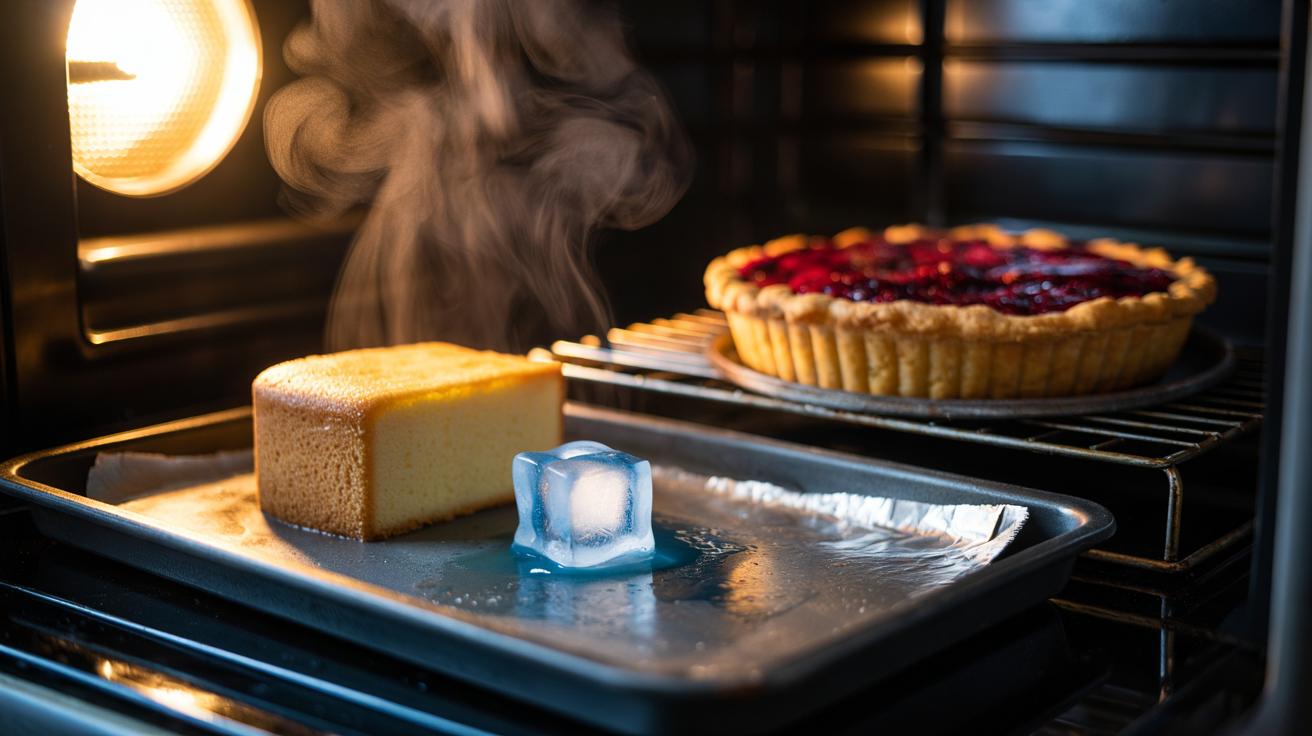
Start with the heat source. For cakes, preheat the oven to 150°C (130°C fan). Place the cake on a tray, add one ice cube nearby—never on top—and tent loosely with foil. The cube melts into steam, trapped under the foil canopy, and that humidity breathes back into the crumb. After 5–8 minutes, check softness by pressing lightly; it should spring back. Stop as soon as the cake feels pliable, because oversteaming blurs flavours and can make the top tacky.
Microwaves work for slices or cupcakes. Put the slice on a plate, set an ice cube beside it, and cover with an upturned bowl to form a mini-steamer. Low power—about 30%—for 20–30 seconds is enough. Wait 30 seconds before lifting the cover to let the steam settle into the crumb. For pies, use the oven only: cube on the tray, pie on a rack above it, foil tented. This keeps the top flaky while humidity mends the interior layers.
| Dessert | Method | Ice Amount | Heat Source | Time | Result |
|---|---|---|---|---|---|
| Sponge cake (whole) | Foil tent on tray | 1 cube | Oven 150°C | 5–8 min | Softer crumb, revived aroma |
| Cake slice | Bowl cover | 1 small cube | Microwave 30% power | 20–30 sec | Moist, not soggy |
| Fruit pie | Foil tent, cube on tray | 1–2 cubes | Oven 170°C | 6–10 min | Flaky top, glossy filling |
| Brownies | Open tray, no foil | 1 cube near | Oven 140°C | 4–6 min | Fudgy edges restored |
Always keep the ice off the bake itself. You’re chasing vapour, not puddles. If in doubt, reheat in shorter bursts and reassess by touch and aroma.
Smart Variations, Safety, and Chef Tricks
Flavour can hitch a ride with the moisture. Freeze cubes of vanilla-infused water, weak tea, or a splash of citrus juice to lift a dull crumb without drenching it. For chocolate cake, a cube made from cooled espresso gives instant depth. Pies love restraint: keep the cube on the tray and use a high rack so steam rises gently. Direct contact between melting ice and pastry equals soggy bottoms, the nemesis of every baker.
For very dry layers, use a two-step rescue. First, the ice cube steam to relax the crumb. Then, a whisper of simple syrup brushed sparingly on cut surfaces only. The order is crucial: steam opens the structure; syrup adds targeted sweetness without sealing the surface too early. Cover and rest for five minutes to let moisture equalise before serving. If frosting’s involved, remove it if possible; steam the naked cake, then reapply or freshen the frosting with a warm spatula.
Safety matters. Use clean water for cubes and clean trays; avoid perfumed freezer ice. Don’t overheat high-sugar glazes—they can drip and burn. If the cake smells eggy or sour, don’t rescue—bin it. The method revives texture, not food that’s past its safe window. Finally, serve warm: steam-softened bakes sing when eaten soon after their revival, with texture and aroma peaking in that short, glorious window.
In a world of elaborate hacks, this one feels almost subversive: a single ice cube, a pocket of heat, and patience measured in minutes. It’s thrifty, fast, and kinder to crumb and crust than drenching with syrup or drowning in cream. Try it on your next tired sponge, your midweek pie, or those brownies that went from fudgy to firm overnight, and judge the transformation with your fork. The simplest tools often save the day. Which bake in your kitchen will you bring back to life first—cake, pie, or something daring like babka?
Did you like it?4.6/5 (28)