In a nutshell
- 🌿 Eggshells supply slow-release calcium from CaCO3, strengthening cell walls and roots, buffering mildly acidic pH, and reducing disorders like blossom end rot in tomatoes and peppers.
- 🔬 Processing matters: rinse, dry, bake, and grind to a fine powder for faster release; react with vinegar to create fast-acting calcium acetate; or blend into compost for steady, microbial unlock.
- 🧰 Apply smartly: light powder in beds and potting mixes, and a diluted vinegar extract during flowering/fruit set; match method to crop needs and keep moisture and calcium supply consistent.
- 📏 Mind the soil: test pH before adding carbonate on alkaline ground to avoid micronutrient lockout; tailor rates (e.g., 50–100 g/m² powder; 5–10 ml/L extract) to conditions and containers.
- 🛡️ Myths and safety: shells don’t stop slugs and aren’t for magnesium fixes; avoid dust, sanitise shells, and prevent over-application that can tie up phosphorus—small, regular inputs win.
What if yesterday’s breakfast could power tomorrow’s harvest? Crushed eggshells—simple, free, and quietly potent—deliver a steady stream of plant-ready calcium that fortifies stems, roots, and fruit. Gardeners across the UK swear by this humble amendment, and science backs them: eggshells are mostly calcite (CaCO3), a slow-release tonic that gently raises soil pH while feeding the microbial engine. Used wisely, an eggshell blend can turn tired beds into productive, resilient plots. This guide unpacks the chemistry, the practical methods, and the pitfalls. It’s part kitchen alchemy, part soil common sense, and all about getting the most from what you already have.
Why Calcium Matters in Soil and Plant Health
Plants crave calcium. Not for lush green colour, but for structure and signalling. Calcium glues cell walls together, stabilises membranes, and helps roots probe new soil. When supplies dip, leaves distort, roots stall, and fruit quality slips. You’ve seen the calling cards: blossom end rot in tomatoes and peppers, tip burn in lettuces, bitter pit in apples. These aren’t simply “lack of water” problems. They’re calcium transport problems.
Eggshells answer with measured generosity. As CaCO3 dissolves, it releases Ca2+ and carbonate, which can buffer acidity. That’s useful in many UK plots, still slightly sour after winter rain. But calcium is not a cure-all. If soils are already alkaline, extra carbonate can lock up micronutrients such as iron and manganese. The key is balance. Test your pH if you can, or watch indicator species: chlorosis on new growth in alkaline ground, moss in areas that sit overly acidic. With the right match, a modest eggshell input bolsters cell formation and steadies fruiting, especially under erratic watering.
Turning Kitchen Eggshells into a High-Impact Soil Amendment
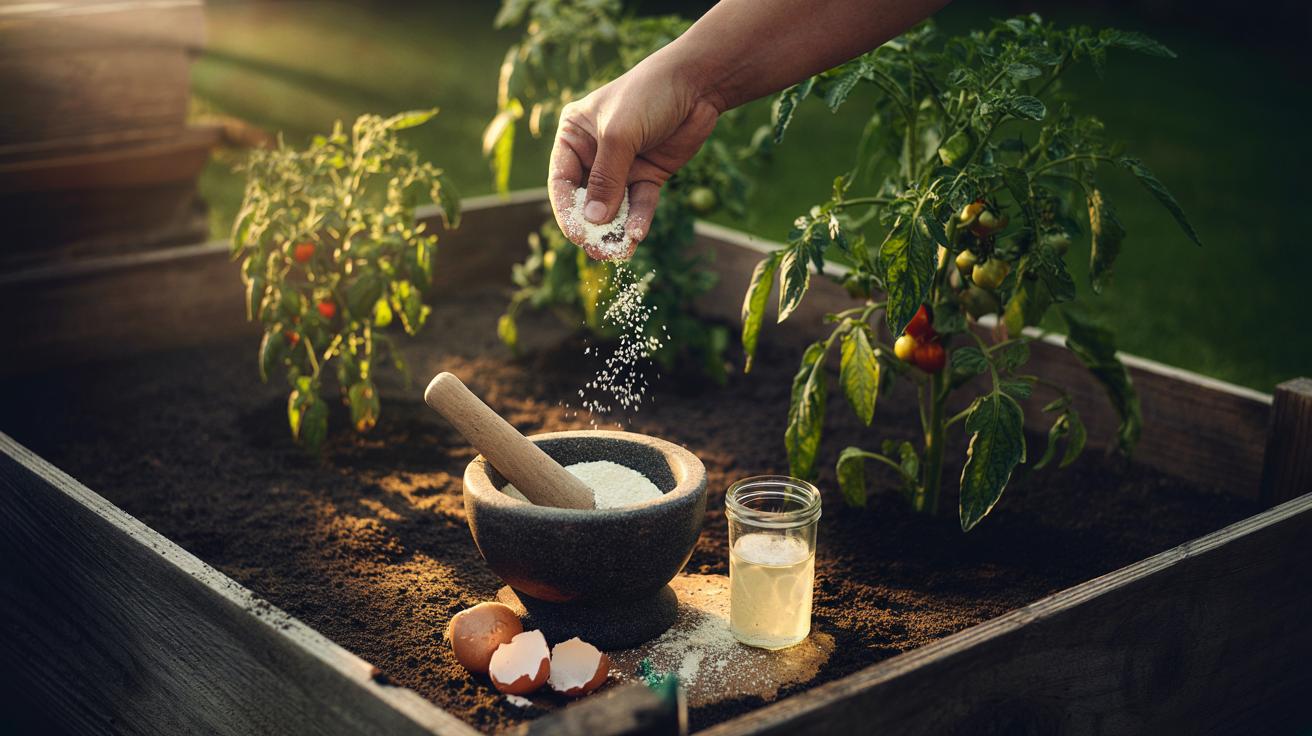
Start clean. Rinse shells, peel away membranes if easy, and air dry. Clean, dry shells are non-negotiable. A brief oven bake at 100–120°C for 10–15 minutes sanitises and crisps them, making grinding simple. Use a mortar, rolling pin, or a dedicated coffee grinder to achieve a fine powder; surface area governs speed, so powder beats coarse shards by a mile. Label your jar. Keep it dry.
For quicker availability, transform shells with household vinegar. In a glass jar, cover finely ground shells with vinegar: it will fizz as acetic acid converts carbonate into soluble calcium acetate. Once bubbling stops (24–72 hours), strain and store the liquid; the spent grit can go to compost. This extract adds a nimble, foliar-safe calcium source when diluted correctly. Finer grind equals faster release. Alternatively, blend powdered shells through compost or a worm bin. Microbes and acids from decaying matter steadily unlock calcium and counteract compost’s mild acidity, producing a balanced, living amendment that feeds both plants and soil life over months.
Smart Ways to Apply Eggshell Calcium in Beds and Pots
Ground shells suit slow, seasonal feeding. Work a light dusting into the top 5 cm of soil around hungry crops—tomatoes, brassicas, cucurbits—well before peak demand. For pots, mix into media before planting or top-dress sparingly and water in. The vinegar extract shines during flowering and fruit set when a fast calcium nudge can avert physiological disorders without swinging pH. Always dilute liquids and introduce gradually. Uniformity beats heavy, haphazard piles that can create alkaline pockets.
| Method | Preparation | Release Speed | Typical Rate | Best For |
|---|---|---|---|---|
| Fine Powder | Oven-dried, ground shells | Slow | 50–100 g/m² in spring; 1 tsp per 3 L potting mix | Acidic beds, long-term feeding |
| Compost Blend | Powder mixed into compost | Medium | 1–2% by volume of finished compost | General soil conditioning |
| Vinegar Extract | Shells reacted with vinegar, strained | Fast | 5–10 ml per L of water, monthly | Tomatoes, peppers during fruiting |
Match method to crop tempo. A heritage tomato in a windy allotment? Pair a pre-plant powder dose with light, regular extract feeds. Container-grown chillies? Use the extract, but keep salts low and watering steady. Consistency of moisture and calcium supply beats any miracle “fix”.
Myths, Limits, and Safety Notes Every Gardener Should Know
Let’s bust a few notions. Coarse shells don’t repel slugs reliably; they weather, soften, and become little bridges. Eggshells won’t patch a magnesium deficiency—reach for Epsom salts only if a test or clear symptoms point to Mg lack. And they won’t overturn chalky, high-pH soils; you’ll risk micronutrient lockout. Always test soil pH before liming, even with “gentle” materials. If you garden on limestone or chalk, aim your calcium strategy at foliar timing, not wholesale soil raising.
Safety is plain but vital. Wash hands. Avoid dust inhalation; a simple mask helps when grinding. Bake shells to reduce pathogen risks, and keep grinders for garden use only. Avoid over-application: repeated heavy doses can skew pH and tie up phosphorus. Watch interactions—excess calcium can outcompete potassium and magnesium uptake in sandy soils. Blend approaches for resilience: a bit of powder for the bank, a living compost for steady release, a gentle extract when fruit swell. Small, regular inputs beat one dramatic dump.
In the end, the eggshell blend is thrift with science: a circular, low-waste route to sturdier plants, cleaner fruit, and soil that holds its structure through wet springs and dry July spells. Used with intent, it complements balanced fertilisers and sharp watering habits, rather than replacing them. The chemistry is simple, the practice satisfying, and the results visible in firmer skins and fewer collapses. Ready to turn breakfast into better borders—what will your first trial be, powder in the brassica bed or a carefully diluted extract for tomatoes on the cusp of fruiting?
Did you like it?4.4/5 (21)