In a nutshell
- 🔬 The onion’s sulphur compounds, natural moisture, and flash steam loosen polymerised grease and smoke tars, aided by gentle abrasion from the onion’s fibres.
- 🧅 Quick method: preheat grill, skewer a halved onion, rub in lanes with firm pressure; for heavy build-up add coarse salt or a splash of vinegar, then lightly oil to season.
- 🛡️ Safer cleaning: avoids wire bristles and harsh chemicals, leaving no taint; ideal for stainless steel and porcelain‑coated cast iron with appropriate pressure.
- 🚧 Troubleshooting: if results lag, do a high-heat burn‑off first, re-trim the onion for fresh juice, use slower strokes, and adjust angle to reach edges and flat bars.
- 🔥 Payoff: cleaner grates mean better sear, fewer flare‑ups, improved heat transfer, and brighter flavour—all in minutes with a cheap kitchen staple.
What looks like a barbecue party trick is, in truth, fast kitchen chemistry at work. Rub a cut onion across hot grill grates and watch a year of stubborn, polymerised fat and smoke tar surrender. It’s quick. It’s cheap. It’s oddly satisfying. The secret is a tandem of sulphur-rich compounds and the onion’s natural moisture, which flash into steam on contact with heat and undercut baked-on grime. Add a little abrasion from the onion’s fibres and you have a scrubber, solvent, and deglazer in one. In minutes, you recover clean metal, better sear marks, and fewer off-flavours, without shedding wire bristles or reaching for harsh chemical sprays.
Why an Onion Works on Steel Grates
Slice an onion and you unleash reactive, sulphur-bearing molecules formed the moment its cells are crushed. Those compounds, alongside mild natural acidity (pH roughly 5–5.5), help disrupt the bonds in oxidised oils and smoke tars that turn into stubborn, polymerised grease. On a hot grate, the onion’s juice flashes to steam. That sudden heat-and-moisture burst creeps beneath crusted residues, lifting them just enough for friction to do the rest. Heat, sulphur-rich juice, and steam form a three-part cleaning system that’s surprisingly effective on year-old build-up.
There’s more than chemistry. The onion’s flesh works like a gentle abrasive, smearing moisture into pits and corners while its sugars create a thin glaze that helps “wet” the metal, reducing surface tension so water can penetrate the crust. The technique also avoids the dreaded wire-brush risk: no rogue bristles ending up in a burger. Do it right and your grate regains the clean metal sheen that encourages proper browning, better heat transfer, and fewer flare-ups. The result? Food tastes like flame and meat, not last summer’s fish.
Step-by-Step: The Two-Minute Onion Rub
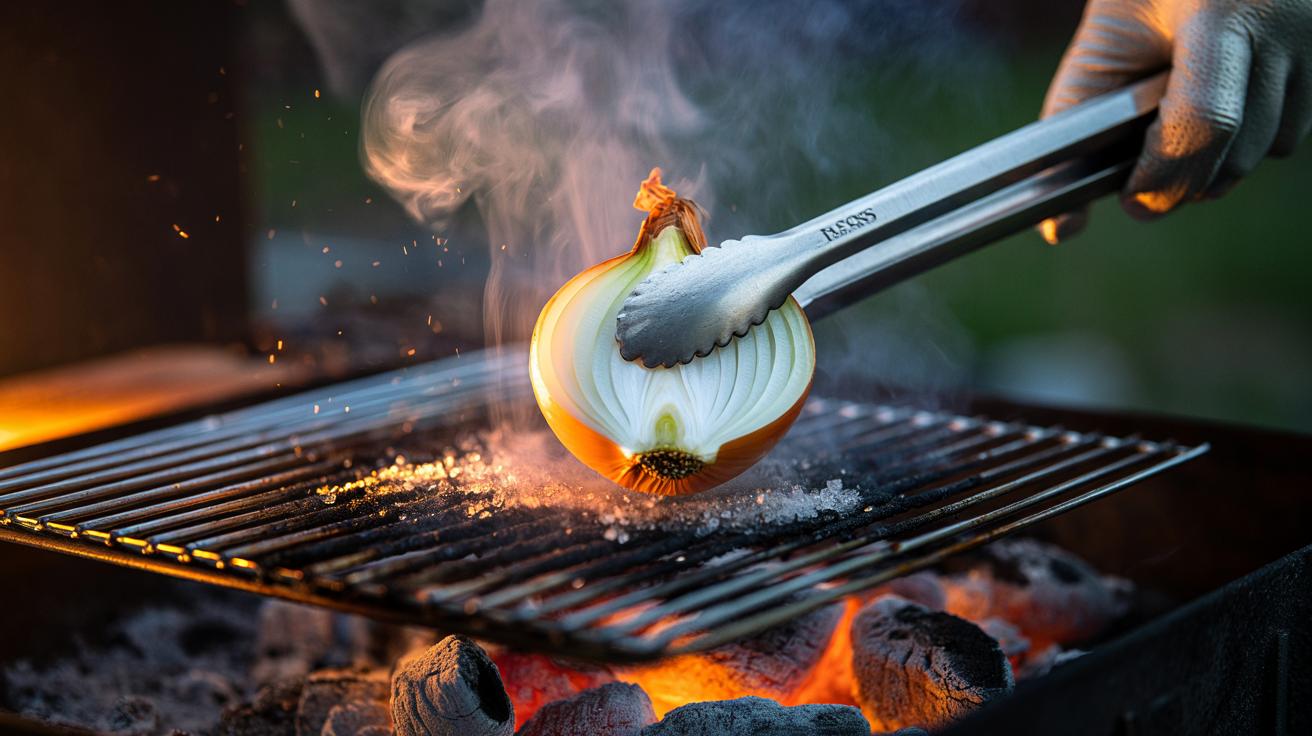
Preheat the barbecue until the grates are properly hot. Medium-high is ideal: hot enough to sizzle, not so hot they glow. Halve a firm brown onion. Skewer the cut face with a long fork or tongs for a secure grip. Safety first: keep hands away from the heat and wear a glove if needed. Now rub the cut side across the bars with firm pressure. You want juice and steam, not just a cursory swipe. Work in lanes, from back to front, using short strokes to dislodge crust. Re-trim the face if it dries out, or rotate to a fresher edge.
For heavy build-up, sprinkle coarse salt onto the cut surface. It adds bite. If residue smears, pass a folded, lightly oiled cloth over the bars to gather loosened gunk. Finish with a thin film of high smoke-point oil on a clean cloth—just enough to season, not drip. Stainless steel and porcelain-coated cast iron both respond well to this routine, though the latter needs a lighter touch.
| Condition | Onion Setup | Add-On | Why It Helps |
|---|---|---|---|
| Light grease | Fresh cut face | None | Steam and sulphur lift thin films quickly |
| Heavy carbon | Hotter grate, slower strokes | Coarse salt | Abrasive grains shear brittle crust |
| Sticky sugars | Juicy face, frequent re-trim | Splash of vinegar | Mild acidity loosens caramelised residues |
Science in the Smoke: Sulphur, Steam, and Surface Tension
Onion cells hold sulphur-containing precursors that, when cut, become a cocktail of reactive molecules. While the tear-inducing compound gets the headlines, the practical action here is broader: a medley of thiosulfinates and related sulphur chemicals that interact with oxidised fats and smoky polymers. They’re not heavy-duty detergents, but on a hot surface their presence, combined with heat and water, helps break up the matrix of old grease. Think of it as a mild, kitchen-safe chemical nudge that tips the physics in your favour.
Moisture is the real enabler. The onion’s water bursts into micro-steam at the grate, slipping under crust where dry brushes simply skate. That tiny wedge of vapour undermines adhesion, so a few strokes finish the job. Organic compounds from the onion lower surface tension, meaning the liquid spreads thinly and reaches more crevices. Add some mechanical action—fibres and salt granules—and you achieve a mini three-phase clean: chemical softening, steam deglazing, physical scraping. No aerosols. No residue that taints food. Just a bare, heat-ready surface that browns evenly and releases steak without tearing.
When It Fails and How to Fix It
Occasionally the onion rub underperforms. Reasons vary. A too-cool grill won’t generate the steam surge that does the lifting, so the juice simply smears. Crust older than a season can be heavily carbonised, almost ceramic in hardness. Or you may be fighting varnish-like layers from sugary sauces. Each issue has a workaround. First, burn-off: close the lid and run the heat high for 10–15 minutes to embrittle residues. Then repeat the onion routine, slower, with fresh cuts of the bulb. If it’s still stubborn, switch to a salt-loaded face or splash a teaspoon of vinegar on the onion to sharpen its bite.
Mind your material. Stainless will tolerate firmer pressure; porcelain-coated cast iron demands care to protect the enamel. If the grill bars are flat rather than round, hold the onion at a slight angle to drive juice under the edges. Persistent sticky patches respond to a final wipe with a hot, damp cloth (held by tongs), followed by a whisper of oil to season. And if you’ve inherited a truly neglected barbecue? One deep clean with a scraper, then the onion method becomes your fast weekly maintenance ritual.
The onion rub doesn’t just clean; it tunes flavour. A clear grate sears better, sheds less smoke, and resists flare-ups that char the outside before the inside is ready. It’s safer too: no wire bristles, no solvent fumes, only a spent half-bulb that can head to the compost. For the price of an onion, you extend grill life and improve dinner. The chemistry is simple, the payoff immediate, and the habit easy to keep. Will your next cookout start with a halved onion and two minutes of steam-powered housekeeping, or will you still reach for the old brush?
Did you like it?4.5/5 (21)