In a nutshell
- 🧽 Ditch detergents: get streak-free glass using microfibre + plain water, avoiding residue that causes smears.
- 🔁 Follow the Two-Step Method: wipe with a damp cloth, then rinse; finish edges with a squeegee or dry microfibre.
- 💧 Beat hard water: use a deionised water final rinse for spot-free drying; avoid cleaning in direct sun.
- 🧰 Minimal kit, minimal cost: 2–4 microfibres, a spray bottle, optional squeegee—fast cleaning and long-lasting tools.
- 🌿 Real-world proof: handles pollen, resin, and condensation without chemicals; kinder to frames, seals, and lungs.
Spritz, wipe, sigh. If your window routine ends with rainbow streaks and a gummy film, the problem isn’t your elbow grease—it’s residue. Here’s the counterintuitive trick professional cleaners swear by: skip detergents entirely. Use a high‑quality microfibre cloth, plain water, and a quick rinse. That’s it. No fragrance, no solvents, no smears. The result? Crisp glass that vanishes against the sky. This method thrives in British weather, copes with hard-water regions, and doesn’t leave your home smelling like a chemical lab. It’s fast, cheap, kinder to frames and seals, and wildly effective. No chemicals, no haze, just clarity.
The Science Behind Streaks and Why Water Wins
Most streaks aren’t dirt; they’re residues left over from sprays. Typical window cleaners contain surfactants and solvents that lift grime, but they also deposit microscopic films as they dry. Those films catch light and dust. The more you polish, the more you smear. Microfibre solves this by using split fibres that create millions of edges. They grip particles through capillary action and static, not suds. Warm water helps loosen grease; the fibre does the rest. No residue means no streaks.
The final rinse is the magic. If you finish with deionised water (sold for irons) or soft rainwater from a clean butt, droplets evaporate without leaving mineral spots. Even standard tap water works when you rinse generously and remove the excess with a light pass of a dry microfibre or a squeegee edge. Crucially, you’re not spreading detergent films, so glass dries honest and invisible. Short version: remove dirt mechanically, then leave nothing behind. That’s how you get that crisp, museum-glass look without perfume or fog.
There’s a bonus. Frames and seals last longer when you ditch harsh formulas. Painted timber, uPVC gaskets, anodised aluminium—they all benefit from gentler cleaning. And your lungs do too.
The Two-Step Method: Wipe, Then Rinse
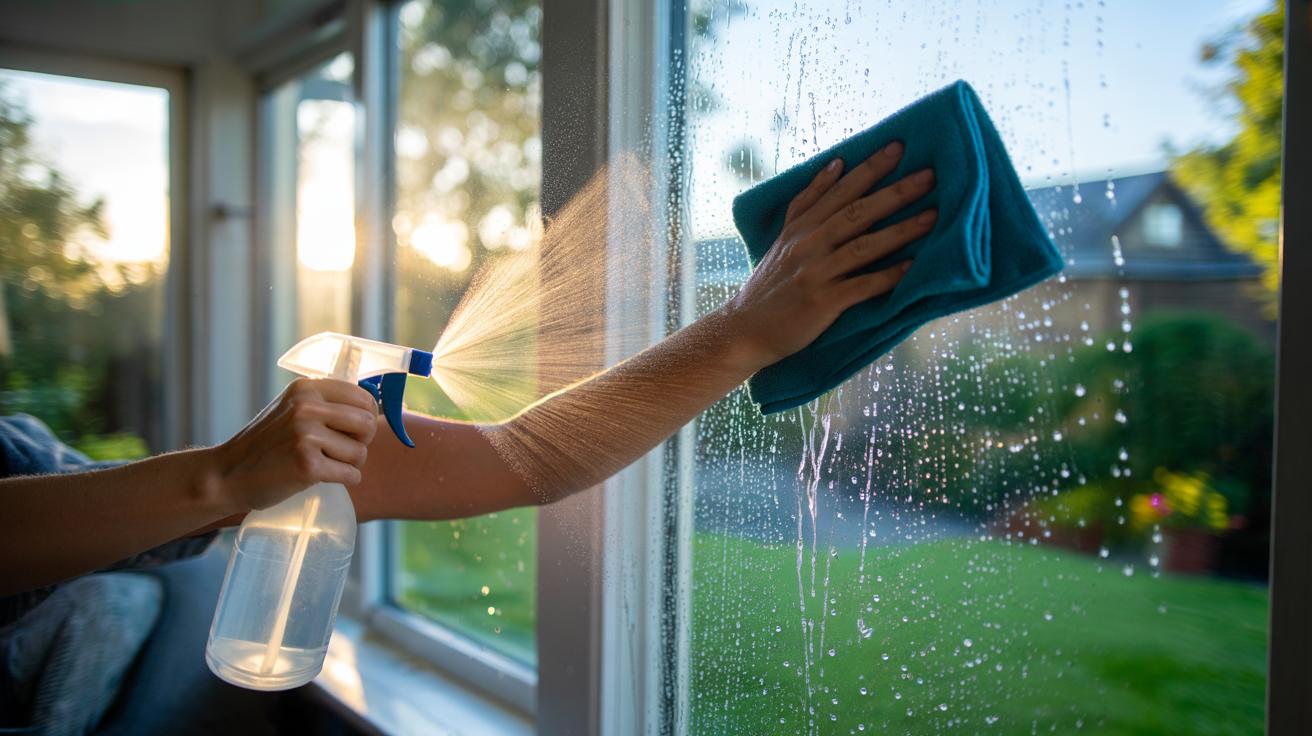
Step one is the wipe. Take a clean, damp microfibre (just warm water), fold it twice to create eight clean faces, and work in overlapping strokes from top to bottom. Corners first. Edges collect the most grime; tackle them before the centre. Apply moderate pressure; let the fabric bite. Flip to a fresh face when the cloth looks grey. For exterior panes with bird marks or pollen crust, pre-wet with a spray of water, wait 30 seconds, then wipe. Only water touches the glass.
Step two is the rinse. Spray or pour water over the pane so contaminants flow off the surface you’ve just wiped. For upstairs windows, a hose with a fine mist works; for interiors, a trigger bottle is perfect. If you live in a hard-water area, keep a small bottle of deionised water for the final pass. Let it sheet down. To speed drying, skim the bottom bead with a squeegee or dab edges with a dry microfibre. Avoid direct sun; rapid evaporation exaggerates lines. Indoors, crack a window or run a fan. You’ll see the clarity settle as the last droplets vanish.
That’s the whole trick. Two motions. No soaps. No polish. Just glass that disappears.
Tools, Costs, and Time: What You Actually Need
You don’t need a caddy of bottles. A tiny kit outperforms the lot. Here’s a simple list, with realistic UK prices and roles. The goal is durability. Buy once, use for years. Keep two microfibres: one damp for cleaning, one dry for finishing edges.
| Item | Role | Typical UK Price | Tip |
|---|---|---|---|
| Microfibre cloths (2–4) | Lift dirt; buff edges | £6–£12 (pack) | Look for 300–350 gsm, laser‑cut edges |
| Spray bottle | Controlled rinse | £2–£5 | Fine mist nozzle reduces spotting |
| Deionised water | Spot‑free final rinse | £1–£2 per litre | Also sold as iron water |
| Small squeegee (optional) | Quick edge control | £5–£10 | Use a sharp rubber blade |
Time-wise, it’s swift. A standard UK bay window takes 6–8 minutes once you’ve got the rhythm. Whole flat? Under an hour. The economics add up fast: no sprays, no paper towels, no fragrances. Wash cloths at 40°C without fabric softener and they’ll last 100+ cycles. Frames stay brighter because you’re not embedding surfactants into the grain. The method scales: large patio doors, skylights, shower screens—same two steps.
Hard Water, Pollen, and Other Real-World Obstacles
Britain’s water varies wildly. If you’re in Kent, Essex, or the Midlands, minerals can spot. The fix is simple: rinse with deionised water for the final pass, or squeegee before droplets dry. On blustery days, airborne pollen can stick like felt. Pre-wet, wait a moment, then wipe; don’t grind it in. Tree resin or sticker gum? Use a plastic scraper and warm water, then rinse—still chemical‑free. If the sun is on the glass, move on and return when it’s shaded.
Condensation streaks on the inside often come from dusty frames. Quick remedy: wipe the top frame and gasket first, then the pane. Old putty or flaky paint? Gentle pressure only; microfibre will still collect the chalk. For upstairs exterior windows without safe access, an extendable pole with a rinse attachment makes this hack practical—still only water. And if you love the newspaper trick, retire it. Modern inks smear, and paper sheds lint. Clean cloths, clean water, clean finish. That’s the whole philosophy.
Seasonally, aim for spring and early autumn deep cleans, with monthly refreshes on high-traffic panes like patio doors. It’s sustainable and repeatable.
Done right, this is the rare household hack that saves time, money, and effort while producing a visibly better result. The clarity is startling because there’s simply nothing left on the glass to catch the light. Start with two cloths, warm water, and a simple rinse, and you’ll never go back to blue sprays. Your home looks brighter; the outside looks nearer. Ready to try it this weekend, and which window will you test first—the patio doors, the kitchen splashback, or that skylight that’s always been a pain?
Did you like it?4.7/5 (20)