In a nutshell
- 🍋 Why it works: citric acid chelates calcium/iron, lowers pH, and dissolves mineral residue, restoring true white—especially in hard-water areas.
- ⏱️ The 30-minute method: Use 60 ml lemon juice per 1 L (or 1 tsp/5 g citric acid per 1 L) in 30–40°C water; soak 30 minutes, agitate once, rinse, then wash or sun-dry.
- ⚠️ Safety and fabrics: Never mix with chlorine bleach; ideal for white cotton and linen; avoid wool, silk, acetate; limit exposure for elastics and metal trims.
- 🧼 Stain tactics: Pre-rinse, spot-treat diluted lemon (1:3), extend soak to 45–60 minutes for stubborn marks, and repeat gentle cycles rather than increasing strength.
- 🌍 Benefits: Low-cost, low-waste brightening without harsh bleach or optical brighteners, delivering a visible lift after one soak and a fresher feel.
White T-shirts that dulled to grey. School shirts with tea splashes. Towels carrying that faint, stubborn yellowing only hard water can brew. There’s a deceptively simple fix waiting in your fruit bowl. The lemon water hack relies on nature’s own cleaning chemistry to revive fibres quickly and gently. In just 30 minutes, a mild bath of citric acid can lift stains, break down mineral film, and leave whites looking cleaner without harsh bleach. It’s thrifty. It’s low-waste. It smells pleasantly fresh. Best of all, you can see the brightening effect after a single soak, especially in homes battling limescale across much of the UK.
Why Lemon Water Works on Whites
At the heart of this hack sits citric acid, a weak organic acid abundant in lemons. It acts in three clever ways. First, it chelates metal ions such as iron and calcium, the culprits behind dingy grey and yellow tones that cling to cotton in hard-water regions. Remove those ions and you remove the “screen” that makes whites look tired. Second, lowering the water’s pH helps release soils and body oils from fibres, disrupting the invisible film that dulls fabric lustre. Third, the acid dissolves mineral deposits left by detergent residues and limescale, letting light reflect more cleanly off the yarns.
It’s not magic. It’s physics and chemistry aligned. Cleared fibres scatter light evenly, so the cloth appears brighter to the eye. On a sunny day, there’s a bonus: UV can gently photobleach organic stains after the acid loosens them. This is a brightening method, not a harsh bleach. It won’t strip colour from the fibre itself when used correctly; it simply evicts the grime and scale that mute true white. That’s why white cotton and linen respond so well, and why the effect is visible after around half an hour.
The 30-Minute Method, Step by Step
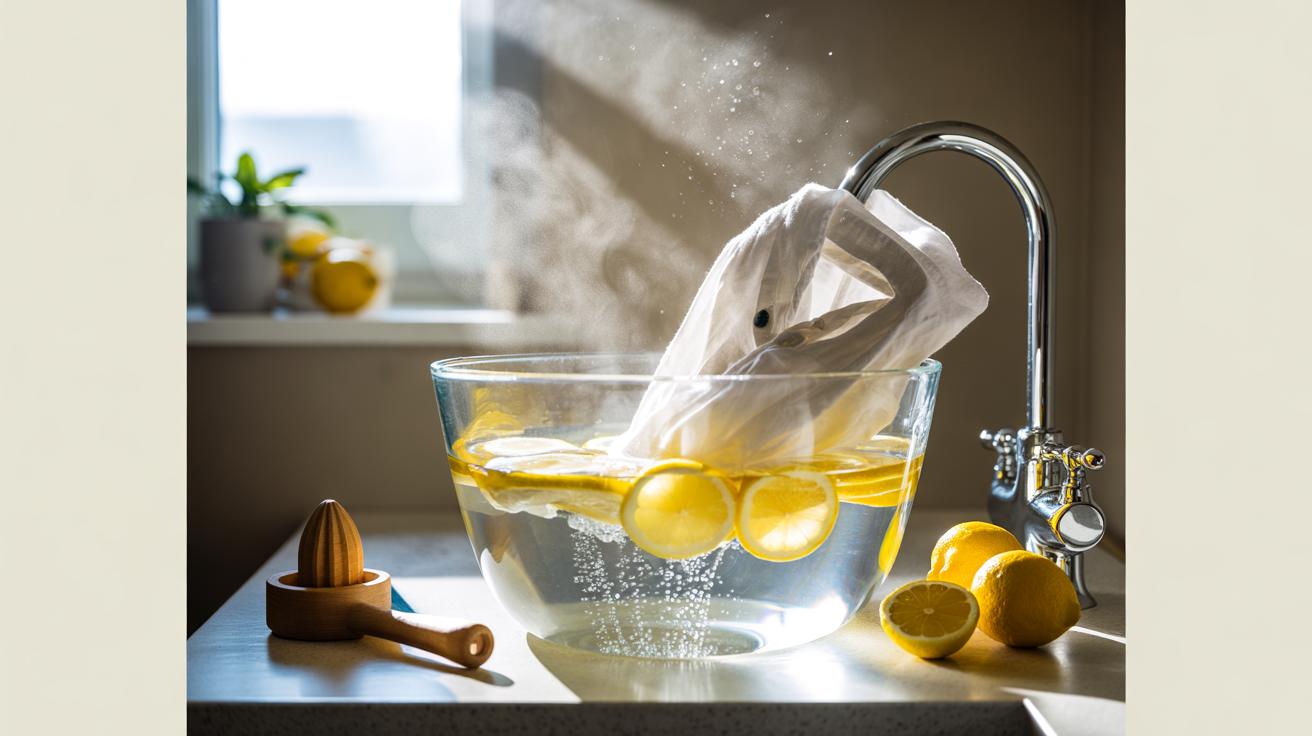
Fill a basin with warm water, ideally 30–40°C. Add either 60 ml (about 1/4 cup) fresh lemon juice per litre of water, or 1 teaspoon (5 g) food-grade citric acid powder per litre for a consistent solution. Submerge clean, pre-rinsed white garments. Swish gently to distribute the solution through the fibres. Soak for 30 minutes, agitating once halfway. Rinse thoroughly in cool water to remove loosened soils and any remaining acid. Launder as usual or line dry in sunlight for a subtle extra lift. Do not add chlorine bleach at any stage—acid plus bleach releases hazardous gas.
For heavy stains, bump soak time to 45–60 minutes and blot persistent marks with a lemon-dampened cloth before the basin bath. If you prefer a machine assist, pour your dissolved citric acid solution into the drum with the garments and run a short, warm pre-wash, then rinse. Keep solutions mild to protect elastics and trims. Targeted spot work? Apply diluted lemon juice (1:3 with water) to cuffs or collars, wait five minutes, then soak the whole item. The combination removes greasy residues and the yellow-grey veil caused by hard water.
| Component | Ratio / Setting | Use Case | Notes |
|---|---|---|---|
| Lemon juice | 60 ml per 1 L water | General whitening | Fresh, strained juice reduces pulp marks |
| Citric acid powder | 1 tsp (5 g) per 1 L | Consistent strength | Dissolve completely before soaking |
| Soak time | 30 minutes | Routine refresh | 60 minutes for stubborn stains |
| Water temperature | 30–40°C | Cotton, linen | Cool rinse afterwards |
Safety, Fabric Compatibility, and Common Pitfalls
Never mix lemon or citric acid with chlorine bleach—ever. That’s the single most important rule. Keep this technique for white-only loads, as acid can encourage dye migration from coloured trims or prints. Check care labels: pure cotton and linen love it; wool, silk, and acetate do not. These protein-based or delicate fibres can weaken in acidic conditions. Limit soaking elasticated waistbands and lingerie to brief dips. If your garment has metal components, rinse them well—acids can tarnish low-grade metals. Work on a non-stone surface; lemon can etch marble or limestone if spilled and left.
Go easy on strength and time. Overconcentration won’t whiten faster; it only stresses fibres and rubber seals. A mild bath, not a marinade, delivers results. If you live in a hard-water hotspot—much of the South East and Midlands—expect outsized benefits: the acid breaks limescale films other detergents leave behind. Sensitive skin? Rinse garments thoroughly and consider an extra spin. If odours linger, repeat a shorter soak rather than ratcheting up the dosage. The goal is bright, neutral-smelling fabric without the brittle “overwashed” feel, and that comes from gentle repetition, not brute force.
Used wisely, the lemon water hack is a nimble, low-cost fix for whites dulled by time and tap water alike. It leverages citric acid to dissolve scale, lift oily soils, and clear stain pigments—often in under 30 minutes. Add sunlight and you’ve got a brightening double act, minus harsh bleach smells or optical brighteners. It’s kinder to fabrics, friendlier to drains, and brilliantly accessible when laundry day sneaks up. One basin, one lemon, one half-hour. Will you test it on a towel first, or dive straight in with those greyed school shirts and see how much brightness you can reclaim?
Did you like it?4.6/5 (23)