In a nutshell
- 🌿 Tillandsia (air plants) quietly absorb ambient moisture via specialised trichomes, offering a soil-free, aesthetic way to ease damp—useful margins, not a full dehumidifier replacement.
- 💧 Acts as a passive, plug-free buffer that moderates humidity spikes and reduces musty odours through high leaf surface area and gentle moisture cycling.
- 📍 Smart placement boosts results: hang Spanish moss in bathrooms (out of direct spray), clip rosettes to window reveals, freshen wardrobes, and temper steam near kettles—cluster for small-room impact.
- 🧩 Care is minimal: weekly soak and dry within 4 hours, light misting after steam, bright indirect light, good airflow; use rain/filtered water and optional light feed—generally non-toxic to pets.
- ✅ Practical benefits with limits: won’t solve structural damp, but offers low-energy, low-fuss freshness and microclimate control that noticeably lifts everyday living spaces.
Homes across the UK wage a quiet war against condensation, musty corners, and the hum of energy-hungry appliances. There is another way. A humble botanical ally, tucked on a shelf or strung from a shower rail, can nibble away at airborne moisture while giving your space a sculptural lift. Meet the air plant clan. They sip damp from the atmosphere, breathe without soil, and ask for little. They do not promise miracles. They offer margins — small, cumulative wins. That is often enough. For renters, students, and anyone dodging bulky machines, one plant can shift the feel of a room without a single plug.
Meet Tillandsia: The Humidity-Sipping Air Plant
The little-known household workhorse is Tillandsia, commonly called an air plant. This epiphyte grows naturally on trees and rocks, using specialised leaf scales called trichomes to drink water and nutrients straight from the air. No potting mix. No drip trays. Just light, air, and an occasional soak. In a steamy flat, those trichomes behave like millions of tiny sponges, taking the edge off sticky mornings and post-shower fog. You won’t see a swinging needle on a hygrometer in minutes, but you’ll notice fewer clammy corners over time.
Scale matters. A handful of plants hung near a damp-prone window can soften daily humidity peaks, especially in small bathrooms, box rooms, or wardrobes. The effect is gentle rather than industrial. This is not a replacement for a dehumidifier in serious damp conditions, but a low-cost, living buffer that chips away at everyday moisture. Choose species like Tillandsia usneoides (Spanish moss) for draping strands that maximise surface area, or rosette types such as Tillandsia xerographica for sculptural impact and sturdy growth.
There’s another bonus. As they shuffle moisture in and out, air plants subtly lift a space’s feel — fresher, greener, calmer. A small nudge, repeated daily, becomes a change you can sense.
How It Freshens Air Without Plug Sockets
Air plants breathe through leaves, not roots. That makes them excellent partners in tight, stale corners where soil-based plants struggle. By absorbing fine droplets, they starve mildew of its favourite fuel: lingering damp. The result is air that feels lighter. Think of Tillandsia as a passive, living filter that trims humidity peaks and takes the must out of stagnant spaces. Their leaf surfaces host benign microbes that can help moderate odours from bathrooms, trainers, or laundry baskets. It’s slow, steady work — nothing flashy — but in small rooms the difference is noticeable.
Claims that houseplants “purify” air are often overstated, yet Tillandsia earn their keep through physics more than hype: vast surface area, constant contact with air, and water uptake via trichomes. No whirring fans. No filters to replace. Just gentle moisture capture during steamy spells, then release when conditions dry. For households trying to cut energy use, that matters. A cluster of air plants near habitual moisture sources — showers, kettles, drying racks — can tame the microclimate where problems begin.
Where to Put It: Real-World UK Scenarios
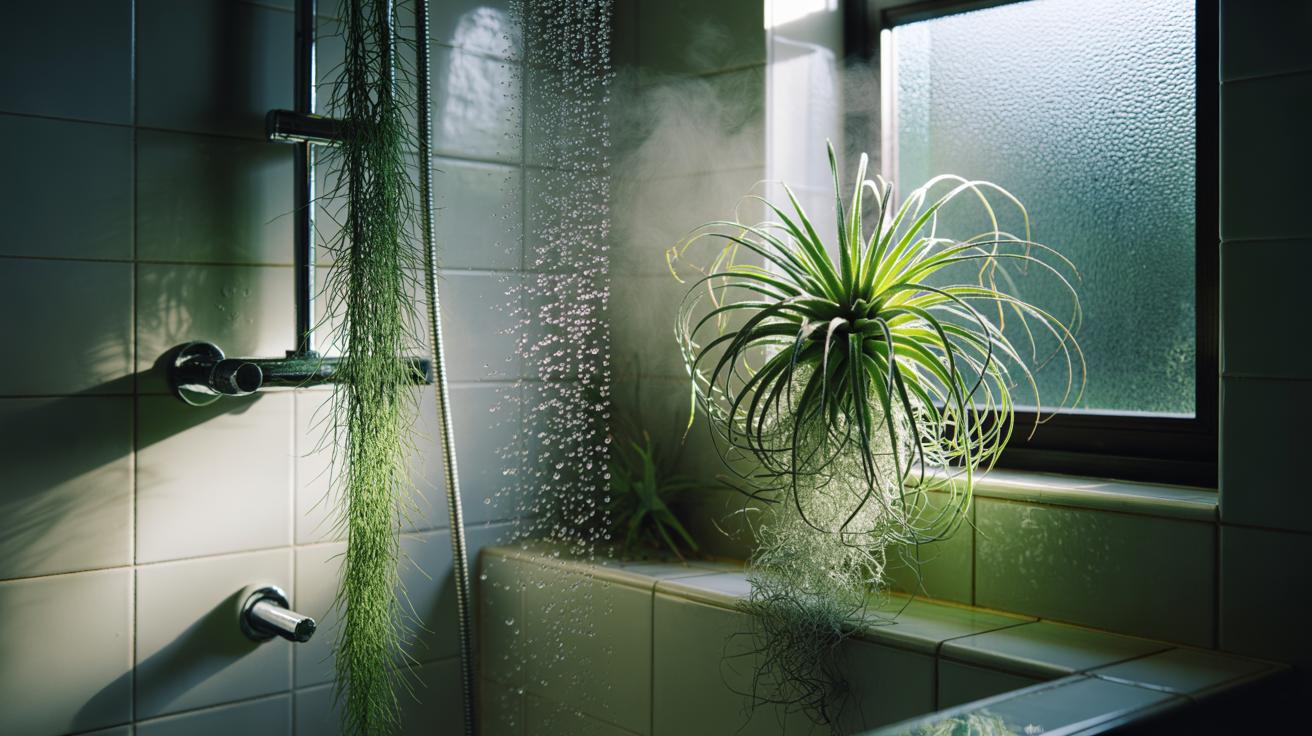
Place air plants where damp forms and air moves. Bathrooms are ideal. Suspend a strand of Spanish moss from a shower rail, away from direct spray, so it catches steam and then dries between uses. In rental flats, hook small rosettes to a suction cup near the window reveal, not touching cold glass. Wardrobes get musty? Hang a mesh sachet with a few mini Tillandsia inside, leaving the door ajar to keep air flowing. Kitchens benefit too — a cluster above the kettle’s plume or near the sink can take the edge off daily boils and splashes.
Light matters. Aim for bright, indirect light — a frosted bathroom window or a north- or east-facing sill. Avoid radiators and persistent drafts. The golden rule is simple: damp exposure followed by thorough drying within several hours keeps air plants working and healthy. If your home is large or very wet, use multiple clusters in hotspots rather than a single specimen. Small rooms, big wins; big rooms, spread them out.
| Placement | Light | Care Frequency | Expected Effect |
|---|---|---|---|
| Bathroom near shower (not in spray) | Bright, indirect | Mist 2–3x weekly; occasional soak | Reduces post-shower humidity peaks |
| Wardrobe or cupboard door | Low to moderate | Mist weekly; ensure airflow | Less musty odour; drier feel |
| Kitchen near kettle path | Bright, indirect | Mist after heavy use | Tames steam bursts |
| North/east window reveal | Indirect, cool light | Soak every 7–10 days | Steady moisture moderation |
Care Made Simple: Keep It Alive, Let It Work
Good news: care is minimal. Give your Tillandsia a thorough soak in room-temperature water for 15–20 minutes once a week in summer, every 7–10 days in winter-heated homes. Shake gently, then let it dry fully within 4 hours — on a rack, hanging, or perched on wire. Drying is the make-or-break step; a wet core invites rot and halts the plant’s humidity work. In between, a quick mist after steamy showers keeps trichomes primed. Use rainwater or filtered water if you live in a hard-water area to avoid mineral spots.
Light should be bright yet diffused; avoid baking south windows and direct radiator heat. Airflow is essential. Treat fertiliser as optional — a half-strength bromeliad feed once a month in spring and summer is enough. Mount plants on cork, driftwood, or simple hooks, never sealed containers. Pets around? Tillandsia are generally considered non-toxic, but keep delicate species out of reach. If tips brown, increase humidity exposure followed by proper drying. Healthy air plants feel springy, not soggy, and look silvery when thirsty, greener when hydrated.
Tillandsia won’t banish rising damp or fix leaky masonry. They will, quietly and dependably, round off humidity spikes and keep small spaces feeling fresher, all while adding sculptural charm. In an age of high bills and low patience, that’s a persuasive package: low energy, low fuss, high utility. Try one in the bathroom, then another in a wardrobe, and watch the microclimate shift. What small, strategic corner of your home could a living, plug-free “dehumidifier” transform first?
Did you like it?4.3/5 (24)