In a nutshell
- 🌙 Sleep scientists in 2024 challenge the 8-hour myth, highlighting segmented sleep—two night-time blocks with a calm wake interval—as a flexible, biologically compatible option aligned with the circadian rhythm.
- 📜 History shows widespread “first” and “second” sleeps before industrialisation; the continuous monophasic night emerged with factory timetables and artificial light, making midnight wakefulness a cultural shift, not a disorder.
- 🧠 Neuroscience indicates two blocks can preserve slow-wave sleep and add a REM-rich window if light is managed; success hinges on timing, darkness, and routine—protect total sleep and stage quality, not rigid packaging.
- 🛠️ How to try it: dim light pre-bed, sleep 3–4 hours, keep a 60–90 minute low-stimulus interval (reading, meditation), then return to bed; anchor wake time, avoid bright LEDs, caffeine late, and track mood, focus, and errors over two weeks.
- ⚠️ Best for parents, creatives, and shift-affected workers; caution for those with insomnia, seasonal mood issues, or suspected sleep apnoea—regularity and darkness matter, and total nightly sleep should stay around 7–8 hours.
The eight-hour, lights-out norm still dominates office small talk. Yet in 2024, sleep scientists are urging a rethink. They point to segmented sleep — two shorter nocturnal blocks with a calm, intentional waking period in between — as a pattern that often suits real human biology. Blue-light screens, flexible work, and shifting commutes have fractured nights anyway. The eight-hour block is not a universal law. It is a cultural artefact that fit factories and train timetables. Today’s question is simpler: how do we align our circadian rhythm, workload, and wellbeing? The emerging answer is pragmatic, not purist. It prizes timing, light, and purpose over a single, rigid number.
What History Reveals About Segmented Sleep
Before gas lamps and smartphones, people commonly dozed in a “first sleep” and “second sleep”. Diaries, court records, even medical manuals from early modern Europe describe a midnight interval for prayer, intimacy, light chores, or quiet reading. The historian A. Roger Ekirch catalogued hundreds of such references. Rural communities expected silence to break after midnight. Urban ones dimmed, but didn’t die. Night once had a middle chapter.
Industrialisation squeezed this pattern. Artificial lighting extended evenings, factories demanded punctual mornings, and a single, continuous monophasic block became the gold standard. That standard seeped into moral language: early bed, early rise, virtue measured in hours. Yet those records remain stubborn. They show that two stretches of three to four hours, bridged by a tranquil wake period, were ordinary. If you wake at 2am and feel alert, it might not be pathology. It might be heritage. Context matters — season, workload, and exposure to darkness sculpted how long people lingered between their two sleeps.
Reclaiming that interval today needn’t mean nostalgia. It means acknowledging that human nights have always been flexible, and that flexibility can be cultivated deliberately rather than endured guiltily.
The Neuroscience of Biphasic and Polyphasic Rest
Sleep isn’t a monolith; it’s a rhythm of NREM and REM cycles riding two forces: homeostatic sleep pressure and the circadian clock governed by the suprachiasmatic nucleus. When pressure is high and light is low, slow-wave sleep arrives — the deep, restorative phase linked to metabolic clean-up and memory consolidation. Later, REM intensifies, supporting creativity and emotional processing. These stages can recur across two night-time blocks if timing and light are handled well.
In 2024, lab studies using actigraphy and polysomnography show that a structured biphasic routine can preserve total slow-wave time while offering an extra REM-rich window in the second block. For some chronotypes — late owls, shift-affected workers, new parents — this split lowers sleep onset anxiety and reduces clock-watching. Consistent dimming before the first block and keeping the midnight interval calm (no overhead LEDs, no doomscrolling) keeps melatonin steady. A short, low-stimulus wakeful period avoids resetting the clock.
Not everyone benefits equally. Adolescents, who naturally drift later, may find segmented timing tricky on school days. People with insomnia might catastrophise the interval unless it’s ritualised. The science points to a principle: protect the total dose and quality of stages; flex the packaging. Get the light right. Keep caffeine early. Anchor wake time.
How to Try Segmented Sleep Safely in 2024
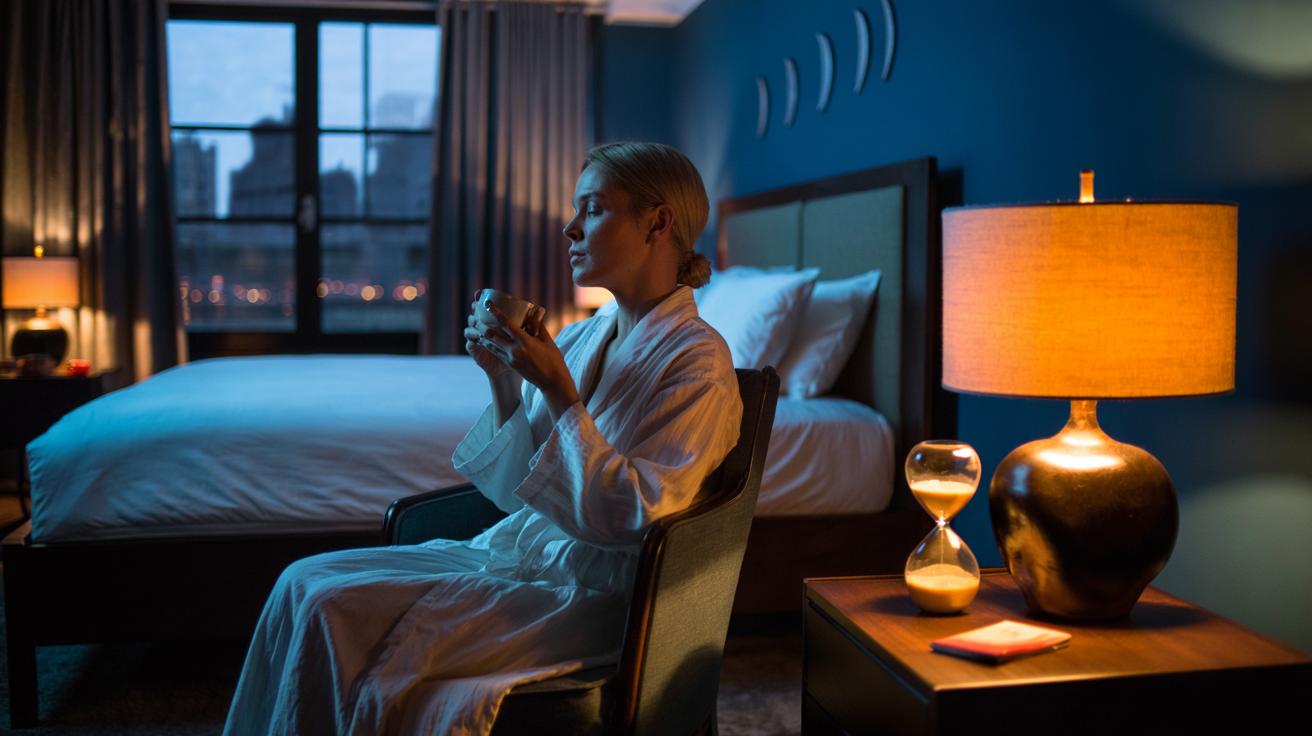
Start with environment. Blackout blinds, cooler bedroom, and warm feet help you descend quickly. Dim screens two hours pre-bed, or use warm, very low lux. Set a regular lights-out for the first block, wake gently for 60–90 minutes, then return to bed for the second. Keep the interval quiet: stretching, journalling, meditation, intimacy, or soft reading. Avoid bright light, email, and heavy snacks in the gap. If you’re not drowsy after 30 minutes back in bed, get up and repeat a calming cue; don’t fight the pillow.
| Pattern | Example Timing | Best For | Caveats |
|---|---|---|---|
| Monophasic | 23:00–07:00 | Fixed office hours, early commutes | Hard if mid-night awakenings are frequent |
| Segmented (Biphasic) | 21:30–01:30 + 03:00–06:00 | Parents, creatives, shift-affected | Needs dark/quiet at both ends |
| Siesta Model | 00:00–06:00 + 13:30–14:15 | Remote workers, Mediterranean schedules | Naps must stay short to avoid grogginess |
Trial it for two weeks, not two nights. Track sleepiness, mood, errors, and training performance. Protect your total: aim for 7–8 hours combined. If daytime sleepiness spikes, revert. People with sleep apnoea, bipolar disorder, or pregnancy should consult a clinician first. Children and teens require consolidated sleep for growth; school timetables complicate splits. The goal is not trend-chasing. It is to match your biology to your diary, and to use the midnight interval as a restorative pause, not a second shift.
Who Benefits, Who Should Be Careful
Segmented sleep can reward those with high evening creativity, variable workloads, or caring responsibilities. The midnight interval often becomes a space for mind-wandering, problem incubation, or intimacy. Many report fewer racing thoughts at bedtime because pressure to “sleep perfectly” recedes. Performance data from athletes experimenting with two nocturnal blocks plus a strategic nap show equal or improved reaction times when total sleep is preserved. The key determinant is regularity, not rigidity.
Caution is essential for groups with fragile circadian health. People prone to seasonal depression may worsen mood if the interval is brightly lit. Those with insomnia can spiral if the wake period turns into clock-checking; they need scripts and very low stimulation. Early-shift workers may find that splitting makes the second block too short, harming deep sleep. Keep alcohol out of the interval; it fragments the second block. If snoring, choking, or morning headaches are present, get screened for apnoea — splits won’t solve airway problems.
Think of segmented sleep as a tool. Not a doctrine. It expands options at a time when rigid 9–5 schedules are fading and chronic sleep loss is endemic. Used judiciously, it can restore agency, reclaim nighttime calm, and protect the architecture of restorative sleep.
We don’t need to demolish the eight-hour ideal; we need to demystify it. The research case for segmented sleep in 2024 is not that everyone must split their nights, but that more of us can. Carve dark, guard regularity, curate your midnight interval, and measure outcomes that matter — mood, focus, error rates, joy. Your best sleep might come in two acts. If your life allowed it, how would you redesign the night: as a single slab, or as a pair of quieter chapters with purpose in between?
Did you like it?4.6/5 (20)