In a nutshell
- 🧅 Onion juice’s sulphur compounds act as a behavioural repellent, confusing aphids, whitefly, mites, and thrips to halt garden invasions without harsh pesticides.
- ⚗️ Quick method: blend onions with water, strain, add a little soft soap; use 1:10 for tender foliage or 1:5 for tougher leaves/heavy pressure, and always patch-test first.
- 🌦️ Daily, light spritzing in cool hours targets leaf undersides, avoids blooms, and is reapplied after rain—fresh batches keep potency high.
- 🦋 Designed for IPM: protects beneficials like ladybirds and hoverflies; pair with pruning, airflow, sticky traps, mesh, and predator releases such as Encarsia formosa.
- ⚠️ Watch for leaf scorch and strong odour, avoid waterways, and note limits—onion juice deters sap-suckers but not slugs or caterpillars; integrate barriers and handpicking there.
Gardeners across the UK are quietly turning to a pungent ally: onion juice. It’s quick to make, cheap, and surprisingly effective at shooing away soft-bodied invaders that mob tender shoots and greenhouse crops. The secret lies in the bulb’s volatile sulphur compounds, which scramble insect senses and make leaves taste uninviting. Used as a light daily spritz, it can break a fast-moving infestation before it becomes a headline event in your beds. This is a deterrent, not a hard pesticide, so it sits comfortably inside a careful, wildlife-friendly routine. Here’s how a simple, sulphur-forward treatment can halt countless garden incursions without drenching your plot in synthetics.
Why Sulphur-Rich Onion Juice Repels Pests
The onion plant is a natural chemical factory. When its tissues are crushed and blended, enzymes unleash a wave of organosulphur volatiles that offend the finely tuned antennae and mouthparts of many sap-sucking insects. Aphids, whiteflies, and spider mites navigate by smell and taste. Onion’s aroma confuses those cues, so pests struggle to settle, feed, or colonise fresh growth. That disruption is often enough to halt exponential population spikes, buying you time to prune, wash, or introduce biological allies.
Crucially, onion juice is best considered a gentle behavioural repellent rather than a killer. It nudges pests away from your plants and towards less challenging meals. That makes it an ideal fit for integrated pest management (IPM) where you avoid collateral damage to pollinators and predators. Think of it as the olfactory equivalent of shutting the gate before the horse bolts. Used promptly, in short bursts, it reduces feeding pressure, lowers virus transmission risks from sap-suckers, and limits the need for stronger interventions. Speed matters: a fresh batch, a fine mist, and consistent coverage turn this humble kitchen staple into a daily shield.
How to Make and Use the Quick Treatment
Start with two medium onions, roughly chopped. Blend with 1 litre of water, leave to steep 30 minutes, then strain very well through muslin or a coffee filter. Add a few drops of soft soap as a wetting agent if leaves are waxy. This is your concentrate. For tender foliage, dilute 1:10 with water; for tougher leaves or heavy pressure, 1:5. Decant into a clean trigger sprayer and label. Always test on a single leaf and wait 24 hours before full use.
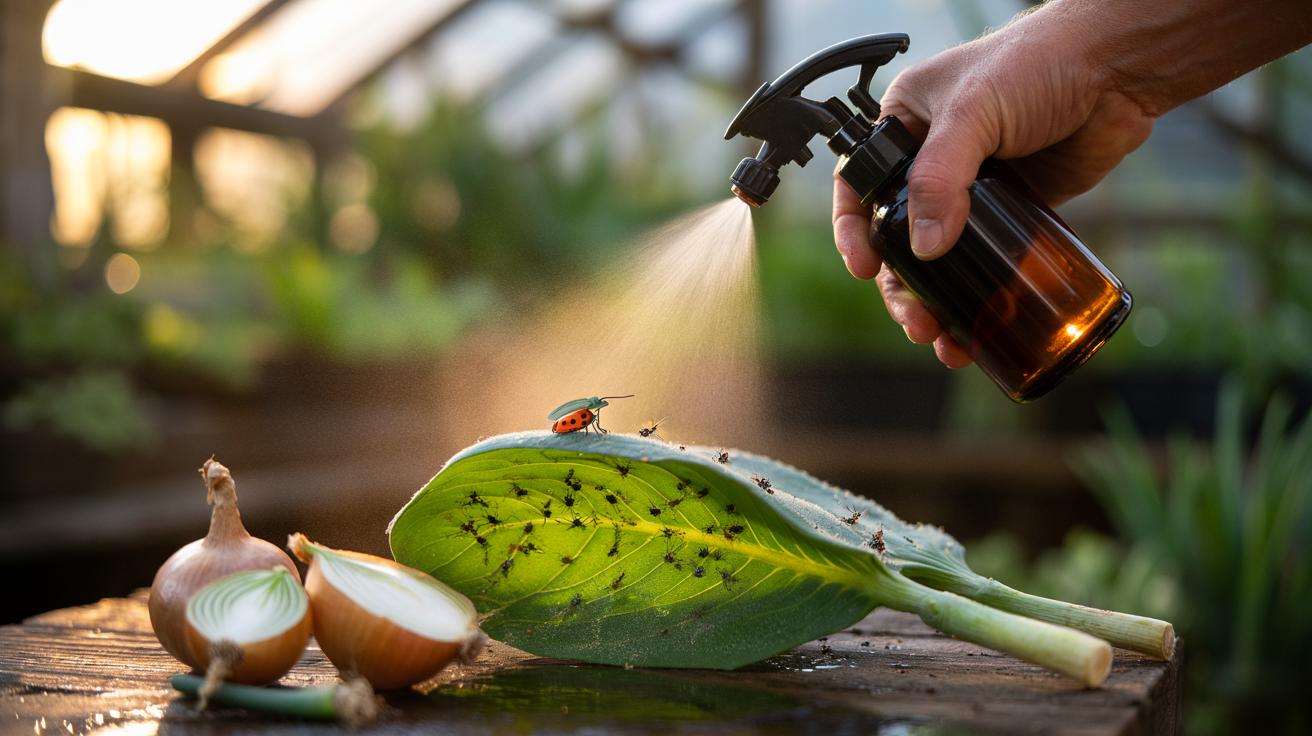
Apply in the cool of morning or late afternoon. Aim for light, even coverage, especially leaf undersides where pests hide. Avoid open blooms to protect pollinators. Repeat daily for two to three days during outbreaks, then reduce to every two to three days as pressure falls. Reapply after rain or overhead watering. Store unused concentrate in the fridge and discard after 48 hours; freshness equals potency. Wear gloves to avoid lingering odours and keep brew away from eyes and pets. Rinse salad leaves before harvest. The following guide clarifies routine choices:
| Pest Target | Dilution (Juice:Water) | Frequency | Notes |
|---|---|---|---|
| Aphids | 1:10 | Daily for 3 days | Follow with a firm water jet to dislodge. |
| Whitefly | 1:5 | Daily for 2–3 days | Focus on undersides; combine with yellow traps. |
| Spider mites | 1:5 | Every other day | Raise humidity to slow mite cycles. |
| Thrips | 1:5 | Every other day | Quarantine affected seedlings promptly. |
Daily Routine, Risks, and Smart Integration
Success hinges on rhythm. A brief, consistent spritz prevents reinvasion by breaking the pest habit of returning to the same host. Keep a small hand sprayer on the potting bench, set reminders, and tackle hotspots first: the soft tips of roses, back of pepper leaves, sheltered greenhouse corners. Light, frequent, targeted application beats occasional drenching every time. You’ll also conserve beneficials—ladybirds, hoverflies, lacewings—that help mop up any stragglers.
There are caveats. Onion juice can mark or scorch very delicate leaves in bright sun; test, dilute, and shade accordingly. The odour is… assertive—warn neighbours near shared fences. Don’t rely on it for slugs or caterpillars; barriers and handpicking work better there. If pest numbers remain high after a week, reassess: prune infested shoots, improve airflow, or rotate to other gentle tactics such as sticky traps, fine mesh, reflective mulches, or predator releases (e.g., Encarsia formosa for greenhouse whitefly). Strong weather or heavy rain resets the clock—reapply promptly. Keep brews off waterways, clean equipment after use, and record what works so each season gets easier to manage.
Used thoughtfully, onion juice is a nimble line of defence: low-cost, swift to mix, and aligned with kinder gardening. It won’t solve every problem, yet its sulphur-led nudge reliably reduces feeding and settling, giving your borders and veg beds breathing space. Pair it with tidy hygiene, biodiversity, and timely observation, and you’ll see fewer outbreaks and faster recoveries. The real power lies in speed and consistency—fresh brew, fine mist, focused targets. Where might a daily, two-minute spritz fit into your routine, and which plants would you shield first to stop pests before they take hold?
Did you like it?4.5/5 (28)