In a nutshell
- 🌱 Sliced onions release organosulphur compounds that shift from brief antimicrobial thiosulfinates to plant-available sulphates, feeding microbes and nudging nutrients into circulation.
- 🧩 Fast-decaying onion tissues spark a microbial bloom that improves soil tilth, aggregation, and water infiltration—especially when mixed with carbon-rich browns like dried leaves.
- 🛠️ Apply smart: use thin pieces, bury 5–8 cm, space rather than stack, tuck under mulch, and consider trench composting; in containers, go little and often.
- 🐌 Early aroma helps moderate pest pressure, while sensible doses support beneficial mycorrhizae; avoid big clumps that create sour, low-oxygen pockets.
- 🐾 Bury to deter pets (onions are toxic if eaten) and enjoy brighter blooms and scent—a low-cost soil amendment that reduces reliance on synthetic fertilisers.
It sounds almost too simple: tuck a few leftover onion slices into a tired border and watch the soil quietly awaken. Yet gardeners across Britain are rediscovering how the onion’s cocktail of natural chemicals drives soil processes that colour up dull flower beds. As those slices soften and vanish, they feed microbes, release plant-friendly sulphur and potassium, and nudge pests away with a brief pulse of pungent aroma. Small, regular doses prove far more effective than a single heap. With a little method—right depth, balanced materials, sensible timing—the humble onion becomes a nimble, zero-cost soil amendment, slipping into the rhythm of weeding, deadheading, and top-up mulching to keep borders fresher for longer.
What Happens When Onion Slices Meet Soil
Slice an onion and you unlock a suite of organosulphur compounds. In the soil, these react and degrade, moving from sharp-smelling thiosulfinates to gentle sulphates that plants can actually use. That arc—from bioactive to bioavailable—is the core of the onion slice revival. In the very first days, those compounds can suppress some fungi and soft-bodied pests. Then, as microbes settle in and begin the feast, the onion becomes a swift, juicy source of carbon and nitrogen, fuelling a local microbial bloom that, in turn, unlocks nutrients from existing organic matter. Think of each slice as a short, controlled spark for the soil food web.
Because onion flesh is moist and low in lignin, it breaks down rapidly compared with twiggy mulches. That speed brings two benefits to flower beds. First, it limits persistent litter in view; the slices simply melt into the soil structure. Second, it reduces the window for anaerobic smells, provided you avoid clumping. Mixed lightly with shredded leaves, pine needles, or spent straw, onion offcuts help form fine aggregates, improving tilth and water infiltration. In compacted borders, that improved structure shows up as easier hoeing and fewer puddles after rain.
| Compound/Property | Where It Comes From | Likely Soil Effect | Practical Takeaway |
|---|---|---|---|
| Thiosulfinates | Formed on slicing | Short-lived antimicrobial pulse | Helps check minor soil-borne issues |
| Sulphates | End of decomposition | Plant-available sulphur source | Boosts colour and scent in some ornamentals |
| Fast-decaying tissues | High moisture, low lignin | Quick microbial energy | Mix with dry browns to prevent slime |
Smart Ways to Use Onion Offcuts in Beds
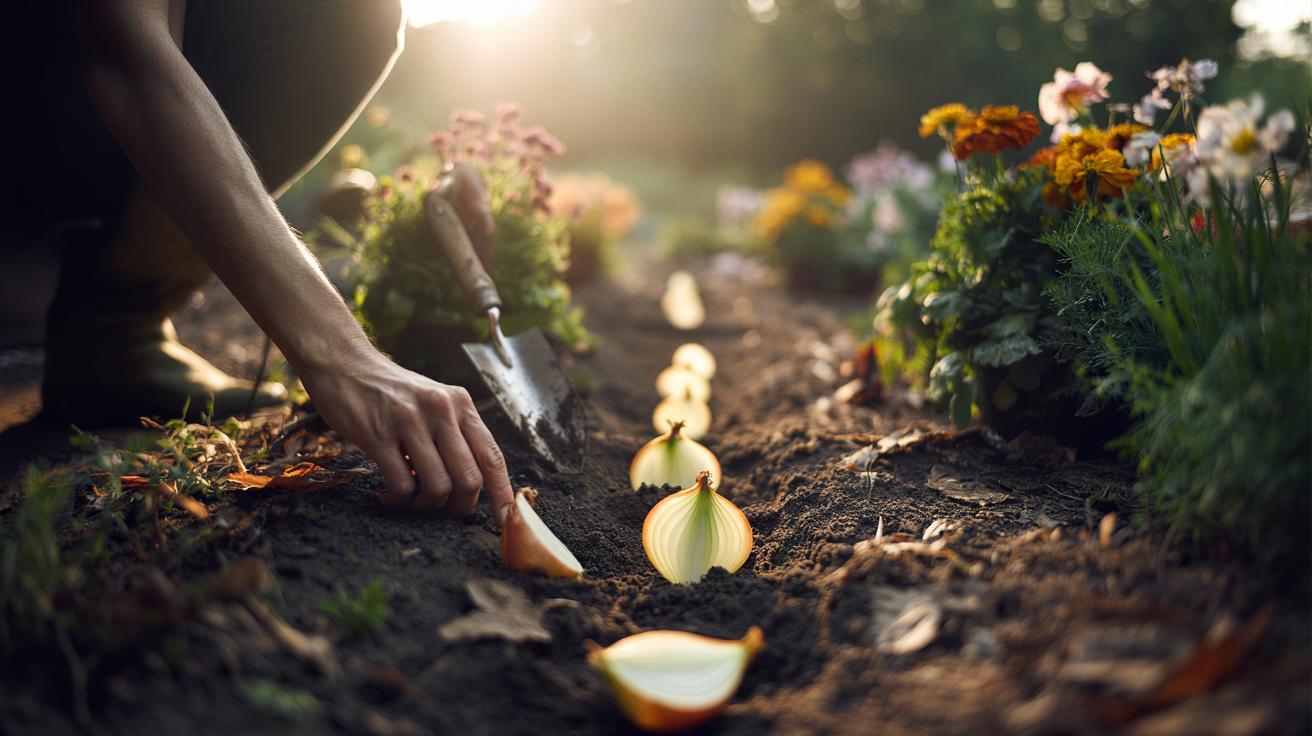
Method matters. Aim for thin pieces—rings or half-moons no thicker than a pound coin. Bury them 5–8 cm deep, spaced like biscuits on a tray rather than stacked; this prevents anaemia-like patches where oxygen is excluded. Pair each handful with a small sprinkle of carbon-rich “browns” (dried leaves, straw, torn cardboard). This simple pairing keeps the microbe party lively but tidy. For show borders, slip slices under existing mulch, where they’ll decompose unseen and be buffered from inquisitive noses. In pots or troughs, blend very sparingly: a teaspoon-equivalent per litre of compost is plenty.
Compost heap or direct bury? If you’ve got a hot heap, onion scraps vanish in days; compost first, then top-dress the bed for a slow, even release. In cooler heaps, you may prefer trench composting: dig a narrow slit along the back of the bed, drop in the slices with browns, backfill, and move along weekly. Pets to consider? Onions are toxic to cats and dogs if eaten, so bury properly and tamp the soil to deter digging. For slugs and snails, the initial onion aroma can be off-putting; after a week, the effect fades, by which time the soil life has taken over the heavy lifting.
Soil Life, Pest Pressure, and the Onion Aroma Effect
Onion chemistry acts like a dimmer switch rather than a sledgehammer. Early on, volatile compounds help moderate pest pressure around delicate seedlings and primulas that sulk under constant nibbling. Don’t expect miracles; expect margins. As decomposition advances, the story shifts to microbes. Populations of bacteria and fungi swell, releasing enzymes that pry nutrients from existing organic matter. This second wave is where most of the long-term benefit lies. In healthy loam, that wave is quick and balanced. In heavy clay, support it by working in a little sharp grit and keeping the top inch mulched so oxygen can flow.
What about friendly fungi like mycorrhizae? Used sensibly, onion offcuts don’t smother them. Overdo it, however—say, a bucket under one rose—and you risk a sour, low-oxygen pocket. Spread small amounts over large areas. In cooler months, progress slows, but that’s no bad thing; the chemistry lingers just long enough to bridge hungry gaps before spring growth. Come late spring, many ornamentals respond to the trickle of sulphur with brighter hues and improved scent, especially sweet peas, marigolds, and wallflowers. A final note for wildlife-minded gardeners: brief onion odours won’t evict hedgehogs or toads; they pass as swiftly as the slices disappear.
For gardeners chasing quiet gains rather than gimmicks, onion slices earn their keep. They sharpen the soil’s appetite, cushion the hungry season, and lend the border a discreet nudge towards vigour without resorting to synthetic fertilisers. The trick is restraint and rhythm: little and often, mixed and buried. Pair them with leaves, tuck them under mulch, and let the microbes do the choreography. As your beds wake up—tilth softening, blooms richer, watering easier—you may look at the chopping board differently. Will your next onion offcuts head straight to the bin, or might they take a detour to revive the dullest corner of your flower bed?
Did you like it?4.4/5 (28)