In a nutshell
- ⚡ Rapid action saves tech: Power down immediately to halt short circuits and electrolytic corrosion, then remove case/SIM and keep ports facing down.
- 🌾 Rice is a stopgap: Dry rice can lower humidity fast in emergencies, but protect ports from dust and treat it as a temporary stabiliser, not a cure.
- 🟦 Silica gel works better: Purpose-made desiccants (silica gel, molecular sieves) absorb moisture faster and deeper in a sealed, airtight container.
- 🛠️ Step-by-step drying plan: No heat guns; use a cool fan, build a dry chamber, wait 24–48 hours, and only charge after visible moisture and alerts are gone.
- 🔬 Science of drying: Create a low-humidity microclimate to pull vapour from crevices; rice’s starches help, but high-surface-area desiccants outperform.
A pint of lager spills, a kayak tips, a storm cloud bursts. Your phone is suddenly more submarine than smartphone. In those jittery seconds, instinct matters, because rapid action often decides whether your device lives to ping another day. Many reach for the old household fix: a bowl of rice. It’s not magic, but it can help when used smartly and swiftly. The principle is simple—reduce moisture around the device fast, slow corrosion, and protect delicate circuits. Speed is your greatest ally. With the right steps and realistic expectations, the humble grain becomes a handy ally, buying time until deeper drying or professional inspection is possible.
Why Speed Matters After a Splash
Water inside a phone isn’t only wetness. It’s chemistry on the move. The mix of electricity, dissolved minerals, and metals creates tiny batteries across your logic board, accelerating electrolytic corrosion. That damage can start within minutes and progress for days. Every minute counts. Turning the device off severs that destructive circuit, like pulling the plug on a storm-battered house. Leave it on, and you risk short circuits and latent failures that appear weeks later, when you least expect them.
Moisture travels quickly by capillary action, slipping under chips and into connectors. Even phones with IP ratings aren’t invincible; those seals degrade with age, knocks, and heat. Dry the outside, sure, but think about the inside climate too. The goal is simple: create a low-humidity microclimate around the phone so water migrates out of its crevices. Rice, silica gel, or any safe desiccant helps by maintaining a gradient that pulls vapour away from tiny spaces.
Avoid heat guns, radiators, or direct sunlight. They warp plastics, fog lenses, and force moisture deeper. Do not charge a wet phone. Current plus water equals trouble. Power down, remove your case and SIM tray, and let gravity help—ports facing down, gentle shakes only. Then build that dry environment quickly. The first hour is critical. The next 24 can be decisive.
Rice Versus Real Desiccants: What Works
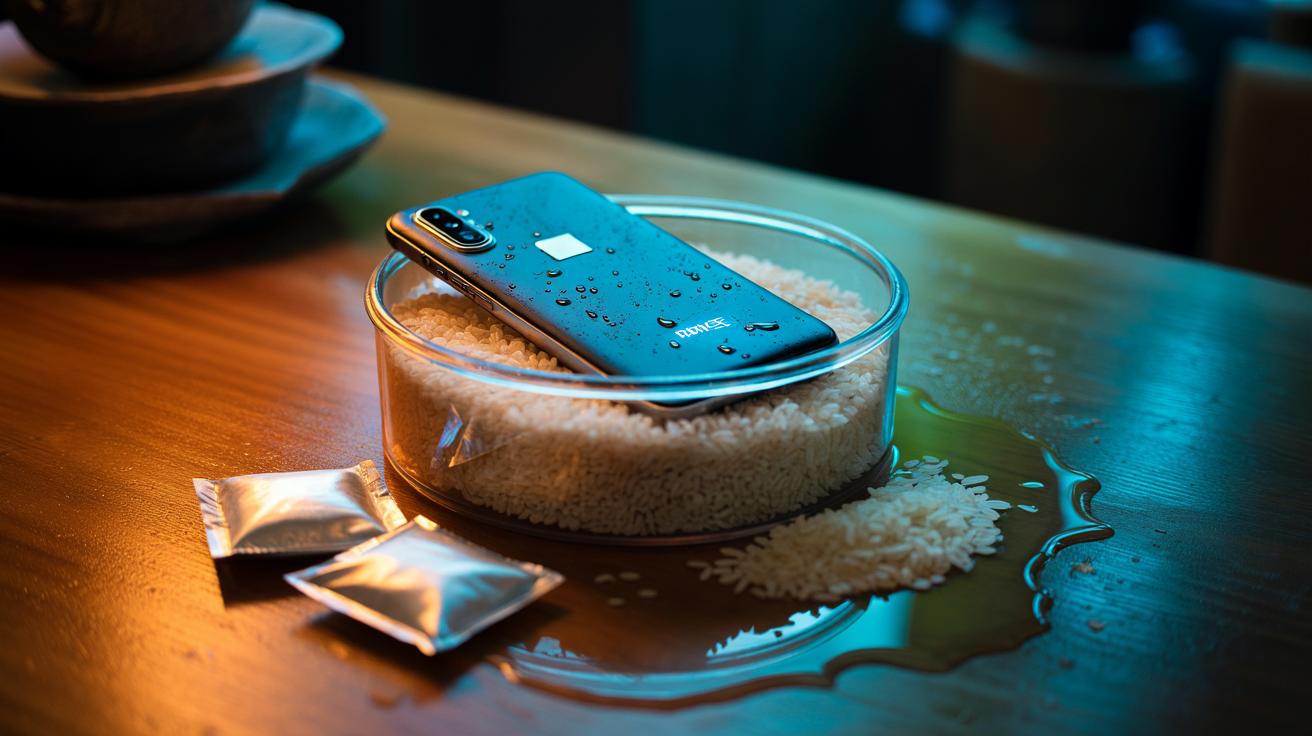
The case for rice lies in availability. It’s in the cupboard, it’s cheap, and it’s moderately hygroscopic. Place a powered-off phone in a sealed tub of dry rice and the grains lower ambient humidity around it. That buys time, slowing corrosion and nudging moisture out of recesses. Yet rice isn’t the top performer. Purpose-made desiccants—silica gel sachets, molecular sieves, even fresh crystal cat litter (silica-based)—pull moisture faster and to a lower equilibrium. They’re designed for the job.
| Absorbent | Relative Speed | Pros | Cons | Best Use |
|---|---|---|---|---|
| Dry Rice | Medium–Slow | Accessible, low cost | Dust, slower, limited capacity | Emergency stopgap at home |
| Silica Gel | Fast | High capacity, reusable | Needs airtight container | Preferred drying chamber |
| Molecular Sieve | Very Fast | Excellent at low humidity | Harder to source | Pro or prep kits |
| Calcium Chloride | Very Fast | Powerful moisture pull | Liquefies into brine—mess risk | Never in direct contact |
There’s a caveat. Manufacturers, including Apple, caution against rice particles entering ports and speakers. Keep dust out. Use a mesh produce bag, coffee filter, or fine cloth sleeve around the handset before placing it in rice. If you have silica gel sachets from shoe boxes or camera cases, go with those in an airtight box; they generally outperform rice by a distance. Still, when it’s midnight and the shops are shut, rice can stabilise the situation until you assemble something better.
Step-by-Step Emergency Drying Plan
1) Power down immediately. Hold the button until it shuts off. Do not press keys repeatedly—that pushes liquid deeper. If the screen flickers, let it. Do not force a restart. 2) Remove case, SIM, straps, and accessories. These trap water. Pat the exterior with a lint-free cloth. Aim the ports downward and give a gentle shake to encourage drips out, not in.
3) Avoid heat and wind tunnels. A cool fan at arm’s length is fine. Hairdryers aren’t. 4) Build a dry chamber fast. Airtight box or zip bag. Best fill: silica gel sachets or fresh silica cat litter in a separate pouch. In a pinch, use dry rice, but keep the phone inside a breathable sleeve to prevent grit. Seal it tight. The desiccant can’t help if your box leaks air.
5) Wait with intent. Twenty-four hours for splashes; up to 48 for dunks. Longer for sugary or salty spills, which are brutal on circuits. If liquid was salty, sticky, or chlorinated, seek a professional clean; technicians use deionised water and isopropyl alcohol to remove residues safely. 6) Inspect before power. Look for lens fog, port warnings, or muffled speakers. Only then attempt a charge. If you see the “liquid detected” alert, stop and return it to the chamber. Patience now prevents heartbreak later.
The Science Inside a Grain of Rice
Rice is a tiny vault of starches—amylose and amylopectin—wrapped in a husk-like surface that can adsorb water molecules. Each grain offers a modest surface area, and multiplied by a kilogram, that becomes a low-tech humidity sponge. It doesn’t suck water out of chips like a vacuum. Instead it creates a drier microclimate that nudges vapour away from crevices, a slow but steady migration driven by gradients. Warmer air carries more moisture, but high heat risks damage, so the sweet spot is room temperature with time.
Silica gel works better because its internal pores are vast, producing a formidable surface area—hundreds of square metres per gram in premium formulations. That’s why camera bags ship with sachets, not basmati. Still, rice’s virtue is availability. It’s clean, inert, and safe when kept out of ports. To boost its effect, maximise contact with dry air: larger containers, more grains or sachets, and a proper seal. Rice is a stopgap, not a cure, yet in the first decisive hour it can hold the line while you source specialised desiccants or professional help.
Phones don’t drown; they corrode. Your job is to slow that chemistry, create a dry refuge, and give the internals a fighting chance. Rice, used wisely, can be the first responder while you build a better plan. Silica gel is the specialist that follows. Act fast, act gently, and keep power off until you’re sure. If you found your handset in hot water last weekend, what would your own go-bag for digital disasters include—and how quickly could you deploy it when the next splash comes?
Did you like it?4.7/5 (23)