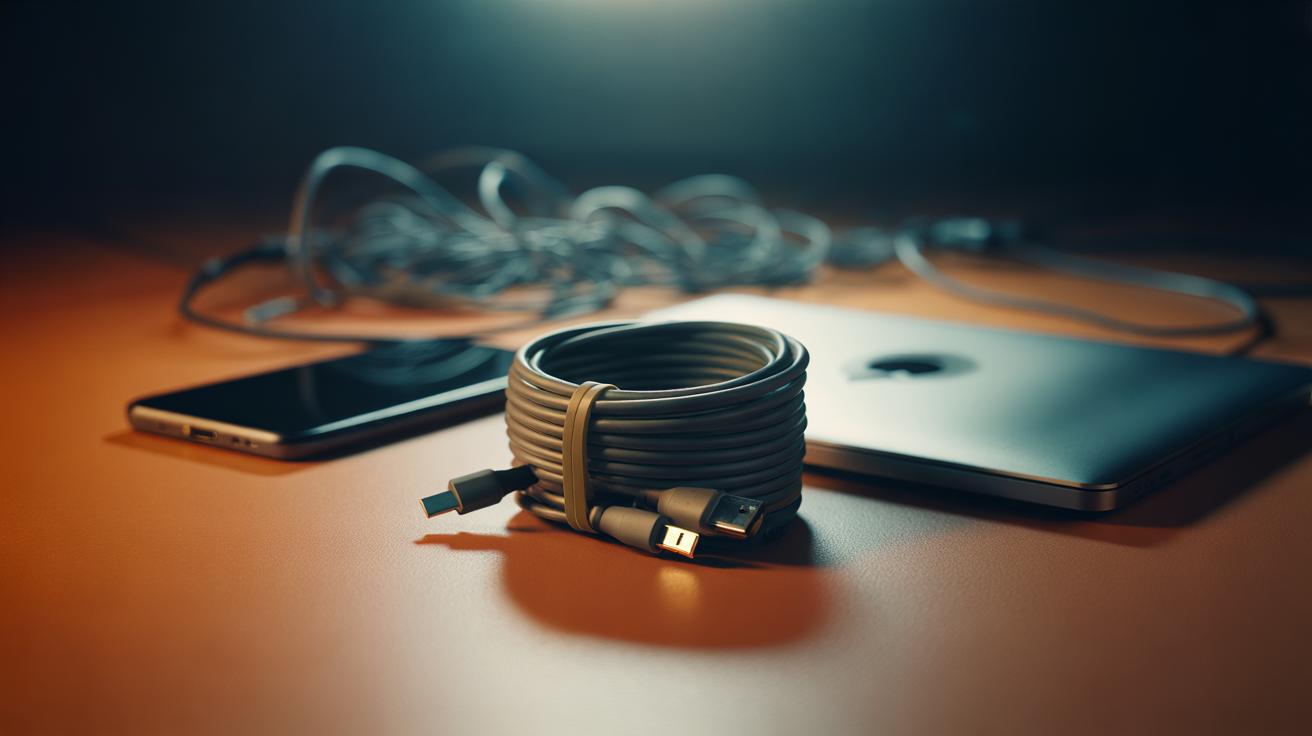
In a nutshell
- 🔧 A simple rubber band bind adds gentle, even pressure that keeps cables tangle-free without crushing jackets or creating kinks.
- 🧠 Step-by-step method: coil using over–under or figure-eight, place a fresh medium band in a figure-eight around the bundle, and add a quick-release tab for fast deployment.
- ⚠️ When to use it—and when not to: great for phone leads, short HDMI, and lav mics; avoid hot environments, very heavy cords, and banding near the connector boot; consider latex-free bands if sensitive.
- 📊 Practical guide: match band width and placement to cable type; use wider ties for thick power cords and keep bands off stress points; replace any band that’s cracked or tacky.
- 🕒 Payoffs: faster setups, fewer knots, and longer cable life thanks to elastic compliance that prevents micro-bends and preserves strain relief.
The most effective tech fix I’ve used this year costs pennies and hides in a desk drawer. A simple rubber band, looped and cinched the right way, turns spaghetti-wild leads into calm, tangle-free bundles. It’s quick. It’s reversible. It respects cables instead of throttling them. In newsrooms and on the road, I’ve watched this humble tie stop chargers from knotting and earbuds from becoming a pocket puzzle. There’s engineering behind it, not just thrift. Small, evenly distributed pressure prevents loops from tightening into damaging kinks. Here’s how a band beats chaos, when to use it, when not to, and a simple reference to keep your kit in working order.
How a Simple Band Beats Cable Chaos
Chaos begins with loops slipping over each other. Once movement starts, coils cinch, friction spikes, and you get a knot. The rubber band bind interrupts that cascade. By lightly constraining the bundle at a single point, it increases static friction just enough to stop loops from migrating, while avoiding the crushing force that deforms copper or fibre. It’s restraint, not strangulation.
Done correctly, the band acts as a compliant anchor. The elasticity gives each coil room to expand and contract as the cable relaxes in your bag, reducing micro-bends and hotspots that lead to breaks near connectors. Compare it to a hard plastic tie: rigid material focuses stress along a sharp edge; rubber spreads it across a soft contact patch. That softness matters on delicate USB-C or headphone leads, which hate tight radii.
The method also supports speed. One pull, and you’re deployed. One loop back, and you’re packed. For working kit that’s constantly in motion—chargers, lav mics, HDMI jumpers—the ability to bind and release with repeatable tension is priceless. The result isn’t showroom pretty, perhaps, but it is reliably tangle-free, and it extends cable life in the bargain.
Step-by-Step: The Rubber Band Bind
First, prepare the coil. Use an over–under wrap if the cable is long; otherwise a gentle figure-eight around your palm works. Keep loops wider than three fingers. Never force a tight bend near the connector boot. That’s where most failures start. Aim for a natural, springy coil that sits flat.
Second, choose the band. A medium-width, fresh elastomer band grips without biting. Place the cable coil on a table. Hook the band around two fingers, stretch it lightly, and slip it over one edge of the coil. Rotate once to form a figure-eight in the band, then fold the second loop over the opposite edge of the coil. You now have two soft contact points, holding the bundle with balanced tension. Add a half twist for thicker leads if needed.
Third, set a pull tab. Tuck a small tail of the band under itself on the front side. That tab becomes your quick-release. Pull, and the band peels away without snagging adjacent cables. It’s a tiny habit that speeds setups and saves swearing. For travel, place the bound coil in a pouch so the band isn’t scuffed by keys or zips, preserving elasticity for months.
When to Use It—And When Not To
The rubber band bind shines with everyday data and charging leads: phone cables, short HDMI, lav mic wires, USB-A to USB-C jumpers. It’s ideal for bundles that move often because the band’s compliance absorbs jostle. If a cable enters and exits your bag daily, a rubber band is your ally. It keeps loops orderly without imprinting hard edges into the jacket.
There are exceptions. Avoid high-heat spots—behind radiators, in sunlit car dashboards—or bands will perish and stick. For thick AC power cords or long, heavy XLR runs, step up to a wider tie or hook-and-loop strap; a thin band may dig in under weight. People with latex sensitivity should choose synthetic bands. Any visible cracking or whitening on a band means retire it immediately.
A word on strain relief: never place the band across the connector boot. Leave at least a hand’s width of unbound cable so the boot can flex without leverage. And don’t store coils under tension for months on end. Loosen or remove bands during long-term storage. Think of the band as a gentle valet for daily life, not a straightjacket for eternity.
Quick Reference: Sizes, Placement, and Tips
A little specificity reduces guesswork. Use this quick guide to match band tension and placement to common leads. The right band in the right place prevents kinks and saves time. Remember: the goal is control with kindness—enough grip to stop slippage, not so much that you stamp a crease into the jacket.
| Cable Type | Coil Style | Band Width | Placement | Note |
|---|---|---|---|---|
| Earbuds / Thin USB | Figure-eight | Thin–medium | Across middle, two points | Quick-release tab essential |
| Phone Chargers (1–2 m) | Over–under | Medium | One-third from end | Keep band off connector boot |
| HDMI / XLR (Short) | Over–under | Medium–wide | Opposing sides | Add a twist for extra hold |
| Power Cords (Thick) | Over–under | Wide or hook-and-loop | Center of coil | Avoid narrow bands to prevent pinch |
Two maintenance tips: store bands away from heat and UV, and replace any that feel tacky. If you need labels, slip a small paper flag under the band—instant identification without adhesive gunk. For shared kits, colour-code bands by cable type so colleagues rebind like for like. Small rituals keep teams efficient, and cables happier for longer.
In a world that sells us smart solutions for every petty problem, the rubber band wins by being humble and effective. It tames mess, protects delicate conductors, and buys back minutes every day. Less friction, fewer kinks, faster starts—it’s the newsroom fix hiding in plain sight. Give it a week in your bag or beneath your desk and watch the tangles vanish. What other low-cost, low-tech tricks could we resurrect to make our digital lives calmer and our kits last longer?
Did you like it?4.4/5 (28)