In a nutshell
- 🧪 The science: acetic acid in white vinegar dissolves alkaline residues and limescale, evaporating cleanly for a streak-free finish when paired with a microfibre cloth.
- ⚡ The 30-second method: mist a 1:1 vinegar–water mix, wait 15–30 seconds, wipe vertically, then buff horizontally with a second cloth; use a squeegee on shower glass.
- 🧼 Ratios and add-ons: stronger mix for hard water, a single drop of detergent for grease, or 10% isopropyl alcohol for faster flash-off—never mix vinegar with bleach.
- 🚫 Surface safety: avoid natural stone, marble, certain anti-glare films and tints; spray onto the cloth to protect frames, seals, and finishes; patch-test if unsure.
- 🧻 Troubleshooting: wash microfibres without softener, do a one-off 2:1 deep clean to remove old films, clean out of direct sun, and rely on the two-cloth rule to banish streaks.
Britain’s windows take a daily battering from coastal salts, urban soot, and the notorious drizzle that dries to a dull halo. Yet there’s a humble kitchen hero that restores brilliance faster than you can fetch a squeegee. White vinegar, a modest 5% solution of acetic acid, can cut through muck and limescale in half a minute, leaving glass crisp, clear, and camera-ready. In tests on mirrors and patio doors, the effect is startling. No mysterious blue dye. No residue. Just chemistry doing quiet work. In 30 seconds, the right mix and method transform smeary panes into a streak-free showcase. Let’s unpack the why, then nail the how.
Why Vinegar Makes Glass Sparkle
At the heart of vinegar’s power is acetic acid, a mild acid that excels at dissolving alkaline residues. Hard water leaves calcium and magnesium carbonates; soap scum is often alkaline too. Acetic acid reacts with those deposits, forming water-soluble salts that wipe away without a fight. That’s the science. The result is practical: grime unlocks from the glass surface fast, often in under 30 seconds, especially if you give it a brief dwell before wiping. Because vinegar is clear and low in additives, it evaporates cleanly, minimising tell-tale streaks that thicker commercial formulas sometimes leave behind.
Vinegar also pairs beautifully with a microfibre cloth. The cloth’s split fibres lift loosened particles rather than smearing them across the pane. Warm solutions shorten the reaction time, and a light mist ensures uniform coverage without over-wetting. Importantly, the 5% acidity typical of kitchen vinegar is gentle enough for standard glass, yet punchy on limescale. You’re left with a surface that feels squeaky under the fingertip and looks brilliantly neutral, not artificially shiny. That neutrality is key: nothing glossy to attract dust, just clean glass that stays clearer for longer.
The 30-Second Method: Step by Step
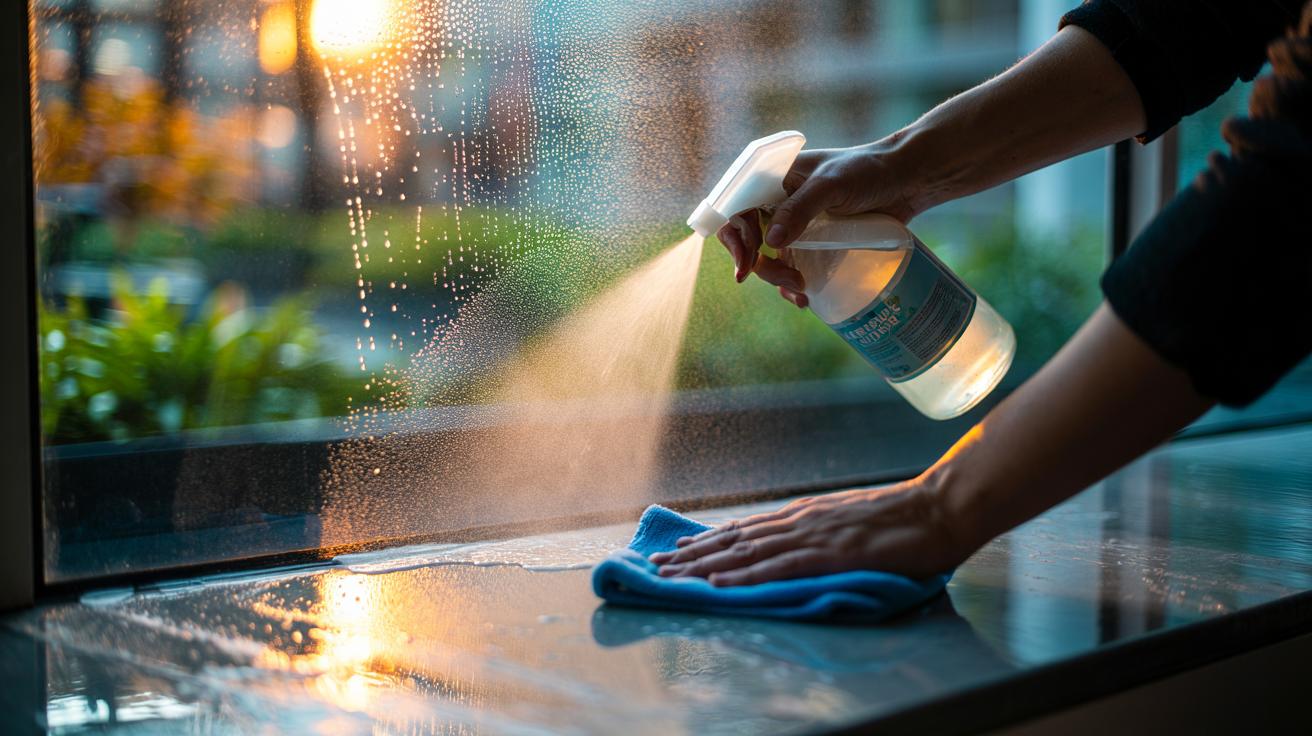
Start with the tools: a spray bottle, white distilled vinegar, warm water, and two clean microfibre cloths. Pre-dust frames and sills so stray grit doesn’t drag across the pane. Mix a 1:1 solution of vinegar and water, then mist lightly from top to bottom. Wait 15 seconds. That pause lets the acid break the bond between the glass and mineral film. Now wipe vertically with the first cloth, flipping to a clean side as it loads. Follow with the second cloth to buff horizontally. Cross-hatched passes are quick, decisive, and streak-resistant.
For mirrors, use less product and an even lighter touch. For shower screens, extend the dwell to 30 seconds, then finish with a squeegee to chase off water. Work in the shade; hot glass accelerates evaporation and can etch in streaks you then have to chase. A single drop of washing-up liquid in the bottle adds a hint of surfactancy for greasy fingerprints, but keep it minimal to avoid film. Done right, the routine is swift: spray, pause, wipe, buff—thirty seconds for a pane that dazzles.
Ratios, Add-ons, and When to Avoid It
If your tap water is hard or your patio doors face the street, tailoring the mix pays off. Use stronger vinegar ratios for chalky rings, weaker for routine shine. You can speed evaporation with a splash of isopropyl alcohol (around 10%), helpful on cold mornings when condensation lingers. Fragrance oils? Use sparingly; many leave residue that invites streaks. And never combine vinegar with bleach—that’s a toxic gas risk.
| Task | Dilution (Vinegar:Water) | Dwell Time | Notes |
|---|---|---|---|
| Routine windows/mirrors | 1:1 | 15–20 sec | Two-cloth buff for zero streaks |
| Shower glass, hard water | 2:1 | 30–60 sec | Finish with squeegee; ventilate well |
| Fingerprints/grease | 1:1 + 1 drop detergent/500 ml | 20–30 sec | Don’t over-soap; it can smear |
| Cold, damp days | 1:1 + 10% IPA | 15–20 sec | Faster flash-off, fewer fog marks |
Be selective about surfaces. Do not use vinegar on natural stone, marble sills, or specialty coatings such as some anti-glare films and certain window tints. Avoid contact with wood finishes and uPVC seals; spray onto the cloth rather than the frame. If in doubt, test a hidden corner. The appeal here is thrift and safety: it’s low-cost, low-fuss, and—used smartly—highly effective.
Troubleshooting Streaks and Smears
Still getting lines? Look first at your cloths. Fabric softener residue clings to glass, so wash microfibres without softener and air dry. Clouding often traces back to old silicone-based polish or bargain sprays that left a film. In that case, a one-off deep clean using 2:1 vinegar and a slow wipe will reset the surface. Work methodically: top to bottom, then a dry buff. If you see rainbowing, you used too much solution; switch to a fine mist and shorten the dwell.
Timing matters. Midday sun bakes in marks, while cold panes can fog. Choose mild conditions, or clean indoors with good ventilation. Persistent spots on shower glass are mineral; hold a warm vinegar-soaked pad on the stain for a minute, then wipe and rinse. For car windows, keep vinegar off tint films and hydrophobic coatings. The simplest cure for streaks is the two-cloth rule: one to clean, one to polish dry, changed often. Replace tired cloths regularly; dulled fibres can’t bite into grime and just move it around.
There’s something satisfying about a solution that’s both old-fashioned and quietly smart. Vinegar speaks to the UK’s frugal streak while delivering professional-grade clarity in a minute or less. It pares back the ritual to essentials—chemistry, cloth, and a touch of patience—without the perfume and price tag of specialist cleaners. Used with care, it turns dreary panes into daylight amplifiers. As energy costs rise and households rethink under-the-sink clutter, could this simple bottle become your go-to for weekly sparkle, and what tweak—ratio, cloth, or routine—will make it perfect for your home?
Did you like it?4.6/5 (25)