In a nutshell
- 🍋 Lemon balm infusion is a gentle nervine backed by herbalists; its rosmarinic acid may support GABA, easing stress and nervous digestion while staying caffeine-free.
- ☕ Brew simply: 2 tsp dried (or a handful fresh) per 250 ml just-off-the-boil water, cover and steep 7–10 minutes; customise with honey, lemon, ginger, or chill for iced tea—avoid milk.
- 📊 Evidence and context: Small RCTs report modest gains in calmness and sleep; European monographs endorse it; a comparison highlights chamomile, tulsi, lavender, and passionflower as complementary options.
- 🕰️ Best use: Sip in late afternoon and again 60–90 minutes before bed; pair with a calming ritual; typical intake is 2–3 cups daily, and avoid driving if drowsy.
- ⚠️ Safety first: Consult a GP if pregnant, breastfeeding, managing thyroid issues, or on sedatives; watch for rare allergies; choose fresh, organic leaf—tea helps, but is not a diagnosis.
When the day crowds in and your shoulders creep towards your ears, the British instinct is to put the kettle on. But there’s a quieter, tastier answer than another black tea. A steaming cup of lemon balm infusion—bright, citrusy, gently minty—has become the go-to recommendation from modern herbalists seeking everyday calm. It’s simple, affordable, and soothing from first sip to last. This is comfort you can brew in five minutes. No complicated regimes, no odd potions, just a fragrant leaf with centuries of use and a growing evidence base. Here’s how this humble herb helps dial down the noise, and how to make your best, most relaxing cup.
Why Lemon Balm Makes the Calmest Cup
Lemon balm (Melissa officinalis) smells like sunshine after rain. It tastes like a whisper of lemon zest over soft mint. On the nerves, it’s kinder still. Herbalists prize it as a nervine, a plant that settles the body’s stress responses without knocking you out. Lab and small clinical studies suggest its polyphenols—especially rosmarinic acid—may gently support GABA activity, the brain’s “calm-down” signal. That’s science in service of serenity. One fragrant cup can tilt a tense evening back into balance. For those whose stress starts in the stomach, lemon balm also shines: it’s carminative, easing tightness and bloating that often tag along with worry.
This herb is refreshingly unfussy. Fresh leaves from a window box or dried cut leaf from a reputable supplier both deliver results. Unlike harsher sedatives, lemon balm’s effect is subtle: a softening of edges, not a blunt instrument. Many readers tell me they notice the first shift in their jaw and shoulders. The secondary benefit? Its flavour satisfies the tea ritual without the caffeine that can wire you up. You get the warmth, the cup between hands, the slow exhale—only calmer.
How to Brew a Stress-Soothing Infusion
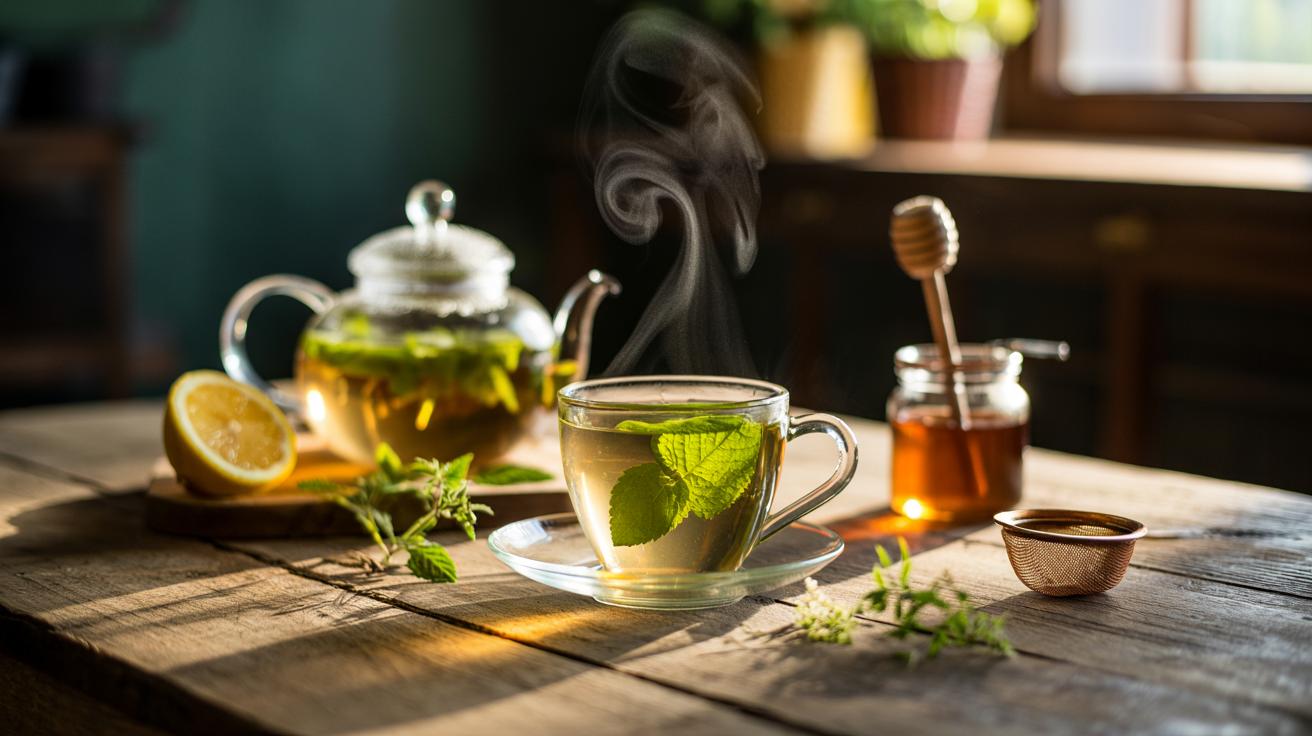
Think simple but precise. Use 2 teaspoons dried lemon balm (or a loose handful fresh) per 250 ml just-off-the-boil water. Cover the cup or teapot—the volatile oils are precious—and steep for 7–10 minutes. Keep the lid on; your calm lives in that captured steam. Strain, then sip unhurriedly. For a rounder cup, add a slice of fresh lemon, a dab of honey, or a twist of orange peel. Avoid milk, which can mute those citrus-mint notes. If you like an evening wind-down, brew a slightly stronger dose and pair it with dimmed lights.
Make it yours. Chilly afternoon? Add two thin coins of fresh ginger for gentle warmth. Bedtime blend? Pair lemon balm 50:50 with chamomile for a soft landing. Summer reset? Chill a pot in the fridge and serve over ice with cucumber ribbons. If you’re growing it, pick leaves in the late morning, when essential oils peak. Dry them on a rack away from direct sun, jar them promptly, and label. Home-grown often tastes brighter than shop-bought, and it’s cheaper, too.
What the Experts and Evidence Say
UK medical herbalists often recommend lemon balm for everyday stress, test jitters, and restless evenings. It’s not a cure-all. But in controlled trials, standardised extracts have shown modest improvements in calmness, alertness balance, and sleep quality. The traditional record is even longer: European monographs endorse lemon balm for mild tension and digestive unease. The take-home: it’s a low-risk first step when life runs hot. That matters, especially if you’re trimming caffeine per NHS advice yet still crave the comfort of a warm cup. Taste plus function is a powerful duo when behaviour change feels hard.
Curious how it stacks up beside other calming plants? Here’s a quick, brew-side comparison for your cupboard planning.
| Herb | Flavour | Primary Use | Evidence Snapshot | Notes/Cautions |
|---|---|---|---|---|
| Lemon balm | Citrus-mint, light | Everyday stress, nervous digestion | Small RCTs show reduced anxiety and better sleep markers | Generally gentle; check with GP if on sedatives |
| Chamomile | Apple-sweet, floral | Anxiety, sleep onset | Evidence supports mild anxiolytic effects | Asteraceae allergy possible |
| Tulsi (Holy Basil) | Clove-spice, green | Stress resilience, mood | Emerging human data for stress scores | Avoid in pregnancy unless advised |
| Lavender | Perfumed, slightly bitter | Tension, restlessness | Oral and aromatherapy studies support relaxation | Use sparingly; strong flavour |
| Passionflower | Green, mildly tart | Worry loops, busy mind | Promising data for anxiety symptoms | May enhance sedatives |
When to Sip and Who Should Be Careful
Timing is tactical. Try one cup in the late afternoon, when cortisol naturally tapers, and a second 60–90 minutes before bed if you need a smoother descent. Pair the brew with a tiny ritual—the same mug, a slow inhale of steam, a three-breath pause. Your nervous system loves repetition. If you feel drowsy, don’t drive. Most people don’t, but listen to your body. For high-stress days, brew a pot, decant into a flask, and sip steadily rather than gulping. Two to three cups daily is a reasonable rhythm for most adults.
Caution is part of care. If you’re pregnant, breastfeeding, managing thyroid conditions, or taking sedatives or anti-anxiety medicines, check with your GP or a qualified medical herbalist first. Allergies are rare but possible; start with a small cup. Quality matters: choose organically grown leaf where you can, stored in opaque packaging, harvested within the year. Stale herbs taste flat and work less hard. And remember, tea is a tool, not a diagnosis. If stress feels overwhelming or persistent, professional support is not just sensible—it’s brave.
A cup of lemon balm is simple. It’s also quietly transformative. It brings temperature, scent, and flavour together to coax the body out of its fight-or-flight crouch, and back into something like ease. When stress is noisy, a gentle ritual speaks volumes. That’s the tastiest way to begin change: one fragrant cup at a time, repeated until the day loosens its grip. Will you try a lemon balm infusion this week—and what small, personal twist will make it your own?
Did you like it?4.5/5 (23)