In a nutshell
- 💎 The unexpected hero is denture tablets, which safely restore sparkle to gold, platinum, and hard stones like diamonds, sapphires, and rubies, rivaling pricey cleaners.
- 🧪 They work via sodium percarbonate releasing tiny oxygen bubbles plus mild surfactants that lift oils, soap film, and grime from settings without harsh abrasion.
- 🧼 Simple method: warm water + one tablet, let fizz 30 seconds, soak 5–10 minutes, use a soft brush, rinse over a sieve, and buff with a microfibre cloth—avoid long soaks.
- ⚠️ Avoid soaking pearls, opals, emeralds, turquoise, coral, oxidised silver finishes, and glued costume jewellery; test first and seek a jeweller for antique or fragile pieces.
- 💷 It’s highly cost-effective and quick, delivering salon-level shine at home while reserving professional checks for loose prongs or delicate heirlooms.
Brits love a bargain, and few bargains feel as satisfying as turning dull, lifeless jewellery into a piece that glitters like new. Forget the pricey potions lined up behind glass at the high-street jeweller. The secret weapon is already in your bathroom: denture tablets. These fizzing tablets, designed to lift stains from dentures, gently dislodge grime and oils from metal and gemstones with minimal scrubbing. The result is impressive. It’s quick, cheap, and oddly satisfying. Used correctly, this humble household staple can rival—sometimes beat—specialist jewellery cleaners, all while being kinder to your budget and, in many cases, to the jewellery itself.
Meet the Surprise Star: Denture Tablets
We don’t often think of denture tablets as beauty products, yet they excel where many glitzy solutions underperform. Drop one into warm water and it erupts into a delicate fizz that reaches into the nooks of ring settings, chain links, and earring backs. The effervescence does the quiet hard work your toothbrush can’t, lifting skin oils, soap residue, and micro grit that make stones look cloudy. Unlike harsh abrasives or ammonia-heavy sprays, tablets are engineered to be gentle on dental materials, making them a surprisingly compatible match for resilient jewellery metals and hard gemstones.
Cost matters. A tube of tablets can cost less than a London latte and deliver dozens of cleans. That’s real value compared with branded cleaners that often rely on similar chemistry dressed in a posh bottle. There’s also a time dividend. Most pieces look markedly brighter after a five to ten-minute soak, a soft rinse, and a quick buff with a microfibre cloth. Gold, platinum, and hard stones love it. Your eyes will, too, when the sparkle returns.
Why It Works: The Science Behind the Sparkle
At the heart of the tablet’s magic is a cocktail of mild oxidisers and surfactants. When you drop a tablet in water, sodium percarbonate (or a related oxygen-releasing compound) reacts, generating tiny oxygen bubbles that shimmy grime away from metal and stone. Those bubbles loosen the film of body oils and hand cream that collect under prongs and in pendant crevices. Meanwhile, gentle surfactants help the loosened dirt slide off, and light chelators bind to mineral deposits left by hard water. The action is powerful but measured, designed to clean without brutal abrasion.
That restraint matters. Many expensive cleaners lean on strong ammonia or abrasives that can haze softer materials or strip delicate finishes over time. The tablet’s fizz, by contrast, is akin to sending in a fleet of soft brushes that reach everywhere at once. It’s not alchemy—just clever chemistry. For the majority of modern, robust pieces—think diamonds, sapphires, rubies, and solid gold or platinum—this approach removes everyday grime without rough handling. Always remember: the right cleaner is the gentlest one that gets the job done.
Step-by-Step: Safe, Speedy Cleaning at Home
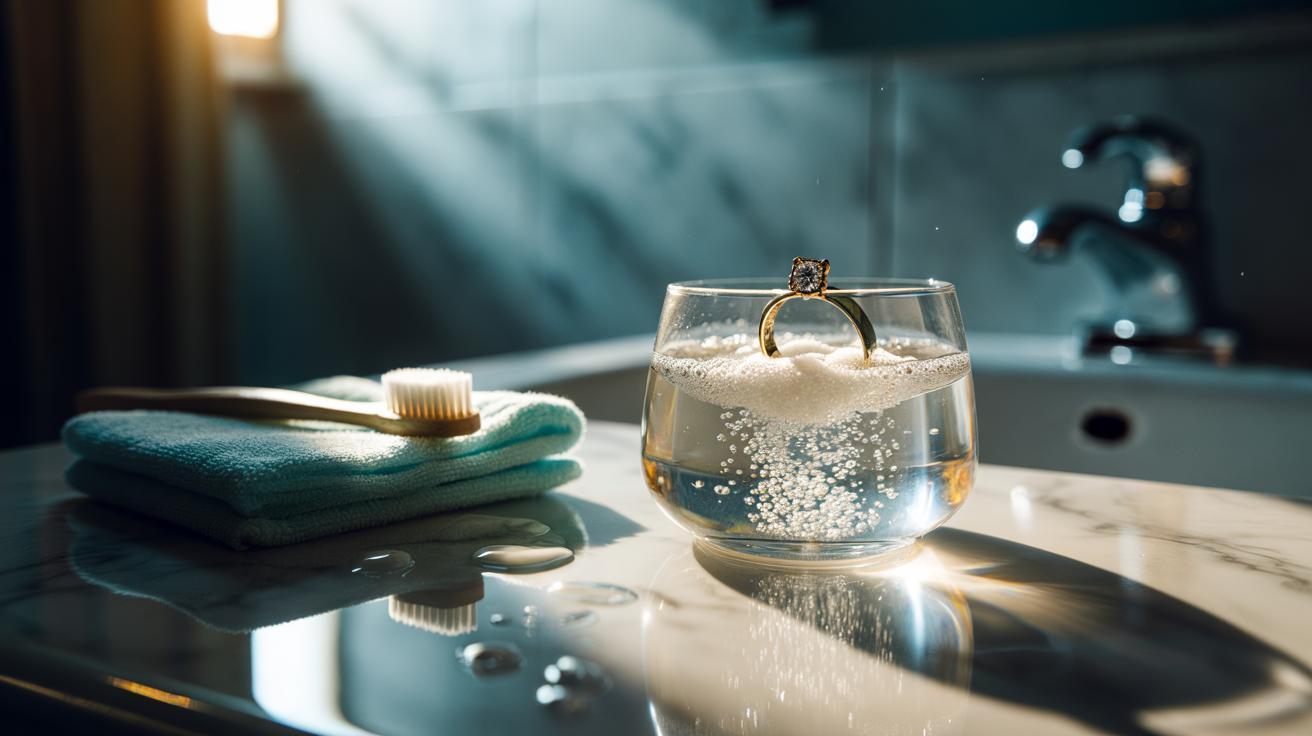
First, prepare the bath: a small bowl of warm (not hot) water and one denture tablet. Let it fizz for 30 seconds to activate. Place your jewellery in the bath for 5–10 minutes. Shorter is safer for mixed pieces. Never soak for hours—more time doesn’t mean more shine, just more risk. As it fizzes, you’ll see fine particles lift away. That’s the oxygen doing its gentle heavy lifting.
When the soak is done, lift the piece onto a soft cloth. Use a very soft brush—a baby toothbrush is ideal—to tease around prongs and under settings, where lotion builds up. Rinse under lukewarm running water, ideally over a mesh sieve to avoid the horror of a lost stone down the plughole. Pat dry with a lint-free microfibre cloth, then buff lightly to restore lustre. If in doubt, always test on an inconspicuous spot first. Repeat only as needed; routine over-cleaning can wear down delicate finishes or loosen old settings.
What to Clean—and What to Avoid
Not every piece is a candidate. Hard stones and sturdy metals thrive with this method. Porous or soft gems are a different story. Heat, moisture, and mild oxidisers can sneak into micro-fractures or dissolve adhesives, risking damage. When a piece is sentimental, antique, or fragile, caution beats bravado. Use a dry polishing cloth or seek professional advice.
| Material / Stone | Tablet Soak? | Notes |
|---|---|---|
| Gold (9k–24k), Platinum | Safe (short soak) | Rinse well; buff with microfibre. |
| Diamonds, Sapphires, Rubies | Safe (short soak) | Tough stones; brush under settings. |
| Sterling Silver | Generally safe | Avoid oxidised/antiqued finishes. |
| Emeralds, Opals, Pearls, Turquoise, Coral | Avoid | Porous/soft; use damp cloth only. |
| Costume Jewellery (glued stones) | Avoid | Soaking can weaken adhesives. |
Two final guardrails. Never soak pearls—period. Wipe them with a barely damp cloth, then dry flat. And treat anything with an oxidised silver patina carefully; tablets may lift the darkening you paid for. If you’re unsure, clean the metal band only, keeping stones and glue away from a soak. When in doubt, your local jeweller can inspect settings and advise a tailored clean.
If your jewellery box is full of pieces that have lost their sparkle, a sleeve of denture tablets could be the thrifty reset you need. The method is quick, gentle, and astonishingly effective on modern, robust pieces, offering salon-level shine without salon-level prices. You’ll still want a professional check for loose prongs or fragile heirlooms, but for everyday sparkle, the fizz is a winner. Which neglected ring, pendant, or bracelet will you revive first—and what story will it tell once it’s gleaming again?
Did you like it?4.6/5 (21)