In a nutshell
- 🧪 The science: 5% acetic acid neutralises alkaline films and dissolves limescale; it breaks residue bonds fast and evaporates cleanly—give it 30 seconds to work.
- ⏱️ Method: Mix 1:1 vinegar:distilled water, add one drop washing-up liquid per 500 ml (optional) and up to 10% IPA for quick flash-off; fine-mist, wait 30–60 seconds, then wipe with a clean microfibre or squeegee.
- 📊 Ratios that deliver: general grime 1:1 (30 sec); greasy prints 1:1 + 1 drop soap (30–45 sec); hard water 2:1 (45–60 sec); cold days add up to 10% IPA—ventilate and avoid over-wetting.
- ⚠️ Safety first: Do not use on marble/limestone, avoid unsealed wood and painted frames, spot-test films/coatings, and never mix vinegar with bleach; keep IPA away from flames.
- 🧽 Streak-free tips: use distilled water, wash microfibres without softener, work out of direct sun, fold cloths frequently, detail edges last, and skip essential oils that leave oily films.
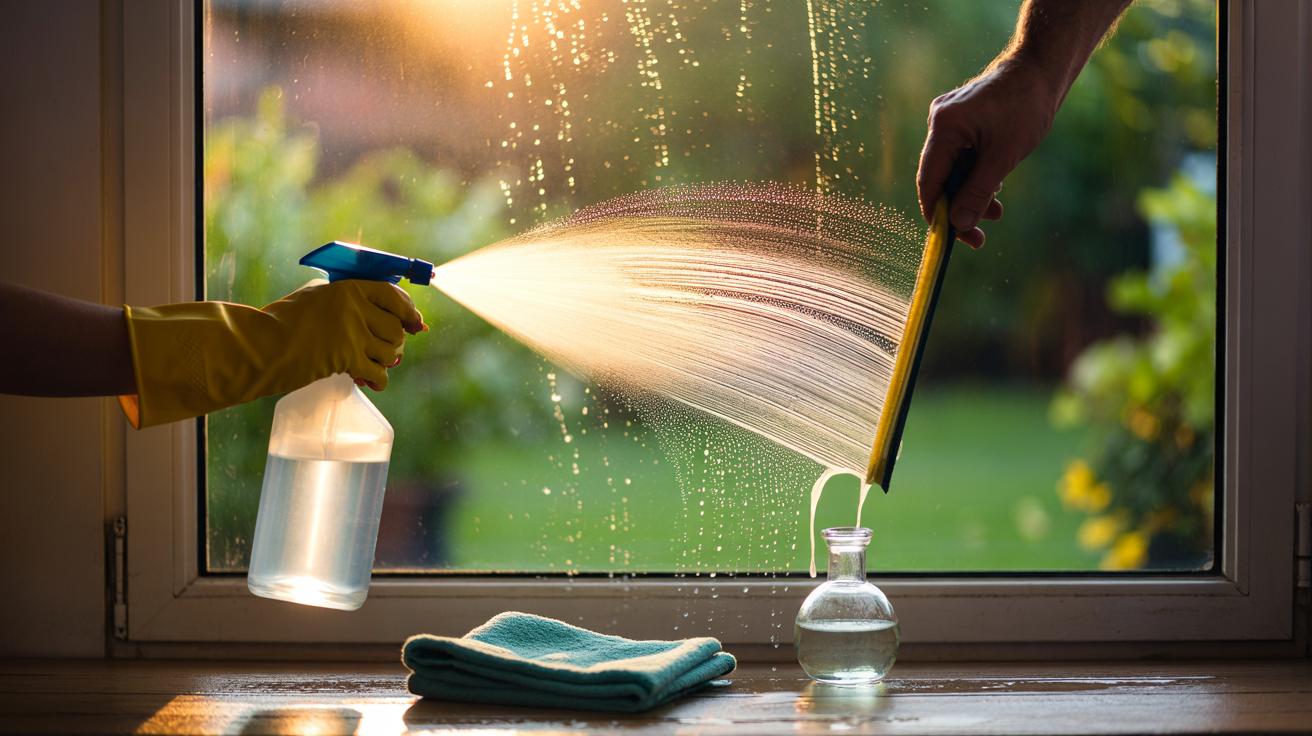
Here’s the simple, science-backed hack behind sparkling panes: a humble vinegar window spray that enlists acetic acid to break down mineral haze and neutralise alkaline films in a flash. It’s cheap, quickly mixed, and effective on everything from patio doors to shower glass. The secret is contact time. Let the solution sit for 30 seconds, then wipe or squeegee. Streaks vanish. Fingerprints fade. Hard-water fog dissolves. You don’t need synthetic fragrances or dyes; just the right ratio and the right cloth. Below, a closer look at how the chemistry works, the precise method, and practical tweaks for Britain’s limescale-prone water and weather.
What Makes Vinegar So Potent on Glass
Household vinegar contains about 5% acetic acid, a weak acid with a powerful knack for dealing with the two main culprits of dull windows: alkaline residue and mineral deposits. On contact, the acid neutralises basic films left by dust, road spray, and cleaning products, while also dissolving carbonate-based limescale that clouds glass after rain or shower steam. The process is fast because acetic acid disrupts the bonds that make residues cling. Give it half a minute to penetrate, and you’ve primed the surface for a streak-free pass with a cloth or squeegee.
Grease is different. Fingerprints and cooking vapours are partly oily, and oils don’t love water. That’s why a single drop of washing-up liquid in the mix helps: it adds surfactants that disperse greasy smears so the acid can reach the grime beneath. You’re not masking dirt; you’re loosening its grip. Crucially, vinegar doesn’t leave soap scum behind, so the finish looks bright rather than cloudy.
There’s another win: vinegar evaporates cleanly. No waxes. No polymers. Just a faint tang that disappears with ventilation. It’s the minimalist route to crisp, reflective glass.
The 30-Second Method: Mix, Spray, Wipe
Make a bottle of ready-to-go cleaner: combine 1 part distilled white vinegar with 1 part distilled water (tap water works, but minerals may encourage spots). For greasy fingerprints, add one tiny drop of washing-up liquid per 500 ml, no more. Optional for fast flash-off: up to 10% isopropyl alcohol by volume. Decant into a fine-mist sprayer.
Technique matters. Work out of direct sun to prevent premature drying. Mist the pane lightly until evenly beaded. Wait 30 seconds. That dwell time lets acetic acid dissolve mineral films and neutralise alkaline dirt. For shower screens with stubborn limescale, extend to 60 seconds. Now wipe top-to-bottom with a clean microfibre, folding the cloth as you go to expose fresh sections, or pull a squeegee down in overlapping strokes, detailing edges with a dry microfibre.
Change cloths sooner than you think. Saturated fibres just smear residue. If you notice ghosting at the edges, do a final, quick mist and a fast buff with a second dry cloth. Less liquid, better cloth, calmer pace. That’s the path to zero streaks and truly spotless glass.
Ratios, Surfaces, and Safety: A Handy Guide
Different messes need small adjustments. Here’s a compact reference for everyday windows, shower glass, and tricky frames. The ratios below keep the solution gentle yet effective, while the notes help avoid unforced errors that lead to streaks or etching.
| Use Case | Vinegar:Water | Dwell Time | Additive | Surface Notes |
|---|---|---|---|---|
| General window grime | 1:1 | 30 sec | None | Safe on standard glass and frames; wipe drips quickly |
| Greasy fingerprints | 1:1 | 30–45 sec | 1 drop washing-up liquid/500 ml | Buff dry with clean microfibre to prevent smears |
| Hard-water limescale | 2:1 | 45–60 sec | None | Rinse and re-wipe; repeat for heavy scale |
| Fast drying (cold days) | 1:1 | 30 sec | Up to 10% IPA | Ventilate; keep away from flames |
Do not use vinegar on marble, limestone, or other calcareous stone near window sills; the acid can etch. Avoid overspray on unsealed wood and painted frames—wipe immediately. For aftermarket window films or specialist coatings, spot-test a hidden area first. Never mix vinegar with bleach; the reaction can release toxic gases. Skip phone, TV, and camera screens too—coatings are delicate and need purpose-made cleaners. With these caveats, the spray is a safe, daily driver for most household glass.
Smart Troubleshooting for Streak-Free Shine
Streaks usually trace back to three culprits: hard water, dirty cloths, or sunlit speed-drying. Switch to distilled water for your mix. Wash microfibres separately and skip fabric softener, which clogs fibres and smears. Work in shade. If you must clean in sunshine, add a little isopropyl alcohol and mist sparingly. Less is more.
Technique tweaks pay off. Use a dedicated glass microfibre for the initial wipe and a second, ultra-dry one for buffing. Pull the squeegee in steady, overlapping lines with a slight angle so the leading edge carries the water off the pane. Detail the borders last with a crisp, dry corner to catch the tell-tale “picture frame” lines. Persistent fogging at the top? That’s residue gathering on the window gasket—wipe the gasket before you start.
If odour bothers you, ventilate or reduce the vinegar ratio to 1:2 and extend dwell by 10–15 seconds. Avoid essential oils; many leave oily films that undo your work. Clean chemistry, clean glass. It’s that simple.
In a market full of flashy bottles and blue dyes, the vinegar window spray stands out because it’s lean, cheap, and ruthlessly efficient. Let acetic acid do the heavy lifting, give it 30 seconds, and finish with a disciplined wipe or squeegee. Safety, ratios, and cloth care are the difference between good and gleaming. Once you dial in your routine, windows become a two-minute task rather than a weekend job. Ready to mix a bottle, set a timer, and see how spotless your glass can get—inside and out?
Did you like it?4.5/5 (24)