In a nutshell
- ⏱️ Use the 30-second refresh: half a lemon + ~200 ml water in a microwave-safe bowl; heat, let steam work, then wipe for instant results.
- 🧪 The science: steam softens grime while citric acid and limonene dissolve grease and neutralise odours, with reduced superheating risk vs plain water.
- 🧼 For stubborn messes: run a 90–120 second cycle, treat spots with hot lemon, add a pinch of bicarbonate of soda, and clean seals, vents, and under the turntable.
- 🔒 Safety first: only use microwave-safe glass/ceramic, avoid overfilling, lift carefully, and use a wooden stick to promote steady boiling; skip abrasive pads and metal.
- 💷 Budget-friendly: costs pennies, reuses lemon peels for deodorising, cuts chemical use, and routine quick cleans prevent time-consuming deep scrubs.
Here’s a domestic miracle that actually holds up under scrutiny: a sliced lemon, a splash of water, and half a minute of heat. In UK kitchens, the microwave is a workhorse and a grime magnet. Sticky sauces, buttery steam, and yesterday’s curry combine into a film that feels permanent. It isn’t. When the clock hits 00:30, scented vapour loosens grease while natural acids get to work. In the time it takes to boil a kettle, you can reset your microwave’s freshness. It’s safe, cheap, and startlingly effective. And yes, it smells like you cleaned on purpose. Here’s how the science and the simple steps align.
Why Lemon and Water Work in the Microwave
The secret is a three-part punch: steam, citric acid, and limonene. Steam is the muscle. It condenses on cool walls, softening baked-on splatters so they wipe off with almost no pressure. Citric acid, abundant in lemon juice, helps break the ionic bonds in greasy films and can chelate mineral residues, so that once-stubborn marks release more readily. Meanwhile, limonene—a natural solvent concentrated in the peel—dissolves light oils and leaves a clean, bright scent that masks lingering odours from bacon, butter, or fish.
There’s also a practical safety edge. Lemon water lowers the risk of superheating compared with plain water, thanks to dissolved ions that encourage safe boiling. You’re avoiding harsh chemicals, sprays, and fumes. It’s kinder to the microwave’s interior than scouring or bleach, which can damage seals and discolour plastics. The economics are equally persuasive: a leftover wedge and tap water cost pennies, yet deliver a near-instant reset. For busy households and shared flats, this is the kind of zero-faff maintenance that keeps appliances fresher for longer and reduces the need for deep cleans.
The 30-Second Method, Step by Step
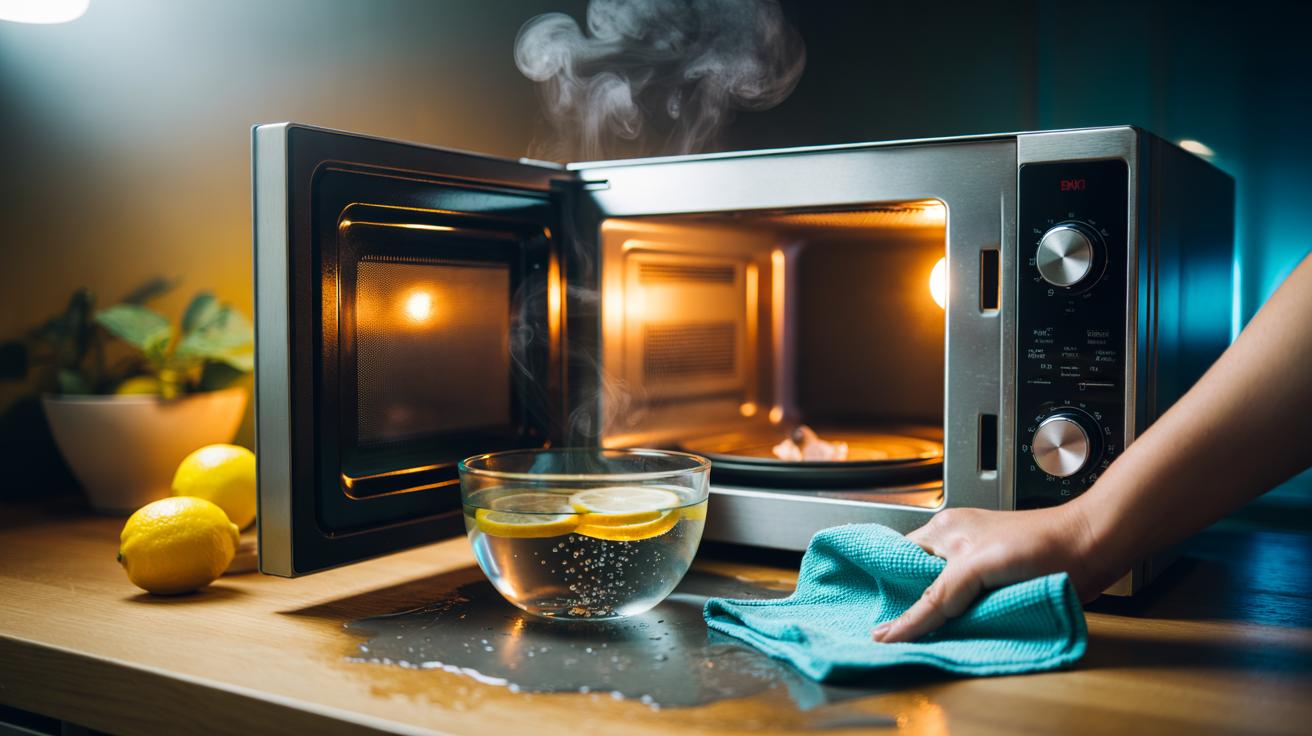
Slice half a lemon into two or three pieces. Drop them into a microwave-safe bowl with roughly 200 ml of water—no need to measure obsessively. Place it beside the turntable hub, not directly on it, to reduce sloshing. Heat on full power for 30 seconds. Open the door carefully; a small puff of lemony steam is exactly what you want. Leave the door closed for 10 more seconds if the walls look dry—trapping the vapour increases the softening effect. Remove the bowl using a tea towel, then wipe the cavity, walls, and ceiling with a clean microfibre cloth.
For light splatters, the result is instant. The film lifts. The odour fades. If you see dry patches, simply re-run for another 20–30 seconds. Take out the glass turntable and wipe underneath—grease loves hiding there. Use the warm lemon half like a mini sponge on bumps of sauce, then follow with a dry cloth to polish. In rented accommodation or office kitchens, this quick cycle keeps you on the right side of the rota without a chemical parade. Store the used lemon in the fridge for a second round later in the week.
Tackling Stubborn Stains and Smells
If life has truly happened inside your microwave—splashed tomato, sugary spills, buttery explosions—extend the cycle. Use a whole lemon, 250 ml of water, and heat for 90–120 seconds. Let it sit for another minute with the door shut. The walls will now be beaded with moisture, and residues should lift with a gentle pass of a cloth. For burnt-on syrupy spots, rest the hot lemon wedge over the patch for 20 seconds, then rub lightly. A small sprinkle of bicarbonate of soda on your cloth adds mild abrasion without scratching the interior coating.
Odours can be surprisingly persistent, especially after fish. Try a peel-only run: lemon rinds in water for 45–60 seconds. The peel is rich in limonene, a natural deodoriser that neutralises smells rather than simply perfuming them. Don’t forget overlooked areas: the door seal, the lip of the cavity, and the vent slots. Wipe the underside of the turntable spindle too. If stains remain, repeat the lemon cycle and leave the door ajar to air. Consistency turns a rescue job into routine upkeep—and spares you from a quarterly scrub-a-thon.
Safety, Materials, and Cost at a Glance
Only use a microwave-safe glass or ceramic bowl, and avoid overfilling to prevent splashes. If you’re nervous about sudden boiling, rest a wooden stir stick or a clean chopstick in the bowl to encourage steady bubbling. Always lift the bowl with care; lemon water gets hotter than you think. Keep metal trim out, and skip abrasive pads that can scar interiors. For plastics that hold onto smells, a second short cycle helps pull odours from pores without warping.
| Method | Lemon-to-Water Ratio | Microwave Time | Outcome | Best For | Approx. Cost (UK) |
|---|---|---|---|---|---|
| 30-Second Refresh | 1/2 lemon + 200 ml | 30 sec | Loosens light splatters | Daily upkeep | ~£0.10 |
| Deep Clean | 1 lemon + 250 ml | 90–120 sec | Lifts greasy residue | Fortnightly reset | ~£0.25 |
| Deodorise | Peels + 200 ml | 45–60 sec | Neutralises odours | Fish/curry smells | ~£0.00 (leftovers) |
Budget-wise, this is a winner. Lemons are inexpensive, and many households have them on hand for tea or salad anyway. The method uses no mystery agents, produces no harsh fumes, and reduces plastic sponge waste because residue wipes away without scrubbing. Think of it as preventative care that saves time, money, and your nose. If you want extra sparkle, finish with a dry microfibre to buff the glass and interior panel—no streaks, no effort.
One lemon. One bowl. Half a minute. For most messes, that’s enough to restore the microwave you actually want to open. The chemistry is simple, the steps are quick, and the payoff feels disproportionate to the effort. Steam, citric acid, and limonene do the graft, you take the credit, and dinner can resume on schedule. Try it tonight, then repeat once or twice a week to stay ahead of splatters. What tweaks—extra time, peel-only runs, a pinch of bicarb—will you test to make this 30-second clean your own?
Did you like it?4.4/5 (27)