In a nutshell
- 🧪 Baking soda (sodium bicarbonate) neutralises fridge odours by buffering pH and promoting adsorption on its large surface area, reducing volatile acids and sulphur compounds without masking scents.
- 🌙 For overnight results, spread 2–4 tbsp in shallow layers on a dish, place centrally (and add a second dish high/low for strong smells), and expect noticeable improvement in 8–12 hours.
- 🍲 Seal strong-smelling foods, wipe spills first, and target sources (fish, curry, cheese, sour milk) to speed results; refresh the soda every 30 days or after heavy use.
- 🧰 When odours persist, clean with a baking soda paste, switch smelly leftovers into glass containers, pair with activated charcoal, and check gaskets, drip trays, and porous plastics.
- ✅ It’s a frugal, scent-free fix: set a dish before bed, contain the culprits, and let chemistry deliver a noticeably fresher, neutral-smelling fridge by morning.
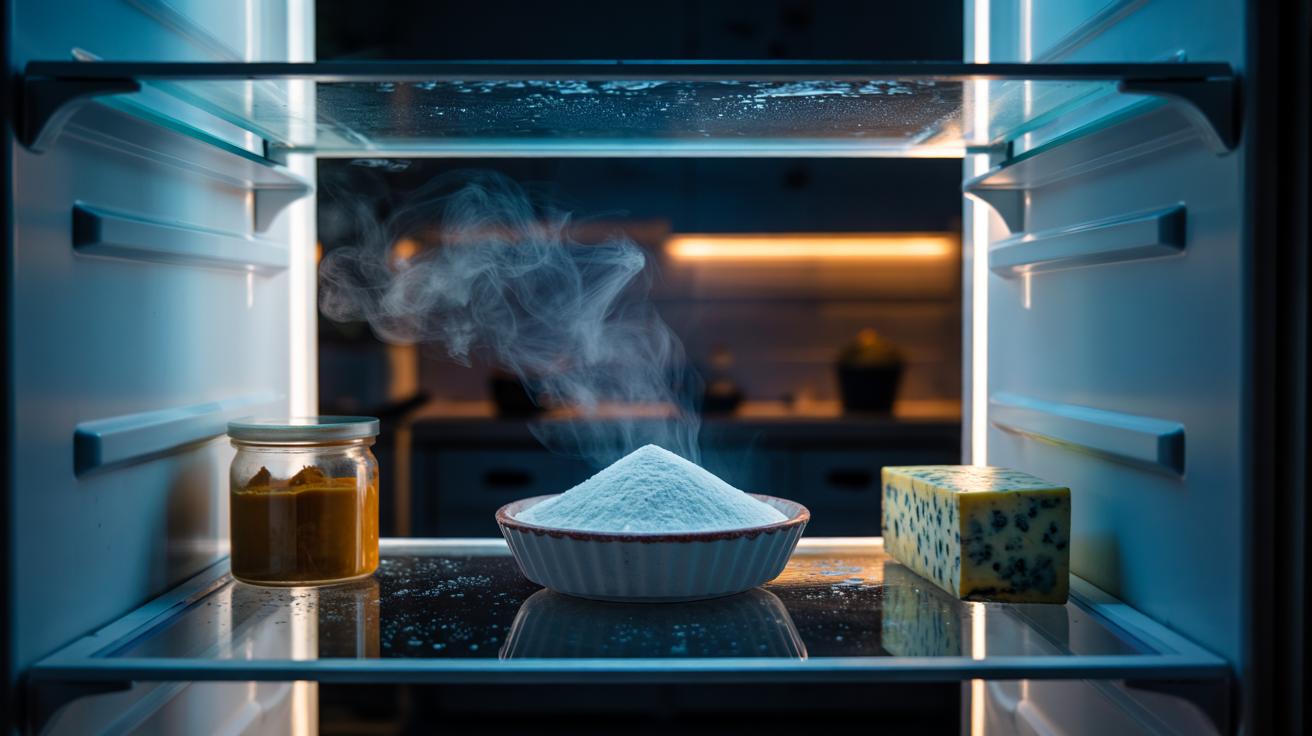
You open the fridge and the smell hits first. Last night’s curry, a dab of garlic butter, a forgotten sliver of blue cheese—aromas that cling. The quick fix isn’t a perfumed spray. It’s a humble box of baking soda. Overnight, this pantry staple can take a cold cabinet from whiffy to calm. Not magic. Chemistry. Sodium bicarbonate interacts with volatile molecules, tames acidity, and soaks up lingering notes through a huge microscopic surface. It works while you sleep, quietly and without adding any new fragrance to the mix. Here’s how and why this unlikely freshener wins the graveyard shift.
Why Baking Soda Works in the Fridge
At its core, sodium bicarbonate is a mild alkaline buffer. Many fridge odours—think sour milk or oniony bite—come from volatile acids and sulphur compounds. Baking soda nudges the local pH toward neutral, which reduces volatility and reaction potential. That’s the sciencey way of saying fewer smelly molecules take flight into the air you notice. It doesn’t mask smells; it neutralises them. There’s a second trick. Sodium bicarbonate crystals offer surprisingly large surface area in a small volume. Those micro-surfaces promote adsorption—odour molecules cling to the solid—especially in a chilled, slightly humid environment where a delicate film of moisture helps dissolve and trap offenders.
Odours are stubborn when they’re constantly replenished—leaky leftovers, a sticky spill, a poorly sealed tub. Baking soda still helps by setting a background trap for the airborne fraction, which is what your nose meets first. Given eight to twelve hours, the balance shifts. Less evaporation. Fewer pungent compounds drifting around. In practice, that means a meaningful drop by morning, then further gains over the next day if sources are contained. The result feels cleaner, yet scentless—no lemony overlay, no cloying floral note—just the quiet absence of pong.
Setting Up an Overnight Deodorising Routine
Start simple. Use a shallow, clean dish and spread 2–4 tablespoons of baking soda in a thin layer. Place it centrally, with space above and around, so air can move. If the smell is intense, deploy two dishes—one high, one low—to catch convection currents inside the cabinet. Thin layers expose more surface area, so they work faster. Keep strong-smelling foods in sealed containers to stop fresh emissions while the soda gets to work. Avoid placing the dish right against a vent; you want circulation, not a blocked airway. In most cases, you’ll notice a distinct softening by breakfast, with best results after 24 hours.
| Odour Source | Recommended Setup | Expected Overnight Outcome |
|---|---|---|
| Fish or shellfish spill | Wipe spill; one shallow plate on middle shelf | Air noticeably cleaner; faint trace remains |
| Curry, garlic, or onion | Two plates (top and bottom); seal leftovers | Strong edge dulled; background aroma muted |
| Ripe cheese | Open box of soda near cheese; wrap cheese properly | Sharper notes reduced; characteristic smell softened |
| Spilled milk | Clean shelf; plate of soda near spill site | Sourness cut back significantly |
Refresh the baking soda every 30 days for routine use, or after a major stink event. Break up clumps; replace if damp or crusted. If you’re hosting tomorrow, spread fresh soda tonight for the quickest win per penny. For day-to-day, a small open box tucked away works fine. For emergencies, go wide and shallow, then consolidate to a single container once the crisis passes.
When Odours Persist: Science-Backed Tweaks
Some smells dig in. Fatty residues oxidise and create tenacious volatiles. Protein spills grow a microbial biofilm. Plastics absorb aroma, then re-release it slowly. In those cases, tweak the plan. First, clean the suspect area with a paste of baking soda and water; its mild alkalinity loosens fatty grime while providing gentle abrasion. Rinse, dry, then re-deploy your overnight soda trays. If a smell survives two nights, it’s likely trapped in porous plastics, not the air. Move leftovers into glass, and if an old container reeks even when empty, retire it.
Pairing helps. Activated charcoal excels with non-polar compounds that bicarbonate won’t catch as efficiently; run both, separated, for a belt-and-braces approach. Boost surface area: more shallow dishes beat one deep bowl. Check hidden culprits—the door gasket, the drip tray, the vegetable drawers. A cotton pad dabbed with vanilla inside a closed tub can neutralise lingering perceptions when you open the door, but keep scents contained; you’re treating the air, not flavouring tomorrow’s salad. Never mix vinegar and baking soda in the fridge if you want deodorising—foaming neutralises their strengths and reduces long-term effect. Replace soda after heavy use; it’s cheap, and freshness matters.
Baking soda’s quiet power suits modern fridges and busy evenings. It’s frugal, accessible, and gentle on food environments because it adds no perfume, only balance. Set a dish before bed, tidy that culprit container, and let chemistry do its night shift. By morning, the nose knows. The best odour is the one you can’t detect at all. What’s your toughest fridge smell right now, and which of these overnight tweaks will you try first to make tomorrow’s door-open moment blissfully uneventful?
Did you like it?4.5/5 (29)