In a nutshell
- 🧪 Acetic acid in white vinegar dissolves light‑scattering residues (minerals, soap scum, grime), restoring colour depth without re‑dyeing.
- 🧼 Practical method: a pre‑soak of 250 ml vinegar in 4 litres of cool water for 20–30 minutes, then wash; or add 120–180 ml in the final rinse to cut build‑up and static.
- ⚠️ Safety first: Never mix vinegar with chlorine bleach; dilute well, patch‑test dyes, and limit exposure for elastane, acetate, viscose, and metallic trims.
- 🧵 Fabric and machine care: effective on cotton and denim; a cool acidic rinse suits wool and silk; avoid repeated heavy doses in the machine and measure detergent to prevent residue.
- 🌈 Expectations and limits: vinegar won’t fix UV bleaching or true dye loss; it removes build‑up from hard water minerals and detergent, yielding richer blacks and fresher fabrics after 1–2 cycles.
Britain’s beloved dark jeans, school uniforms, and black T‑shirts often fade not from age but from a film of residue that dulls the surface. Here’s the twist: that greyness is rarely permanent dye loss. It’s mostly build-up. Enter humble white vinegar. Its active ingredient, acetic acid, is gentle, inexpensive, and surprisingly effective at stripping away the microscopic grime that scatters light and makes colours look tired. Used properly, vinegar can revive depth and contrast without harsh chemicals or re-dyeing. Think soft fibres, truer blacks, fewer odours. Used in a soak or a final rinse, it can turn the clock back on a wardrobe that’s lost its sparkle.
Why Vinegar Revives Faded Fabrics
Clothes often appear faded because of deposits, not because the original dye molecules have vanished. Detergent overdosing, hard water minerals, deodorant residues and city dust create a fine, chalky layer that clings to fibres. Under indoor lighting this film diffuses reflections, so colours flatten and blacks look cloudy. White vinegar tackles that film. It’s acidic enough to dissolve alkaline soap scum and mineral salts, yet mild enough for most everyday fabrics.
In practical terms, vinegar does three things that matter for colour. It loosens the film so it can rinse away. It shifts the fabric’s surface back towards a mildly acidic pH, cutting static and improving drape. And it helps release trapped odours that often ride along with the residue. The result is a cleaner surface that reflects light more coherently, which our eyes read as richer colour.
There are limits. Vinegar won’t reverse UV bleaching or splash damage from chlorine. It won’t re‑dye abraded fibres. But for dullness born of build-up—especially in homes with hard water—it’s a simple, repeatable fix that makes dark laundry look sharp again.
The Chemistry: How Acetic Acid Targets Fade Particles
The star is acetic acid (CH₃COOH), usually 5–8% in household vinegar. Many “fade particles” are not dye fragments but aggregates: calcium and magnesium carbonates from hard water, fatty acid soaps formed when detergent hits body oils, and iron-rich grime. Acetic acid protonates these alkaline compounds, converting stubborn insoluble salts into soluble acetates that rinse away. In plain English: it turns crust into liquid and sends it down the drain.
That microfilm adheres by weak ionic attractions and hydrogen bonds. Lowering the pH disrupts those interactions, so the film detaches from cotton, denim and blends. Acetic acid also nudges the charge on textile surfaces, reducing the tendency for charged residues to cling. Think of it as unhooking microscopic Velcro. Once the light-scattering film lifts, colour depth returns without touching the dye itself.
There’s a second, quieter effect. Residual detergent is often alkaline. Acidic rinsing neutralises the alkaline tail of a wash cycle, improving fibre feel and cutting stiffness that makes fabric look chalky. The chemistry stays gentle: weak acid, short contact time, lots of water. It’s enough to break up residue aggregates, not enough to strip modern reactive dyes on cotton or disperse dyes on polyester.
Practical Steps: Reviving Colours in the Wash
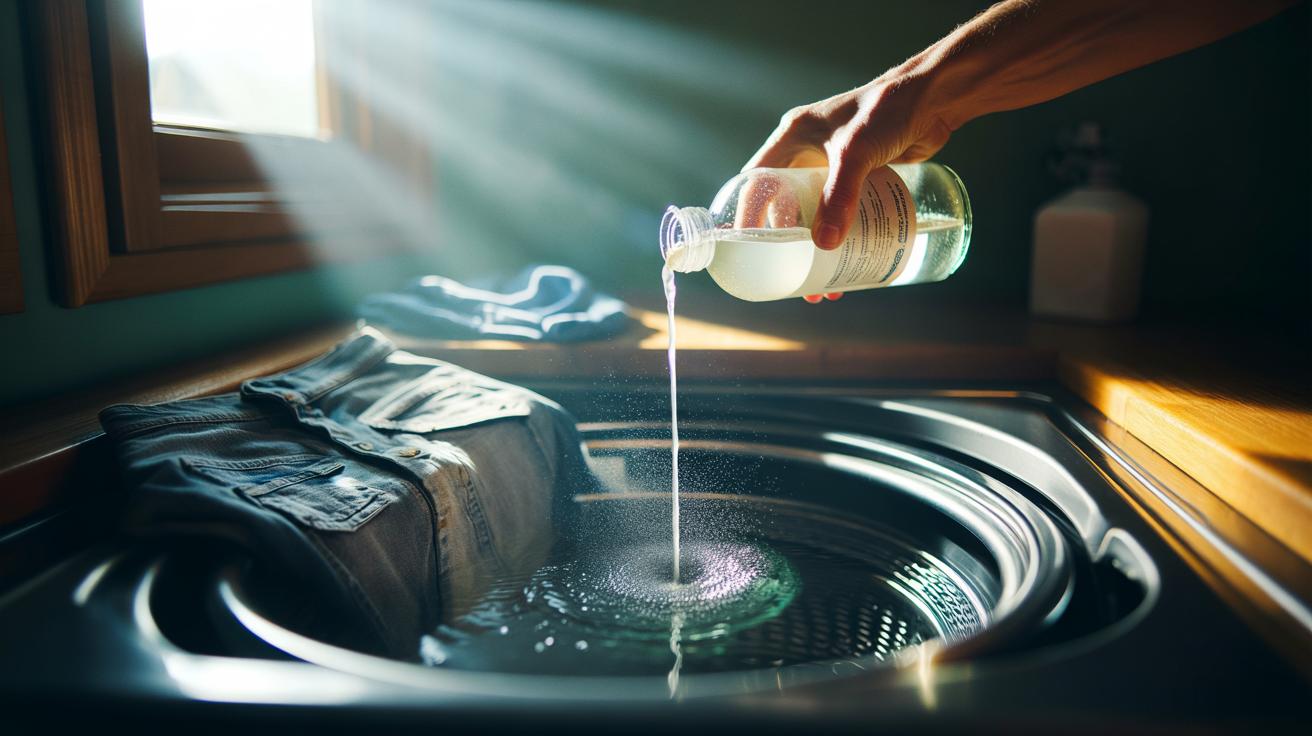
Start with a pre‑soak. Mix 250 ml of white vinegar into 4 litres of cool water and submerge the garment for 20–30 minutes. Swish occasionally. For heavier build-up—gym kit, black denim—extend to 45 minutes. Then launder as usual with a measured dose of detergent. For ongoing maintenance, add 120–180 ml of vinegar to the fabric softener drawer for the final rinse; it replaces softener, cuts residue, and reduces static without perfumed coatings.
Use cool or warm water for darks to protect fibres. Don’t overload the drum; residue needs room to release. If colour transfer worries you, test on an inside seam: dab vinegar solution, blot, check the cloth. Vinegar won’t “set” most modern dyes, but it will lift loose, unbound dye so it rinses away now, not onto other clothes later.
| Issue | Vinegar Dose | Tip |
|---|---|---|
| Dull blacks/greys | 250 ml soak; 150 ml rinse | Cool water; gentle spin |
| Hard water residue | 200 ml in rinse | Consider a water softener |
| Persistent odour | 300 ml soak, 30 min | Sun-dry to finish |
| Soap scum stiffness | 150 ml in final rinse | Reduce detergent dose |
Never pour undiluted vinegar directly onto fabric. Always disperse it in water or via the dispenser so it spreads evenly, does its chemistry, and rinses cleanly.
Safety, Fabrics, and When to Avoid It
Never mix vinegar with chlorine bleach. The reaction releases toxic chlorine gas. Keep the two steps separate by at least one full wash and rinse. Vinegar plays well with oxygen bleach (sodium percarbonate) when used in different stages, but don’t combine them in the same drawer. For delicate fibres—wool and silk—vinegar can be helpful in a cool final rinse because protein fibres prefer a slightly acidic environment; still, test first.
Be cautious with acetate, rayon/viscose, and garments with metallic trims or unstable dyes. Limit contact time, dilute well, and patch-test. Elastic components tolerate brief exposure, but constant acid soaks can age elastane; keep to rinses, not hours-long baths. Cleaning vinegar at 10% is potent: halve the dose or dilute 1:1 to mimic standard 5% strength. Store safely and keep it away from marble or limestone surfaces while you measure, as acids etch stone.
Machine care matters too. Vinegar in sensible amounts won’t harm seals, but avoid repeated heavy doses in empty maintenance cycles. Rinse drawers occasionally to prevent sour build-up. Above all, adjust your routine: soft water or measured detergent dramatically reduces residue in the first place. The less film that forms, the less you need vinegar to remove it, and the longer those colours stay punchy.
Used with intent, white vinegar is a quiet powerhouse for tired clothes. It dissolves the invisible film that mutes colour, restores a soft hand, and neutralises odour—without perfumes or pricey additives. Acetic acid does the chemistry; the rinse does the rest. Keep doses modest, contact times short, and fabrics sorted by type, and you’ll see truer blacks and brighter blues reappear after just a cycle or two. What garment in your wardrobe is first in line for a revival, and how will you test the transformation in your next wash?
Did you like it?4.6/5 (23)