In a nutshell
- 🔬 Acetic acid disrupts cell membranes, desiccating leaves in minutes; it’s a contact herbicide, not systemic—expect rapid top kill, limited root impact.
- ⚖️ Pick the right strength: 5–10% for seedlings, 10–15% for tougher rosettes, 20–30% only with caution; a drop of surfactant improves coverage.
- 🧰 Technique matters: spray on warm, dry days, aim close to foliage, shield ornamentals, test on calcareous stone, sweep first, avoid pooling, and repeat for perennials.
- 🛡️ Safety and ecology: wear PPE above 5%, keep pets away until dry, and never mix with bleach; vinegar degrades quickly but is non-selective, so manage drift.
- 🇬🇧 Compliance and strategy: heed UK HSE guidance for approved products; don’t sell unapproved mixes; pair vinegar spot-treatments with hand weeding and design tweaks to curb regrowth.
Weeds between pavers can make a pristine patio look neglected within days. Gardeners swear by a simple fix: a spray bottle of vinegar. The results can be startlingly quick. Leaves wilt, darken, and collapse as if scorched. The secret isn’t magic but chemistry. The active component, acetic acid, acts fast on delicate plant tissues exposed on hardscapes. It’s a contact killer, not a systemic poison, which is why visible impact can arrive in minutes yet roots may re-sprout later. With the right strength, smart timing, and simple safety steps, vinegar can be a nimble, low-cost tool for paths and patios—especially against tender seedlings that colonise cracks after a summer shower.
Why Vinegar Scorches Weeds So Quickly
Vinegar’s power comes from acetic acid, an organic acid that disrupts cell membranes. When sprayed on young foliage, it penetrates the waxy cuticle and causes rapid water loss. Cells collapse. Proteins denature. The leaf surface turns from vibrant to matte and then to brittle. On sun-warmed stone, evaporation accelerates this desiccation, which is why gardeners often see a dramatic “burn-down” within 10–30 minutes on small weeds. That speed is a hallmark of a contact herbicide, not a root-killing systemic.
Low pH is part of the punch. By acidifying the immediate leaf surface, acetic acid disrupts enzyme activity and ion transport, crippling photosynthesis almost immediately. Annual weed seedlings—chickweed, bittercress, young dandelion rosettes—lack the carbohydrate stores to recover after foliage loss, so one thorough spray usually finishes them. Perennials with deep roots are different. They often rebound because the underground crown remains intact. Expect quick top kill, not guaranteed eradication, on established perennials and grasses. Repeat treatments starve reserves over time, but persistence, sun, and timing do much of the heavy lifting.
Temperature and exposure matter. Warm, dry weather maximises efficacy; rain dilutes acids, shade slows desiccation. Coverage matters too. Wet the leaves to a light sheen—drips waste product and increase the risk of staining or runoff. Done correctly, vinegar turns the patio crack from green to bare faster than hand weeding, and often with less effort.
Choosing the Right Strength and Simple Add-Ons
Not all vinegars are equal. Kitchen vinegar is typically 5% acetic acid, cleaning versions may be 6–10%, and horticultural products can reach 20–30%. Strength governs speed and collateral risk. High-strength acetic acid demands PPE—gloves and eye protection—because it can burn skin and damage eyes. For patios plagued by tiny seedlings, 5–10% is usually enough; tougher rosettes may yield faster to 10–15%. A drop of mild surfactant (plain dish soap) helps the spray cling, improving coverage without escalating acidity.
| Product Type | Acetic Acid (%) | Typical Use | Speed on Seedlings | Key Risk |
|---|---|---|---|---|
| Kitchen vinegar | 5 | Light weed flushes | Visible wilt in 30–90 min | May need repeat sprays |
| Cleaning vinegar | 6–10 | Heavier patio growth | 10–45 min | Irritating to skin/eyes |
| Horticultural vinegar | 20–30 | Stubborn rosettes/grasses | 5–20 min | Chemical burns; strict PPE |
Salt? Skip it. Sodium chloride can sterilise the crack briefly but migrates into beds, degrading soil structure and harming ornamentals. Sugar, Epsom salts, and bleach concoctions are internet myths or dangerous. Never mix vinegar with bleach—this creates toxic chlorine gas. Keep it simple: vinegar, water for dilution if needed, and a touch of surfactant. Label any decanted solution, store away from children and pets, and use a dedicated sprayer; metal parts can corrode under acidic conditions.
Practical Patio Technique: Speed, Safety, and Surfaces
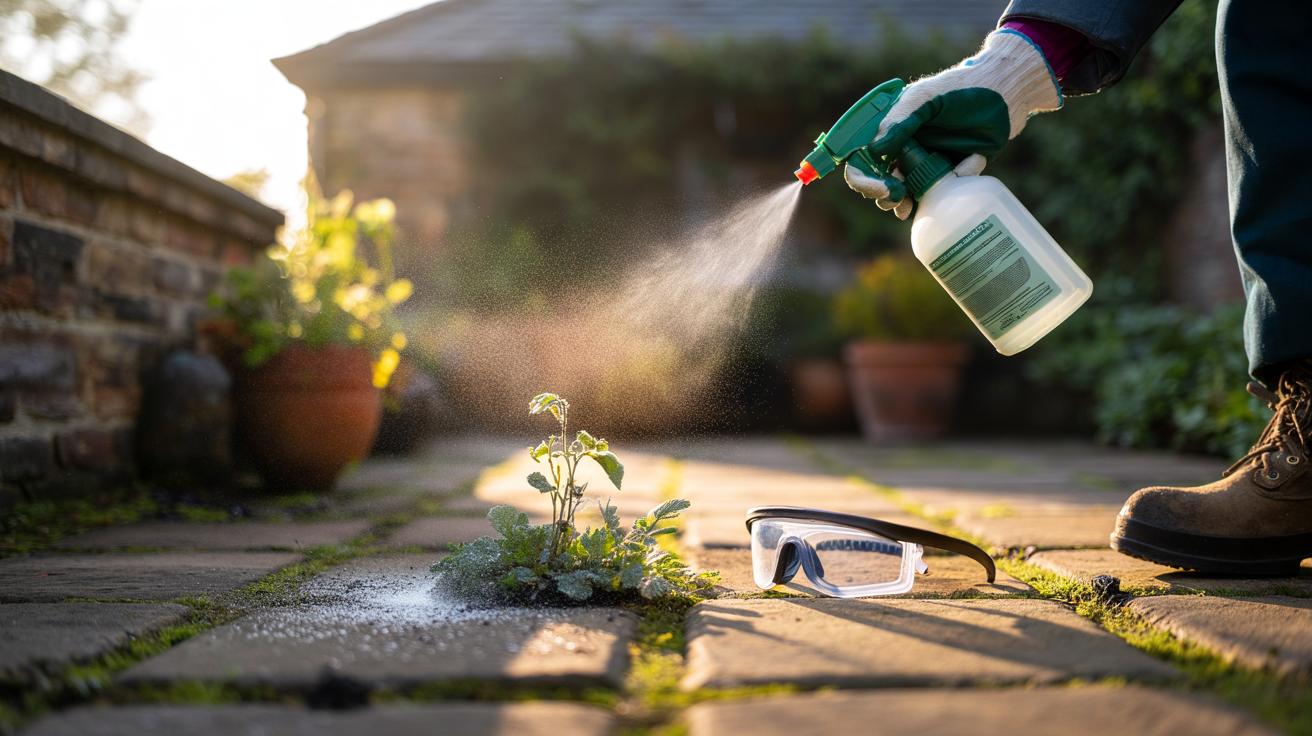
Success hinges on precision. Choose a dry, bright day, ideally midday, when stone is warm. Shield border plants with cardboard; a simple shroud stops drift. Hold the nozzle close, aim only at green tissue, and avoid pooling on grout or resin-bound joints. Vinegar can etch calcareous stone—limestone, marble—and can dull certain sealers. Test an inconspicuous spot first. On concrete slabs, staining risk is lower, but iron-rich residues may still mark. Sweep first; dust and moss mats block contact and waste spray. Then apply a light, even wetting, not a soak.
Wear gloves and eye protection for anything above 5%, and a mask if you’re working in confined courtyards. Rinse accidental splashes on delicate stone with water promptly. Keep pets indoors until the surface is dry; the smell fades quickly, the hazards even faster. Expect young weeds to flop within an hour. Return after a day to brush away desiccated foliage and assess regrowth. Perennials? Score the crown with a weeding knife and respray new leaves in three to seven days, repeating until energy reserves are exhausted. The method is fast, tidy, and low-tech, ideal for routine path maintenance.
Disposal is simple: any leftover diluted solution can be used the same day, but don’t pour concentrated vinegar into beds or drains. Small amounts can be neutralised with water and bicarbonate of soda before disposal. The goal is targeted weed burn, not broad soil acidification. Done carefully, vinegar keeps patios crisp without a shelf full of synthetics.
Limitations, UK Law, and Environmental Footprint
Vinegar is no silver bullet. It shines on seedlings and soft annuals, struggles with woody stems and rhizomatous perennials. It’s also non-selective; a gust of wind can brown prized thyme as readily as speedwell. Work low, work slow. In the UK, gardeners should note one regulatory point: use only products approved for use as weed killers if you’re buying a ready-made spray, and check the HSE database for current authorisations. Repurposing household vinegar at home sits in a grey area, but selling or advertising unapproved pesticides is restricted. Professionals must use authorised plant protection products and follow label instructions.
Environmentally, the trade-offs are clear. Acetic acid degrades rapidly, leaving no persistent residues in soil, which appeals to eco-conscious households. But contact with non-target organisms can still be harmful. Avoid spraying near amphibian habitats, pond edges, or during pollinator activity. Drift onto beds can stress beneficial ground covers and microfauna. Compared with synthetic systemic herbicides, vinegar’s life-cycle impact is often lower for small jobs, yet repeated applications add up in travel, plastic, and manufacture. The greenest approach blends methods: physical removal for taproots, vinegar spot-treatments for flushes, and design tweaks—wider joints, polymeric sand, dense planting—to reduce colonisation.
Finally, be realistic about aesthetics and effort. Vinegar delivers swift visual wins, but prevention beats cure: brush regularly, improve drainage, and fix crumbling joints that trap organic debris. Budget time for quick re-sprays after rain or mowing. With informed expectations, a spray bottle becomes a nimble maintenance tool, not a miracle cure-all.
Used judiciously, vinegar turns the patio from weedy to welcoming in a lunch break, harnessing simple chemistry to scorch green invaders before they seed again. The science is clean, the routine brisk, and the results satisfying, especially on fresh flushes after summer rain. Respect surfaces, wear basic PPE, and stay within UK guidance, and you’ll keep hardscapes sharp without heavy chemistry. As you plan your next tidy-up, which patches on your paths or paving would benefit most from a fast, targeted vinegar pass—and how will you combine it with prevention to cut regrowth for good?
Did you like it?4.6/5 (30)