In a nutshell
- 🚗 Cloudy screens come from traffic film, plastic off-gassing, and mineral deposits; a quick vinegar wipe dissolves residues and delivers a streak-free finish.
- 🧪 Acetic acid neutralises alkaline grime, lowers surface tension for clean evaporation, and is safe on glass—just avoid soaking seals and never mix with bleach or ammonia.
- 🧼 Method that works: use a 1:3 vinegar-to-water mix (1:1 for heavy haze), spray the cloth not the glass, wipe in overlapping passes, then dry buff with a second microfibre.
- 🧴 Choose white distilled vinegar (5%) and tight-weave microfibre cloths; a fine-mist sprayer prevents drips, while cleaning vinegar (6%) needs extra dilution.
- 🌙 Benefits: faster clarity, less glare at night, low cost and eco-friendly; work on cool glass and clean wiper blades to keep the view crystal clear.
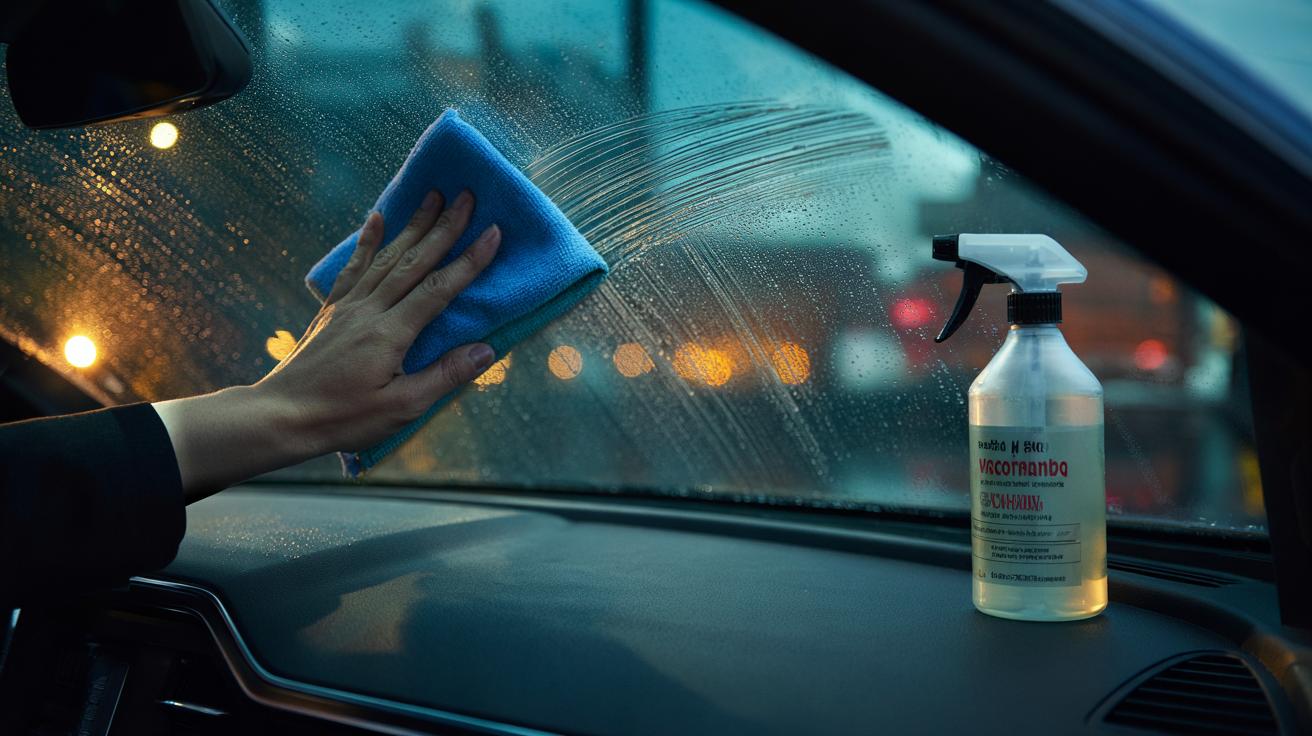
Streaky glass is a daily gripe for British motorists, especially in winter when smeary demist lines and road grime conspire to blur the view. Here’s the simple fix: a quick vinegar wipe. In seconds, it can cut through haze that commercial sprays often smear around. The secret is acetic acid, the mild acid that gives vinegar its bite and its surprising cleaning power. Used correctly, it clears residue and leaves a streak-free finish that looks professionally detailed. Work on cool glass, out of direct sunlight, and you’ll see the shine appear almost immediately. Cheap, eco-friendly, and fast. Exactly what your commute needs.
Why Your Windscreen Turns Cloudy
A cloudy windscreen rarely has a single culprit. It’s usually a cocktail of traffic film (diesel particulates, brake dust, oily spray), off-gassing from interior plastics, and microscopic minerals from hard water. Add fingerprints, condensation drying marks, and the faint silicone left by some dashboard products, and you’ve got a hazy veil that scatters light. Night driving makes it worse. The glare blooms across the glass, and contrast collapses.
Inside the cabin, new-car plastics release vapours that settle as a slightly greasy film. Smokers see a faster build-up, but even non-smokers get residue from heaters, air fresheners, and cleaning aerosols. Outside, wiper blades can grind grit into the surface, leaving arcs of fine deposits that a weak cleaner fails to lift. What looks like “steam” is often a mix of oils and minerals bonded to the glass.
Water alone won’t shift this chemical mix. Standard household sprays often rely on surfactants that move grease but can leave their own film. That’s where vinegar helps. Its mild acidity dissolves alkaline deposits and breaks the grip of oily residues. Used with a quality microfibre cloth, it lifts grime cleanly instead of smearing it thin.
How Acetic Acid Works on Glass
Acetic acid (typically 5–6% in white vinegar) is a weak acid, but exactly the right tool for the job. It neutralises alkaline contamination—think road salt, limescale traces, and residues from some detergents—through simple acid–base reactions. The acid also helps dislodge metal-containing particles in traffic film by disrupting their bond to the surface. Result: loosened grime that wipes away rather than skates around the glass.
There’s a second win. Vinegar reduces surface tension, so the cleaning solution spreads evenly and evaporates cleanly, cutting the streaks you get from high-surfactant cleaners. Less residue means less glare when you face headlights or low winter sun. Because acetic acid is volatile, it flashes off quickly, leaving the surface optically crisp without a perfumed film that grabs dust.
Glass is chemically tough, so this mild acidity is safe. The caveats are practical. Don’t soak window seals or headliner edges. Avoid overspray on electronics and cameras behind the mirror. If you have aftermarket tint on side windows, spot-test a corner of the film’s edge. And go gentle on natural rubber: wipe blades with a dampened cloth, then rinse. The goal is controlled cleaning, not a bath.
Step-by-Step: The Vinegar Wipe That Leaves No Streaks
Mix your solution: one part white vinegar to three parts water for routine cleaning; go 1:1 for heavy haze. Decant into a fine-mist sprayer. Prepare two clean microfibre cloths: one for wet cleaning, one for dry buffing. Always work on cool glass, out of direct sun, to prevent flash-drying and streaks. Park in shade or wait until dusk if necessary.
Spritz lightly onto the cloth, not the windscreen—especially inside—to avoid drips near sensors or the dash. Wipe in overlapping vertical strokes, then horizontal, to cover the whole area and break stubborn films. Flip the cloth as it loads. For edges, pinch the microfibre along the screen’s border to lift the darker line of residue that hides by the seal. Repeat with a touch more solution on stubborn arcs.
Now the magic: the dry buff. With your second cloth, polish gently until the surface squeaks. That’s the tactile cue of a residue-free finish. For the exterior, run the wipers briefly to clear any mist, then clean the blades with a vinegar-damp cloth and rinse with water. Don’t mix vinegar with bleach or ammonia—ever. If fogging persists inside, clean the glass again and reduce cabin films by airing the car and using the demist on fresh air, not recirc.
Choosing the Right Vinegar and Tools
Pick a no-nonsense option: white distilled vinegar at 5% acidity. It’s clear, consistent, and leaves no dye or sugar. “Cleaning vinegar” at 6% works faster; just dilute a notch more. Save malt or cider vinegar for chips—colour and aroma aren’t ideal for interiors. Pair with tight-weave microfibre (circa 300–350 GSM) and a fine-mist bottle that lays down a light, even spray.
| Vinegar Type | Typical Acidity | Best Dilution | Pros | Watch-outs |
|---|---|---|---|---|
| White Distilled | 5% | 1:3 (vinegar:water) | Clear, neutral smell, streak-free | None significant |
| Cleaning Vinegar | 6% | 1:4 to 1:5 | Faster cut on heavy film | Stronger odour undiluted |
| Malt/Cider | 5% | Not recommended | Readily available | Colour/aroma can linger |
Tools matter as much as chemistry. Use lint-free microfibre only; cotton smears and sheds. Keep a dedicated glass pair of cloths to avoid cross-contamination with silicone from dashboard care. For ADAS-equipped cars, spray the cloth, not the screen, around camera pods and sensors. Finally, refresh wiper blades or clean them weekly—gritty, oxidised rubber re-deposits film no cleaner can fully defeat.
There’s a quiet satisfaction to glass that disappears, leaving nothing between you and the road but air. A simple vinegar wipe earns that clarity quickly, cheaply, and with fewer chemicals under the sink. The science is sound. The method is repeatable. And the result—especially at night—is immediately visible. Next time your view looks milky, try the acetic acid approach and watch the haze surrender. Will you add a bottle of white vinegar to your boot kit and put the streaks to the test on your next Sunday wash?
Did you like it?4.4/5 (24)