In a nutshell
- 🔥 A WWII-era haybox (fireless) cooking revival turns residual heat into hours of gentle cooking, helping UK households cut electricity use and often save hundreds of pounds a year.
- 🍲 How it works: bring food to a vigorous boil for 10–15 minutes, seal in insulation to let thermal mass finish cooking, then reheat to at least 75°C before serving for safety.
- 💷 Big savings: swapping a two-hour oven simmer for a haybox can cut kWh by 60–80%; with off-peak tariffs and batch cooking, typical users can save £200–£350/year.
- 🧰 Easy setup: improvise with a duvet, pillows, and a box or use a commercial thermal cooker; best for beans, stews, grains—avoid quick-cook pasta or delicate fillets.
- ♻️ Wider impact: smart load shifting reduces peak demand and emissions, and pairs well with pressure cookers and solar PV for a leaner, lower-carbon kitchen.
The idea is older than your gran’s recipe book, but it is suddenly fashionable again. Known in wartime Britain as the haybox or fireless cooker, this simple method turns a pot’s leftover heat into hours of gentle cooking. In an age of volatile tariffs and anxiety about meters spinning, households are dusting off a WWII energy trick that uses almost no power after the initial boil. Bring food to a rolling boil, wrap the pot in insulation, and let physics finish dinner. The result? Tender stews, perfectly cooked grains, and electricity savings that, for frequent users with electric ovens or hobs, can stack to hundreds of pounds a year.
The Wartime Origin of Haybox Cooking
Food was rationed. Fuel, too. During the Second World War the Ministry of Food promoted haybox cooking to help families stretch every shilling and every lump of coal. The principle was beautifully simple: cook briefly, remove the pot from the fire, and tuck it into a box packed with hay, cushions, or wool so residual heat continued the process. It earned nicknames like the fireless cooker and appeared in pamphlets alongside advice on thrift and nutrition.
Britons used it for beans, soups, and puddings. Naval cooks insulated galley pots when seas were heavy or fuel tight. Rural homes, short of coke or paraffin, swore by it. The secret is not magic, it is thermal mass and insulation doing quiet work while you get on with your day. The method faded as cheap energy returned and modern appliances filled kitchens. Today, high unit prices and smart tariffs are making this old idea new again, reminding us that durable solutions often come from the past.
How It Works, Step by Step
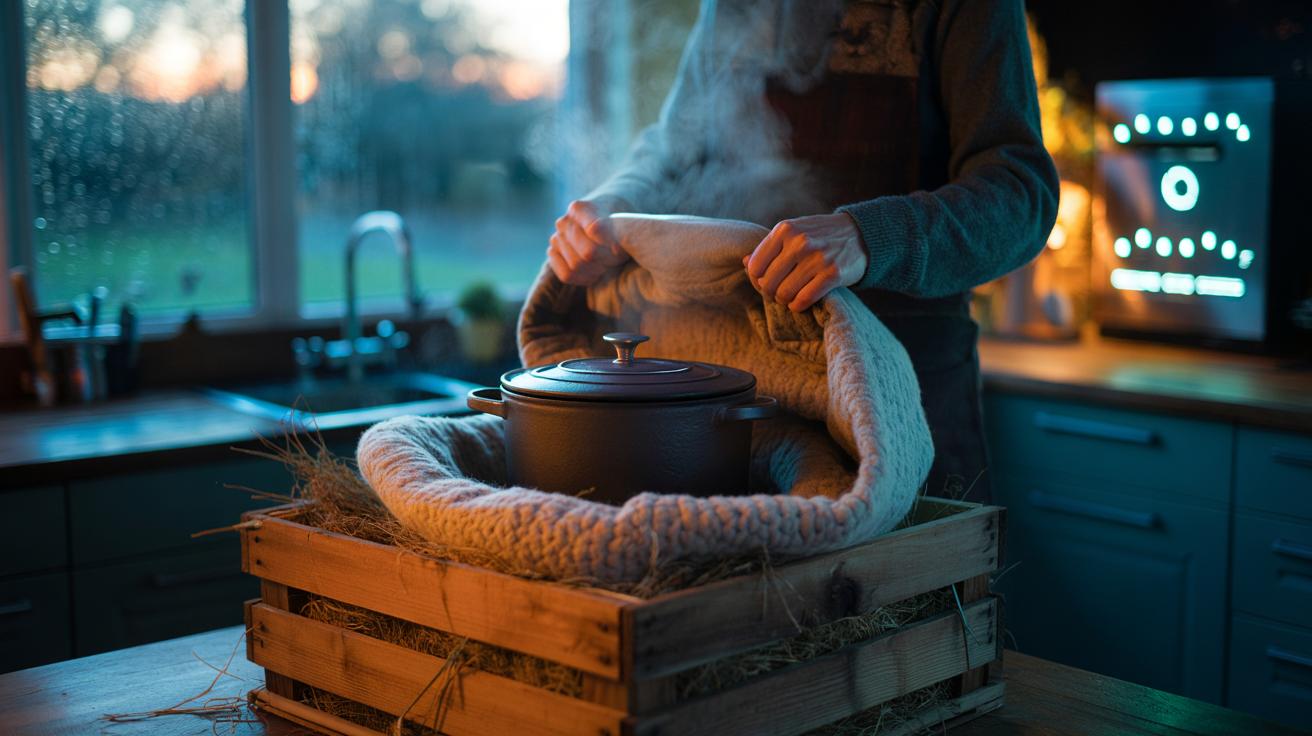
Start with a heavy, lidded pot. Bring your stew, grains, or pulses to a vigorous boil for 10–15 minutes on the hob; skim and season as normal. That short burst is the only meaningful electricity you will use. Then swiftly place the pot into your improvised or commercial thermal cooker and insulate it on all sides—tight packing matters. A cool box, a laundry basket, or a wooden crate lined with duvets all work.
Seal the “box” and resist peeking. Every lift of the lid leaks precious heat. Depending on the dish, leave for one to five hours. Before serving, reheat to steaming for food safety—aim for 75°C in the core. Favour bean stews, brown rice, chickpeas, root vegetables, and bolognese. Avoid quick-cook pasta or thin fillets that need high heat. The science is elegant: the pot’s thermal mass equalises slowly, proteins tenderise below boiling, and starches gelatinise without a simmering meter. Result: the texture of slow cooking, without the slow spend.
What You Save and When It Adds Up
If you usually simmer on an electric hob or bake casseroles in an oven, the maths is striking. A two-hour oven stew can draw 2–3 kWh; a haybox version may need just 0.3–0.6 kWh to reach the boil and a brief reheat. Multiply by weekly habits and the total swells quickly. Heavy users can trim dozens of kWh per month and, over a year, cross the fabled “hundreds saved” line, especially at 28–35p per kWh and with frequent batch cooking.
Assumptions for the table below: price 32p/kWh; frequency indicated in the final column.
| Dish | Conventional kWh | Haybox kWh | Saved kWh | Est. Annual £ |
|---|---|---|---|---|
| Beef stew (2 h oven) | 2.6 | 0.6 | 2.0 | £133 (2x/week) |
| Chickpeas from dry | 1.8 | 0.5 | 1.3 | £86 (1x/week) |
| Brown rice (family pot) | 0.6 | 0.3 | 0.3 | £50 (5x/week) |
| Bolognese (hob simmer) | 1.2 | 0.4 | 0.8 | £106 (2x/week) |
Add in smart-tariff timing—boil during off-peak—and the savings improve. Stack it with batch cooking, and a typical electric-only flat, cooking most nights, can realistically spare £200–£350 a year.
Setting One Up at Home: Cheap, Safe, Effective
You do not need to buy anything. A duvet, two pillows, and a sturdy box make a fine haybox. A camping cool box or old laundry hamper works too; line gaps with towels. For a belt-and-braces build, add reflective foil around the cavity to cut radiant losses. Or pick a commercial thermal cooker with a latching, vacuum-insulated shell for convenience.
Safety is simple. Boil hard before insulating, insulate snugly, and reheat to piping hot before serving. Keep meat or poultry batches large enough to retain heat. Do not leave dairy-heavy sauces all day; reheat sooner. Place the box on a stable surface away from kids and pets. Label the setup so no one absent-mindedly sits on it. Rinse and dry fabrics to prevent musty smells. The kit is portable, too—take it to a picnic, plug nothing in, unveil hot lunch on arrival. Frugal, practical, and oddly fun.
Beyond the Kitchen: Grid-Friendly and Low-Carbon
The quiet genius of haybox cooking is not just thrift. It is timing. By shifting almost all energy to a short initial boil, you can align with off-peak tariffs or home solar PV output, then coast through the evening peak without cooking load. That flattens demand, eases grid stress, and trims your carbon footprint when marginal generation is dirtiest. Energy nerds call this load shifting. Your grandmother called it common sense.
Pair the haybox with a pressure cooker for beans, or an electric blanket for personal warmth, and the combined cuts become meaningful. Heat what matters, when it is cheapest, for only as long as necessary. In a country of rental flats, temperamental meters, and capped consumer choice, this is agency. From wartime leaflets to TikTok kitchens, the message returns: make the most of heat you have already paid for, and pay for far less of it tomorrow.
Britain has been here before, and the fix was ingenious then as it is now: capture heat, hold it close, let time do the rest. A haybox costs next to nothing, asks little skill, and rewards you with soft beans, tender meat, and a calmer bill. When power prices zigzag, that kind of certainty feels priceless. Will you build your own fireless cooker this week and see how much of your supper—and your spending—you can skip burning for?
Did you like it?4.5/5 (30)