In a nutshell
- 🧠 Memory anchoring links vivid cues to actions, exploiting encoding specificity and context‑dependent memory so the cue triggers a low‑friction cue–response–reward loop, strengthened by implementation intentions.
- 🎧 Deploy simple, exclusive anchors: sensory cues (tea, playlists, scents), place anchors (desk modes), and habit stacking with precise if–then prompts to cut start‑up hesitation.
- 🧩 Design anchors to be distinctive, consistent, and tied to a small reward; hit the “gateway moment” fast with micro‑constraints, and rotate elements periodically to avoid habituation.
- ⏱️ Track outcomes with TTFK (time to first keystroke), seconds to context restoration after interruptions, and weekly “clean starts” to prove real productivity gains.
- 🤝 Avoid contamination by keeping cues task‑exclusive; reconsolidate dull anchors with small wins, add recovery breaths, and use light team‑wide anchors (e.g., a deep‑work chime) for calmer throughput.
There’s a sly, almost unfair way to keep promises to yourself without chewing through willpower. It’s called memory anchoring — pairing a desired behaviour with a vivid cue so your brain does the heavy lifting. Think of it as a commitment device that hides in plain sight: a scent, a sound, a place. Done well, it short‑circuits hesitation, lops off minutes of dithering, and converts intention into action. The trick isn’t mystical. It’s mechanical, evidence‑backed, and quietly potent. Match the cue, get the action. That’s the pact. And when your workday is a minefield of distractions, that pact feels like a superpower.
How Memory Anchoring Works in the Brain
At root, memory anchoring exploits encoding specificity: the idea that we recall best when the retrieval context echoes the learning context. Your brain binds a cue — a song, a posture, a mug — to a behaviour. Later, the cue lights the path back. Context drives recall faster than motivation does. Neuroscience doesn’t romanticise this; it formalises it as context-dependent memory and cue-reactivity, the reliable tendency for triggers to spark routines with minimal conscious effort.
Productivity gains appear because anchors compress the “activation energy” of starting. The decision to begin vanishes into a practised loop: cue, response, reward. Add a tiny hit of anticipatory dopamine when the cue appears and the loop accelerates. This is why implementation intentions (“If it’s 9:00 and kettle boils, then open the brief and write 150 words”) beat vague plans. They fuse time, place, and action into a stable retrieval bundle your brain can find even when you’re tired.
Anchors also tame context switching. By reserving distinct cues for deep work versus admin, you help your hippocampus sort tasks into dedicated neural “folders”. Clear folders, faster access. It’s dull, practical, and wildly effective.
Simple Anchors You Can Deploy Today
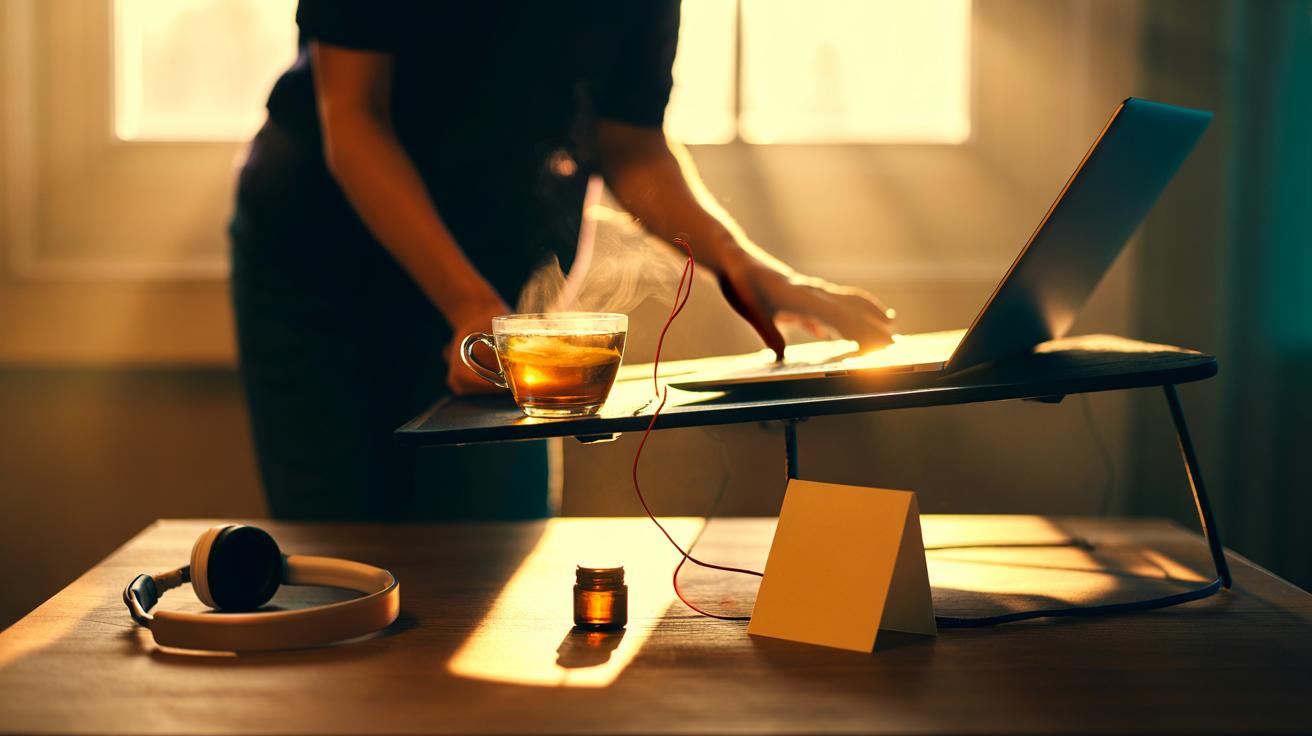
Start with sensory anchors. A specific tea blend for drafting. One playlist for spreadsheets. A citrus hand balm only before slide design. Keep each anchor unique to one task. If you can smell, hear, or touch the cue, your brain can find the pathway home. Then try place anchors: a standing desk for edits, a window seat for ideation, headphones on equals inbox zero. Brightly label it to yourself. Ritual matters.
Layer in habit stacking: bolt a micro‑task onto an existing routine. “After I log in, I run a five‑minute scope review.” Use if–then planning for precision. “If it’s 3:30, I batch messages for 10 minutes.” Tiny, specific, repeatable. Over a week, this trims friction and creates a gently compounding rhythm.
| Anchor | Trigger | Primary Effect | Best Use Case |
|---|---|---|---|
| Tea blend | First sip at 9:05 | Fast start | Morning drafting |
| Instrumental playlist | Headphones on | Noise shielding | Spreadsheet analysis |
| A5 notecard | Placed on keyboard | Task salience | Top three priorities |
| Standing desk | Raise at 11:00 | State shift | Editing pass |
Designing Anchors That Stick
A powerful anchor is distinctive, consistent, and tied to a reward. Distinctive means the cue doesn’t pop up elsewhere in your day. Consistency means you pair it with the same task, at roughly the same time, for at least two weeks. Reward means a small, immediate payoff: a tick on a visible tracker, a satisfying sound, even a sip of something you save for that moment. Immediate wins beat distant goals when wiring habits.
Timing matters. Pair the cue with the first 60–120 seconds of the task — what behavioural scientists call the “gateway moment”. Pre‑write a one‑line prompt, open the file, type a working title. Avoid marinating in preparation. Movement encodes faster than contemplation. For creative tasks, add a micro‑constraint (“150 words before checking sources”) so the anchor ushers you into action, not debate. Your future self will thank you.
Refresh anchors quarterly. Rotate the playlist, swap the tea, shift the scent. This prevents habituation, the dulling of response to repeated stimuli. Same structure, new skin, steady results. Keep the scaffold, change the paintwork, and the cue stays crisp.
Measuring Gains and Avoiding Pitfalls
Track the right indicators or the whole idea becomes vibes and guesswork. Two simple metrics expose real change: time to first keystroke (TTFK) after the cue, and seconds to context restoration after interruptions. Shorter is better. Add a weekly count of “clean starts” — sessions begun within two minutes of the cue. What gets measured stays anchored. A low‑friction spreadsheet or a pocket notebook will do; you’re measuring latency, not art.
Beware contamination. If your playlist blares during crises, your anchor will inherit that stress. Keep anchors exclusive. Don’t overload them either; one cue, one task. When an anchor dulls, “reconsolidate” it: step away for a day, re‑introduce the cue with a small win, and rebuild the association. If attention feels brittle, insert a recovery anchor — a 60‑second box‑breathing routine before resuming work — to reset the system.
For teams, anchor publicly and lightly. A shared chime at 10:00 for deep work. Status lights that mean “do not ping”. Small rules, big calm. The ROI is less bluster and more throughput, measured not in hours stayed late but in hours that actually moved the needle.
Memory anchoring doesn’t bully you into productivity; it invites your brain to follow a friendly breadcrumb trail back to focus. When the cue appears, the next step happens almost by itself, and energy is spent on craft, not on starting. The method is humble, repeatable, and portable from newsroom to home office. Make the next good action the easiest action. That’s the hack. Which anchors will you test this week, and how will you know — truly know — that they helped you produce better work with less strain?
Did you like it?4.4/5 (22)