In a nutshell
- ✈️ The much-hyped £9 Ryanair bag is a soft, compressible holdall sized to the free underseat limit of 40 x 20 x 25 cm, typically unbranded and cheap, designed to look small and slide into the sizer.
- 🧳 It rarely gets stopped because flexible sides visually read as compliant (true 20 cm depth), smooth fabrics hide bulges, and confident, light carrying reduces scrutiny—while off-peak travel or Priority further lowers sizer risk.
- 🧠 Pack smart: build a flat base, roll clothes, keep the 1-litre liquids bag on top, seat tech in a thin sleeve, wear bulky shoes, and use the “one-hand press” test to confirm the bag collapses back to shape.
- ⚠️ False economy alert: if you’re hauling a laptop, winter gear, or camera kit, paying for Priority Boarding with a 10 kg cabin bag may beat gate fees; follow rules on duty-free and avoid overstuffing that invites checks.
- 💡 Buy by form, not brand: choose slim, soft-sided designs with tidy handles, a trolley sleeve, and top-corner zips; avoid rigid frames, thick back pads, and busy pockets that steal space; expect UK prices around £7–£14.
There’s a small, soft-sided holdall doing the rounds on British feeds this year, touted as the £9 Ryanair carry-on that glides past gate checks. It isn’t magic. It’s measurements. In 2025, Ryanair’s free underseat allowance remains a compact box, and the winning budget bag nails the numbers while looking unthreatening to busy staff. Travellers swear by it because it swallows a weekend’s worth of kit and still slides into the metal “cage”. No bag is guaranteed never to be stopped, of course, but design and discipline make this one a quiet champion. Here’s how to spot the right model, pack it properly and avoid that wallet-wincing gate fee.
What Qualifies as the £9 Ryanair Bag in 2025
The phrase “the £9 bag” doesn’t point to a single brand. It’s a category: a 40 x 20 x 25 cm soft carryall that’s cheap, collapsible and compliant. Most are unbranded marketplace specials, sometimes sold as “Ryanair underseat bags” or “personal item totes”. The price fluctuates between £7 and £14 depending on sales and season, but the sweet spot many readers report finding is around £9. The important feature isn’t the logo. It’s the structure: lightly padded sides, a squishy base that compresses in a sizer, and either twin grab handles or a short shoulder strap that doesn’t add bulk. If it looks small, it gets less scrutiny.
Think form, not fashion. Black or navy fabrics disguise bulges; rigid frames don’t. A good underseat bag has a narrow depth—genuinely close to 20 cm—with a forgiving zip track that lets you “flatten” the load. Many include a trolley sleeve, useful if you’ve paid for Priority and carry a second, larger cabin case. Zips should meet at a top corner so security trays and gate checks can open and reclose quickly. Inside, fewer pockets are better; they steal space and create tell-tale bumps. Below is a quick snapshot of what typically works—and what to watch.
| Form Factor | Typical UK Price | Stated Size | Pros | Watch-outs |
|---|---|---|---|---|
| Soft Holdall | £8–£12 | 40 x 20 x 25 cm | Compresses easily; low profile | Overstuffing bulges to 22–23 cm |
| Slim Backpack | £9–£15 | 39–40 x 20 x 25 cm | Hands-free; neat silhouette | Straps and back pad add thickness |
| Tote/Shoulder | £7–£11 | 40 x 18–20 x 25 cm | Opens wide; easy at security | Unstructured base needs careful packing |
Why This Bag Rarely Gets Stopped at the Gate
Gate agents make fast, visual judgments. A compliant-looking underseat bag, carried lightly and kept flat, slips through the flow because it doesn’t read as “big luggage”. The £9 soft holdall excels here. Its trick is simple: the sides flex inward when gripped, giving the eye—and the sizer—an honest 20 cm depth. Hard shells and boxy gym bags can’t do that. Smooth fabrics also help; they don’t create shadow lines that suggest bulk. Perception matters as much as the tape measure.
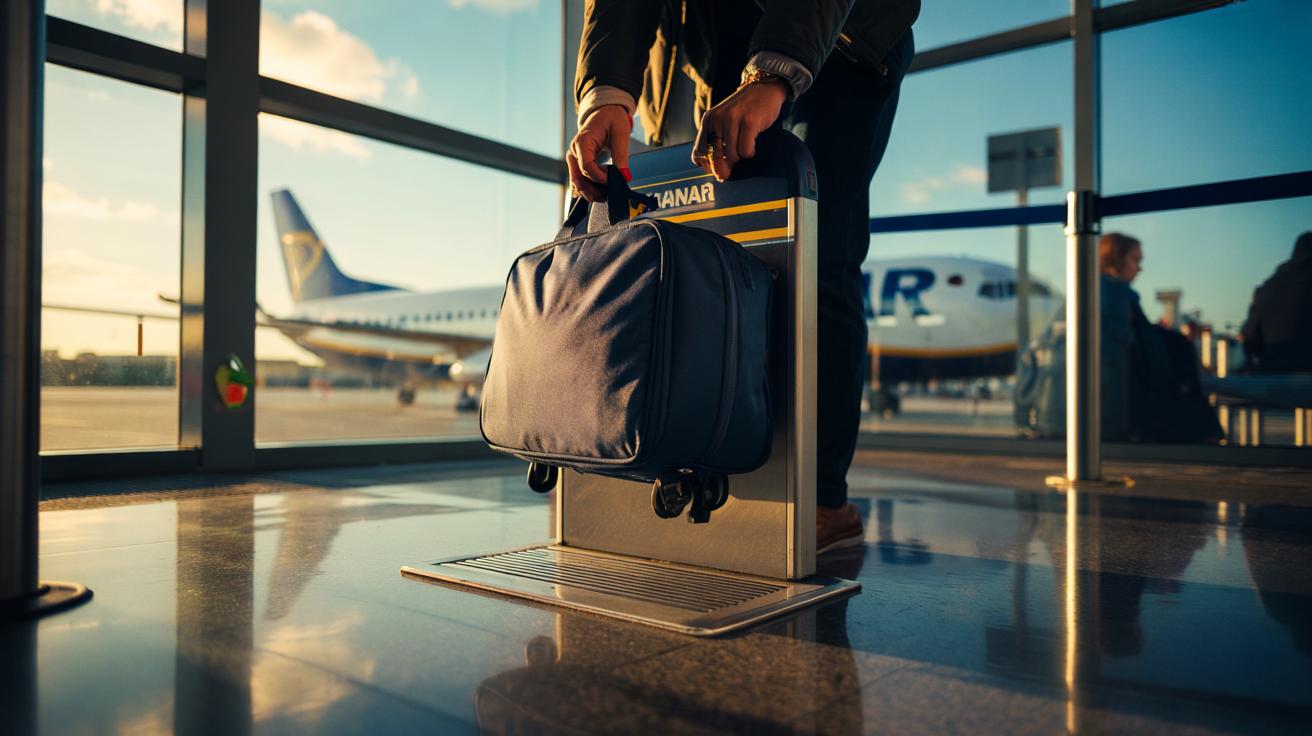
Functionally, the bag’s geometry works with Ryanair’s metal checker. A low, rectangular footprint settles cleanly into the frame, while a slightly domed top compresses under the bar. Short handles keep it under the seat without spilling toward your knees, and the zip orientation lets agents peek inside without everything exploding out. The psychological bit is not to lug it like a brick. Keep it on your shoulder, looking light. Use your coat or duty-free to carry overflow rather than distorting the bag. And remember: staff attention spikes during heavily booked flights and congested gates. Travelling off-peak or with Priority reduces sizer roulette dramatically.
Packing Strategy: How to Stay Within 40 x 20 x 25
Start with the base. Lay flat items—document pouch, flip-flops, a rolled knit—at the bottom to create a stable rectangle that won’t bulge. Toiletries next, but decant ruthlessly: a single 1-litre airport liquids bag is both a security rule and a space saver. Slide it at the top so you can lift it out without unzipping to the seams. Clothing should be rolled into cigar shapes, then “tiled” side by side to keep depth under control. Shoes are tricky; wear the big pair, pack the smaller pair stuffed with socks and tuck them at the ends to maintain the 20 cm profile.
Tech is best consolidated in a thin sleeve. Tablets are easier than laptops; if you must take a computer, choose a 13-inch model and seat it against the bag’s flattest wall. Fill dead space with compressible layers—underwear, a packable tote, a tiny laundry bag. Keep chargers and cables in a flat zip pouch, not a cube that balloons. The golden rule is weight distribution: dense items against the long sides, airier items in the centre where inspectors press. If any panel bows outward, reorganise until you can press it back to shape with one hand. That tactile test is your real-world sizer.
When £9 Becomes a False Economy: Fees, Priorities, and Edge Cases
A bargain bag is only a bargain if it avoids penalties. Ryanair’s gate fee for oversized personal items is intentionally painful, designed to push compliance. If you’re carrying photo gear, a chunky laptop, or winter clothing, paying for Priority Boarding with a 10 kg cabin bag may be cheaper—and calmer—than gambling. Families and those on tight connections benefit most from the extra allowance and earlier boarding. Conversely, short hops, mild weather and minimalist packing are where the £9 hero shines. Match the fare to the trip, not to a trend.
There are also ethical lines. Hiding items under a coat, sneaking a second “free” carrier, or pleading ignorance strains the system and can backfire quickly. Duty-free bags are permitted, but gaming that rule with non–duty free goods invites a sizer moment. If a staffer asks, comply promptly: place the bag gently in the frame, remove a jacket if needed, and don’t argue the millimetres. Consider durability, too. Ultra-cheap stitching and zips fail under stress; a torn handle at 5 a.m. isn’t worth the fiver saved. The sensible compromise is a low-cost bag with decent seams and a simple warranty, still well below branded luggage prices.
In the end, the “never stopped” reputation comes from honest sizing, soft structure and smart packing, not from a logo or a miracle hack. A 40 x 20 x 25 cm soft holdall, kept trim and carried confidently, blends into the boarding flow and lives peacefully under the seat in front. No airline promises zero checks, and no bag is truly bulletproof. But with the right materials, the right loadout and the right behaviour at the gate, your £9 companion can keep saving you money all year. What will you leave behind—or upgrade—on your next Ryanair trip to make that underseat allowance work perfectly for you?
Did you like it?4.4/5 (24)