In a nutshell
- 🍵 A quick teabag plunge adds tannins that boost structure, heighten umami and salt perception, and turn bland soups vivid in seconds.
- 🧪 Keep contact brief—think “dip and lift” for 10–20 seconds—to gain pleasant astringency without bitterness; taste between short dips.
- 🌿 Choose unscented teas: black (Assam/breakfast) for grip, oolong for warmth, sencha for clean snap; avoid perfumed blends like Earl Grey.
- 🥣 Practical method: skim excess fat, dip the plain teabag, season after (tannins make salt pop), and finish with acid or soy for length.
- ⚠️ Skip the trick for delicate consommés, dairy-heavy chowders, or already bitter soups; consider alternatives like sherry, dashi, or roasted mushrooms instead.
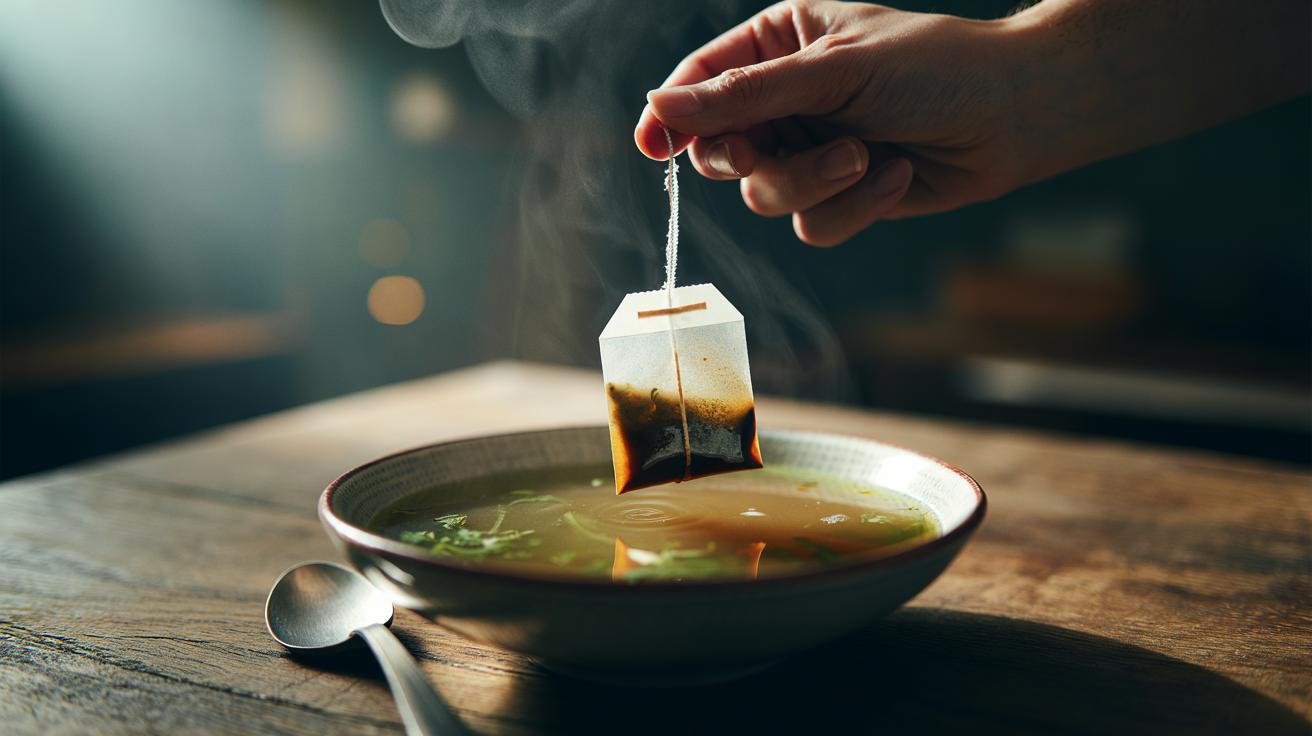
There’s an audacious little trick circulating in professional kitchens: dip a plain teabag into a bland soup, count to twenty, and taste again. The change is immediate. Tannins from tea add shape, contrast, and backbone, taming flabby sweetness while sharpening the savoury core. They don’t mask; they frame. Proteins bind, fats seem tidier, and salt suddenly reads more clearly. Even a thin vegetable broth acquires grip and length. Used judiciously, a quick teabag plunge can transform Tuesday leftovers into something you’d serve to company. It’s chemistry meeting convenience, in under a minute, with nothing more exotic than the box you already keep by the kettle.
Why Tannins Transform Broth So Quickly
Tannins are a family of plant polyphenols that latch onto proteins and alter how our tongues perceive texture and taste. In soup, that binding slightly firms the mouthfeel and rounds off loose, sweet edges—think of it as adding scaffolding to a wobbly building. A trace of astringency also heightens perceived umami and salt, so a mild stock can feel more seasoned without a single extra grain. Because the soup is already hot, extraction is instant; even ten seconds pulls enough compounds to matter.
There is a line you shouldn’t cross. Over-extraction tips from structure into bitterness, especially with robust black teas rich in oxidised polyphenols. Keep contact short, taste, then stop as soon as the broth gains a pleasant “dry” finish on the cheeks. A teabag is not a spice sachet meant to simmer—think “dip and lift,” not “steep and forget.” The effect stacks, so two brief dips separated by tasting are safer than one long soak.
There’s another benefit: light precipitation of stray proteins and emulsified fats can make a greasy soup feel cleaner. It’s subtle, not a clarifying consommé trick, but that small polish often reads as chefly intent. Layered with a squeeze of lemon or a dash of soy, tannins become a force multiplier for depth, length, and balance.
Choosing the Right Tea for Soup
Not all teas tell the same flavour story. You want unscented leaves with a clean, culinary profile—no bergamot, vanilla, or rose perfumes. Assam or blended breakfast teas bring sturdy tannin and malt; lightly roasted oolong lends toast and warmth; gentle sencha adds grassy snap without too much bitterness. Smoked teas like Lapsang Souchong can be thrilling in bean or mushroom soups but overpowering in delicate broths. When in doubt, reach for a plain black teabag and keep the dip brief.
| Tea Type | Tannin Impact | Flavour Boost | Best For | Suggested Dip Time |
|---|---|---|---|---|
| Black (Assam/Breakfast) | High | Malt, structure, gentle bite | Chicken, beef, lentil, root veg | 10–20 seconds |
| Roasted Oolong | Medium | Toast, warmth, rounded finish | Mushroom, squash, barley | 15–25 seconds |
| Green (Sencha) | Medium | Fresh grass, clean edge | Vegetable, seafood, miso-lite | 8–12 seconds |
| Lapsang Souchong | Medium–High | Smoke, campfire depth | Bean, tomato, mushroom | 5–10 seconds |
| Genmaicha | Low–Medium | Nutty rice, gentle grip | Clear veg broths, chicken | 15–20 seconds |
Decaf versions work, too; caffeine isn’t the driver here, the polyphenols are. Herbal options vary: rooibos gives soft caramel and modest tannin, a friendly match for carrot or pumpkin purées. Avoid floral blends and anything oil-scented, which will imprint the soup with perfume rather than structure. One rule keeps you safe: choose teas you’d happily drink plain, and let the soup do the talking.
A One-Minute Method: Safe, Tidy, and Effective
Heat the soup to a lively but not violent simmer—around serving temperature is perfect. Slip in a plain teabag (tie the string to a spoon handle for easy retrieval), and dunk it like a biscuit. Count slowly to ten, stir, and taste. Need more grip? Give it another five to ten seconds. For a litre of broth, two short dips usually suffice; for smaller bowls, a single dip often nails it. The goal is balance: a clearer savoury line, not a cup-of-tea flavour in disguise.
Mind the fat. If your soup has a thick slick of oil, skim a little first; fat can shield extraction and amplify bitterness. Season after the teabag step—tannins can make salt pop, so you may need less than you think. A tiny acid addition (lemon, sherry vinegar) right at the end stacks beautifully with the new structure, brightening without shouting. Consider finishers: chopped herbs, a dab of miso, or a splash of soy sauce lock in length.
Keep it clean and repeatable. Use unscented bags only. Park the bag in a ladle to control contact, especially in chunky soups where leaves could snag and tear. If you overshoot and feel bitterness creeping in, rescue with a knob of butter or a spoon of cream to soften edges, or dilute with a ladle of hot water and reseason. Small moves, big payoff.
When Not to Use the Teabag Trick
Some bowls don’t want tannins. Fragile consommés, dairy-heavy chowders, and silky bisques can suffer: protein-binding may slightly roughen the finish or emphasise chalkiness. If the recipe leans on delicate aromatics—saffron, lemon zest, fine herbs—the tea’s astringency might overshadow them. Any soup already rich in bitter compounds—dark greens, heavy char, aggressive chilli—risks tipping into harshness with added tannin.
Tomato-based soups are a case-by-case call. The fruit’s natural acidity loves structure, but too much tannin can read metallic. Try a very short dip with a softer tea (roasted oolong, genmaicha) before reaching for black. Cream soups can curdle if simmered post-tea; if you must, dip off the heat, taste, and serve promptly. And skip scented blends like Earl Grey—bergamot will commandeer the bowl.
There are smart alternatives when tea isn’t right. A splash of sherry or vermouth, a teaspoon of cocoa powder in chilli, or a few drops of dashi concentrate all add dimension without astringency. Roasted mushrooms, a Parmesan rind, or toasted buckwheat also build backbone. The rule of thumb is simple: if a soup needs architecture, tea helps; if it needs aroma, reach for herbs, citrus, or wine.
In a world fond of complicated fixes, the teabag dip is disarmingly elegant: fast, cheap, reversible, and faithful to the soup you’ve already made. A measured pulse of tannins lends definition, length, and a chef’s sense of intention, while saving salt and letting vegetables, pulses, or bones speak clearly. It’s the seasoning move you can deploy in seconds when dinner needs a last‑minute lift. What will you try first—a smoky whisper in mushroom broth, a malty nudge in chicken soup, or a clean green snap in a spring vegetable pot, and where might it take your cooking next?
Did you like it?4.6/5 (27)