In a nutshell
- 🥧 The science: guide heat circulation—conduction, convection, and moderated radiation—so steam escapes via vents, concentrating browning for a crisp base and deep Maillard reaction.
- 🧰 The hack: lightly crumple–flatten aluminium foil, add perforations, preheat the tray/steel, then blind-bake; use an egg wash to seal and a removable foil collar to prevent rim scorch.
- 🍽️ Gear & dough: match shortcrust to dark, perforated trays; treat puff with gentler ridges and high heat; avoid slow-heating glass; adjust for fan vs static ovens and aim for 190–210°C depending on pastry.
- 🧪 Troubleshooting: don’t over-crumple (no “mountains”); never seal foil edge-to-edge; rotate trays, tweak perforations, remove the collar earlier, or switch to a darker tray to fix pale rims or soggy bases.
- ♻️ Safety & eco: keep foil away from elements, shield acidic fillings with parchment if needed, reuse the textured sheets, and recycle clean foil—most UK councils accept rinsed aluminium.
British cooks have a quiet obsession: pastry that shatters into flakes yet stays sturdy enough to hold a glossy curd or beefy gravy. The difference between soggy and sublime is often hidden in the way heat moves. Enter the humble sheet of aluminium foil. Shape it, vent it, and you can guide heat circulation so the crust crisps evenly from base to rim. It’s part physics lesson, part kitchen trick. Simple to try, cheap to repeat. The goal is not more heat, but smarter heat—a balance of conduction, convection, and evaporation that dries the base while protecting the edges. Here’s how to make that happen, reliably, in a home oven.
The Science of Heat Circulation and Crispiness
Why does pastry go limp? Moisture has nowhere to escape, and the base sits on a flat, cool barrier. With a subtly structured layer of aluminium foil, you nudge three forces. Conduction transfers energy from hot metal into dough. Convection—hot air rolling under and around—whisks away steam. Radiant heat from the oven walls browns the exposed rim. When these work in concert, you get a brittle, burnished crust that sings under the knife.
Foil’s reflective surface moderates radiant heat, so the parts you cover won’t scorch early, buying time for the centre to set. Create micro-ridges by crumpling then flattening the sheet; those low channels allow steam vents under the base. Add pinprick holes and you amplify the effect. Dryness at the surface concentrates sugars and proteins for a decisive Maillard reaction, the flavour-building browning we crave. Shiny vs matte side? Marginal in most ovens, but the slight reflectivity of shiny can protect delicate rims. The key variable isn’t which side faces up—it’s airflow and controlled moisture escape.
Finally, pastry thickness matters. Thin, well-chilled dough sets fast and benefits from the foil’s guided draft. Thicker pies need a longer bake, where a foil “collar” prevents over-browning while the base catches up. Think air management, not just temperature.
The Aluminium Foil Hack: Step-by-Step Method
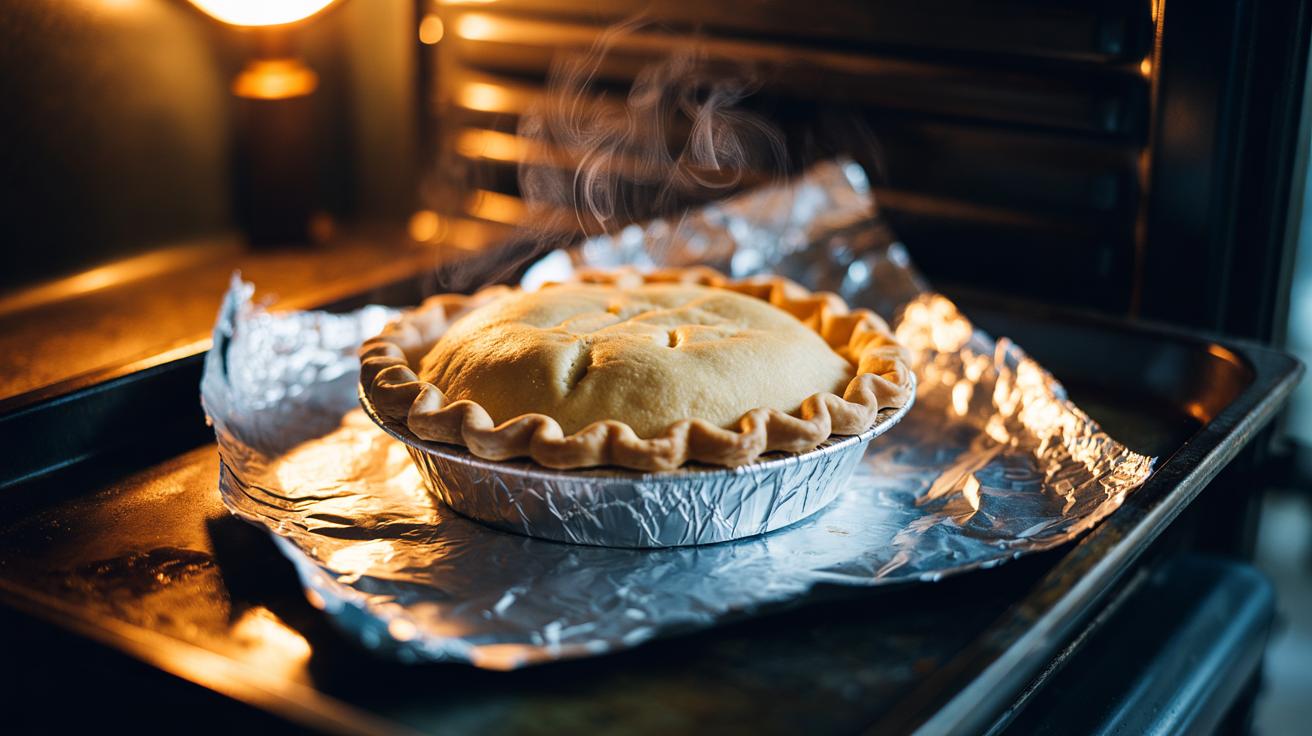
Start with a heavy tray, preheated. A pizza stone or steel beneath is a bonus. Tear a sheet of aluminium foil slightly larger than your tray; crumple lightly, then smooth it to leave shallow ripples. Lay it shiny side up if you’re guarding against harsh top heat. Perforate the foil with a skewer, one hole per 2–3 cm. This becomes a breathable platform, boosting heat circulation under the pastry. Dock your dough lightly, chill again, then place it on the prepared foil. For tarts, sit a perforated ring right on top.
| Foil Setup | Effect on Crust | Best For |
|---|---|---|
| Crumpled–flattened + pinholes | Air channels dry base; even browning | Quiches, fruit tarts |
| Flat foil + perforations | Slight lift, moderate airflow | Shortcrust pie bottoms |
| Foil “collar” round rim | Prevents edge scorch, centre catches up | Deep-dish pies |
Blind-bake with weights if your recipe requires it, but swap ceramic beads for rice or sugar to improve surface contact. Midway through, lift out the weights, keep the foil, and brush a thin egg wash to seal. Remove the foil collar for the final 10–15 minutes to bronze the rim. For juicy fillings, preheat the tray an extra 10 minutes and bake the first third of the time on a lower rack to intensify base heat. If your oven runs hot on top, tent loosely with foil for the first 15 minutes, then peel back to finish crisp.
Choosing the Right Pastry, Trays, and Ovens
Different doughs, different demands. Shortcrust thrives on steady conduction; ripple-foil plus a dark, perforated tray yields a snappy base. Puff needs lift and dry edges; keep foil ridges gentle and the oven well-preheated to maximise steam release. Rough puff sits between: treat it like shortcrust for the base, puff for the rim. Cold dough meeting hot metal is non-negotiable for flake.
Hardware matters. Dark, perforated trays accelerate browning. Light aluminium trays are even but slower; pair with the crumpled–perforated foil to make up the difference. Avoid thick glass for crisp bottoms—it’s slow to heat and radiates poorly. If you own a baking steel or stone, park your tray on it for a turbo-charged base. Fan-assisted ovens move air aggressively, so the foil’s micro-channels shine; in static ovens, give yourself longer at a slightly lower temperature to avoid rim burn.
Targets help. For shortcrust, aim 190–200°C fan (210–220°C conventional). For puff, 200–210°C fan to set layers quickly. Preheat at least 20 minutes. Brush crumbs of semolina or fine polenta under wet fillings to sip stray juices without sog. Combined with the foil’s vented platform, this creates a dry, brittle base that stays crisp hours after cooling.
Common Pitfalls, Safety, and Eco-Friendly Tips
Don’t over-crumple the foil into peaks; you want lanes, not mountains, or the base will dimple. Avoid sealing the tray edge-to-edge without perforations—steam needs an exit. If the foil blocks airflow, you’ve built a sauna, not a dryer. Watch for hot spots: rotate trays two-thirds through the bake. If rims darken too quickly, fit a loose foil collar at once. For extra insurance, a light dusting of icing sugar on the rim during the last minutes promotes rapid, even browning.
Safety matters. Keep foil clear of heating elements and never press it tight to oven walls; you’ll disrupt circulation and risk damage. Avoid prolonged contact between foil and highly acidic fillings (lemon, tomato) at high heat; line with parchment over the foil if concerned. Reuse the sheets: the crumpled–flattened texture improves with a few bakes. When done, wipe and recycle if clean; in the UK, most councils accept rinsed foil in mixed recycling, but check local guidance.
Troubleshooting is simple. Soggy base after a fruit pie? Increase foil perforations and extend the blind bake by five minutes. Pale rim, crisp base? Remove the collar earlier or raise the rack. Uneven colour suggests contact issues—smooth the foil slightly and switch to a darker tray. Keep notes. One or two tweaks and your method becomes set-and-forget, delivering that brittle, buttery snap every time.
Done well, this aluminium foil hack turns a fussy variable—how your oven breathes—into an advantage you can control. The micro-channels dry the base. The collar protects the rim. The perforations vent steam instead of trapping it. The result is pastry that stays crisp, from first slice to last crumb. Ready to test it on your next tart or pie—and which filling will you challenge it with first: a silky lemon tart, a rustic apple galette, or a savoury quiche packed with greens and cheddar?
Did you like it?4.5/5 (23)