In a nutshell
- 🔬 A tiny pinch of baking soda raises brew pH, rebalancing tannins to soften astringency and revive colour and body in weak tea.
- 📏 Dose precisely: about 1/16 tsp per 250 ml, added after steeping and before milk; stir once, taste, and stop to avoid soapiness.
- 🚫 Avoid common errors: don’t add to the kettle, don’t confuse baking soda with baking powder, skip delicate green/white teas, and don’t pair with lemon or add after milk.
- 💧 Helpful with UK hard water: slight alkalinity can improve clarity and perceived bitterness, but it won’t soften water—keep adjustments micro, not macro.
- 💡 Practical rescues for office mugs, hotel sachets, and iced tea; one careful stir lifts dullness swiftly without rewriting the tea’s character.
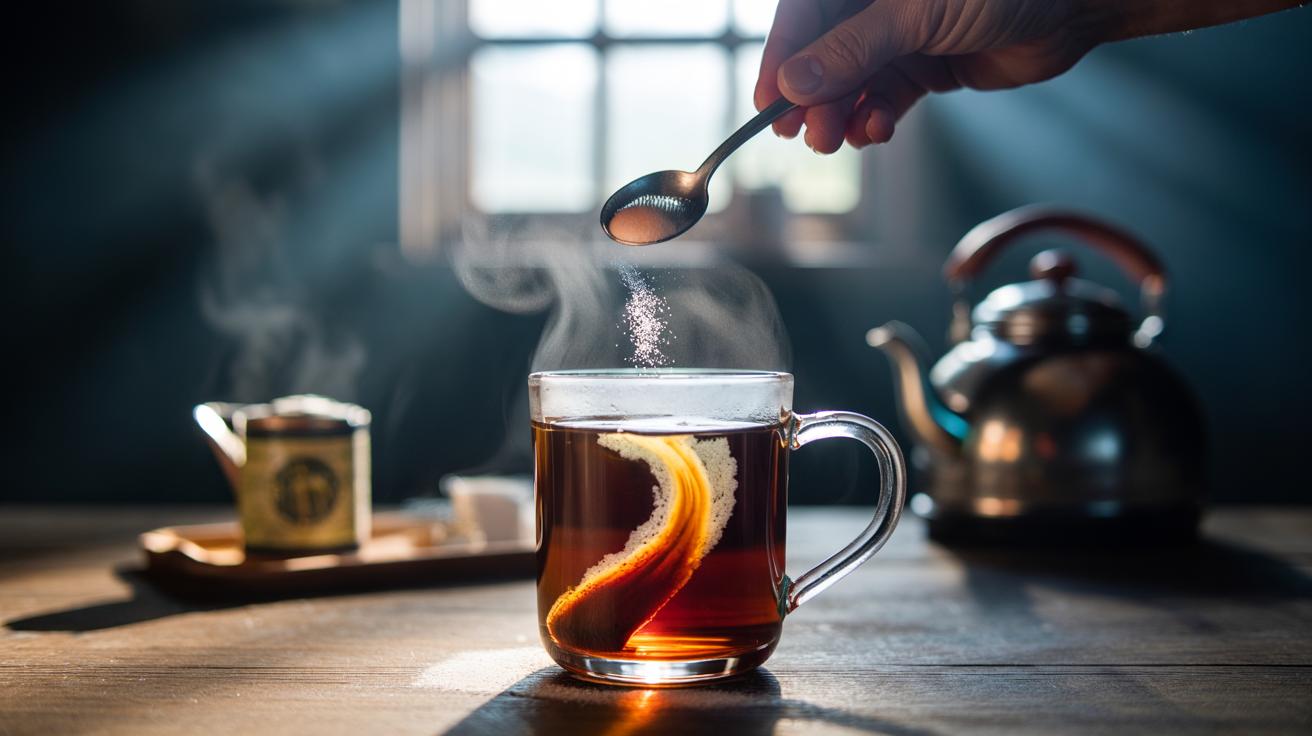
Weak tea happens to the best of kettles. Water a shade off the boil, leaves past their prime, a hasty dunk rather than a patient steep — and the cup sulks. Enter a cupboard staple with an outsized reputation: baking soda, or sodium bicarbonate. A microscopic pinch changes the chemistry of the brew, sharpening colour and coaxing out a rounder, kinder flavour. It’s not a gimmick; it’s alkalinity doing quiet work on tannins. One stir can lift a listless mug to newsroom-ready clarity. Used wisely, it won’t make tea salty, soapy, or odd. It simply shaves off dullness and lets the leaf speak up.
How Alkalinity Rescues a Flat Brew
Tea’s backbone is a tangle of tannins, theaflavins and thearubigins, which lend structure, colour and that lip-drying astringency. When the balance skews — under-extraction, tired leaves, or hard water haze — the cup tastes thin yet oddly harsh. A dusting of sodium bicarbonate nudges the brew’s pH upward. That shift alters how polyphenols bind to proteins on your tongue, dialling back the scratch while freeing the sweeter, maltier notes that seemed to be missing. A literal pinch transforms drab into bright, not by masking flaws but by rebalancing them.
This is chemistry you can taste. Slightly higher pH deepens the reddish-brown of black tea, much like an artist adding a touch of warmth to a cool palette. Harsh edges soften. Body returns. Importantly, bicarbonate is not baking powder; there’s no acid to drive fizz or odd flavours. Think of it as a backstage prompter, whispering lines to a nervous actor. The performance improves, the spotlight feels warmer, and the audience — you — keeps sipping without quite knowing why the scene suddenly works.
The Right Pinch: Safety, Taste, and Proportions
Precision matters. Too much baking soda and your tea turns flabby and soapy; too little and nothing changes. Aim for a “pinch” — about 1/16 teaspoon, roughly 0.3 g — per standard 250 ml mug. Add it to the brewed tea, give one good stir, and taste before adding milk or sugar. For a pot, build cautiously. You’re editing, not rewriting. Those sensitive to sodium should keep the amounts tiny and infrequent; the dose here is modest but not nil. Never heap the spoon, and never confuse baking soda with baking powder, which can introduce off-notes.
| Brew Size | Baking Soda Amount | When to Add | Expected Effect | Notes |
|---|---|---|---|---|
| Single mug (250 ml) | 1 pinch (~1/16 tsp) | After steeping, before milk | Smoother body, brighter colour | Stir once and taste |
| Teapot (1 litre) | 2–3 pinches total | After decanting | Balances astringency in weak pots | Add incrementally |
| Cold brew (1 litre) | 1 pinch | After brewing, before chilling | Rounded, less grassy notes | Avoid with delicate greens |
Keep an eye on milk. Bicarbonate works best on the liquor itself; dairy can mask your adjustments and, in excess, amplify slickness. Add the pinch before the milk, then finish the cup as usual. If you’re cutting back on sodium, reserve the trick for emergencies, not every brew. And if the water is truly at fault, fix the water — filtered or freshly drawn — before you reach for the jar.
Chemistry at the Kettle: Tannins, pH, and Colour
Black tea’s amber glow owes much to thearubigins and theaflavins, polyphenols that behave differently as pH shifts. A touch more alkalinity changes their ionisation, lending a deeper hue and a sensation of greater body. That’s why a weak, pale cup can look and taste livelier after a minor bicarbonate nudge. It’s a pH cue, not a flavouring. At the same time, the softened astringency reduces that raspy scrape across the palate, which many mistake for strength. Strength is extraction; harshness is an imbalance. Bicarbonate addresses the latter.
There’s also the question of water. In the UK, hard water can throw a filmy “tea scum” as minerals interact with polyphenols. A tiny dose of sodium bicarbonate won’t remove hardness, but by adjusting the brew’s environment it can keep the perception of bitterness in check and improve clarity in the cup. Overdo it and the colour may skew muddy, the aromatics flatten, and the surface feel slick. That’s the bright line: micro-adjustment good, macro-meddling bad. If your leaf is delicate — white, green, or lightly oxidised oolong — skip the trick altogether; alkalinity can push those teas into vegetal, soap-adjacent territory surprisingly fast.
Practical Use Cases and Common Mistakes
This fix shines in everyday scrapes. Office kettle gone lukewarm? Hotel room sachets underwhelming? Old tea bags at a relative’s house? A discreet pinch can rescue the cup without a fuss. It’s a back-pocket technique for iced tea as well, where dilution dulls brightness. Stir in the tiniest amount post-brew, and the chilled result tastes cleaner and less puckering. For large batches, treat the whole jug like a single “mug” scaled up sparingly — then stop and taste. Let the cup tell you when to quit.
Mistakes are predictable. People add the soda to the kettle (don’t), dose like salt (don’t), or attempt to revive fully spent leaves (no magic there). Another misstep: adding after milk, which blunts the effect and can create a slippery mouthfeel. Add it to the plain liquor, then finish as you please. Avoid pairing with lemon; acid reverses the shift you just created. And remember, not all weakness needs chemistry. Sometimes it’s fresher leaf, hotter water, or an extra minute in the pot. Baking soda is a scalpel, not a hammer.
Used with restraint, a pinch of baking soda is a quick, clever edit that rescues tepid tea without rewriting the leaf’s character. It’s cheap, reversible, and quietly scientific — the sort of understated trick British kitchens excel at. Respect the pinch, not the heap, and you’ll dodge soapiness while gaining poise and colour in the cup. Next time your brew looks shy and tastes thinner than the front page on a slow news day, will you risk a speck of alkalinity and see what a single stir can do?
Did you like it?4.6/5 (23)