In a nutshell
- ✨ Banana peel contains natural oils and waxes that fill micro-scratches, lift dust fast, and leave a soft sheen with a mild anti-static effect.
- ⏱️ Two-minute method: light dusting, glide the peel (circles then with the grain), then an immediate, thorough dry buff; always test first to avoid tackiness or tone shift.
- 🧭 Safety and suitability: great on sealed finishes (varnish, polyurethane, lacquer, veneer); conditional on oiled pieces; avoid unfinished wood, open end‑grain, inlays, and electronics.
- 🌿 Cost and sustainability: upcycle kitchen waste for a near‑zero cost, low-VOC polish; no harsh solvents, and the peel goes straight to compost.
- 🛠️ Limits and upgrades: it’s not a miracle fix for water rings, heat marks, or deep scratches; use restorative products, or finish with a light beeswax buff for a richer gloss.
There’s an old kitchen whisper making a very modern comeback: the humble banana peel. In under two minutes, it can turn tired timber into a brighter, cleaner surface, thanks to a slick of natural oils and waxes hiding in its soft interior. No aerosol. No harsh solvents. Just a peel, a cloth, and a little technique. It won’t replace deep restoration or fix gouges, but for light dullness and dust build-up it’s a surprisingly deft touch. The result is a gentle, low-VOC gleam and a finish that resists fresh fluff, ideal for last‑minute spruce‑ups before guests or quick weekday resets.
How Banana Peel Oils Work on Wood
Banana peels are packed with a cocktail of lipids, esters, and natural waxes that behave like a feather‑light polish. When you glide the inside of the peel across a sealed wooden surface, those microscopic waxes spread into tiny pores and micro‑scratches, softening the look of scuffs and imparting a soft lustre. Small amounts of moisture help lift dust while the waxy film adds a mild anti-static effect, so dust is less eager to resettle. This is a cosmetic clean-up, not a structural treatment, but it’s persuasive enough for coffee tables, frames, or skirting that’s lost its sparkle.
It’s also gentle on most modern finishes. Polyurethane, varnish, and lacquer respond quickly because the oils sit on the finish rather than soaking into the wood fibres. Oiled furniture will accept the peel’s lipids but may deepen tone slightly. Avoid letting the sugary residue linger; it can feel tacky and attract crumbs. The trick is swift application and a thorough buff. Think of it as a two-minute top-up sheen, best repeated only when needed, not a substitute for periodic waxing or professional care.
Two-Minute Method: From Fruit Bowl to Gloss
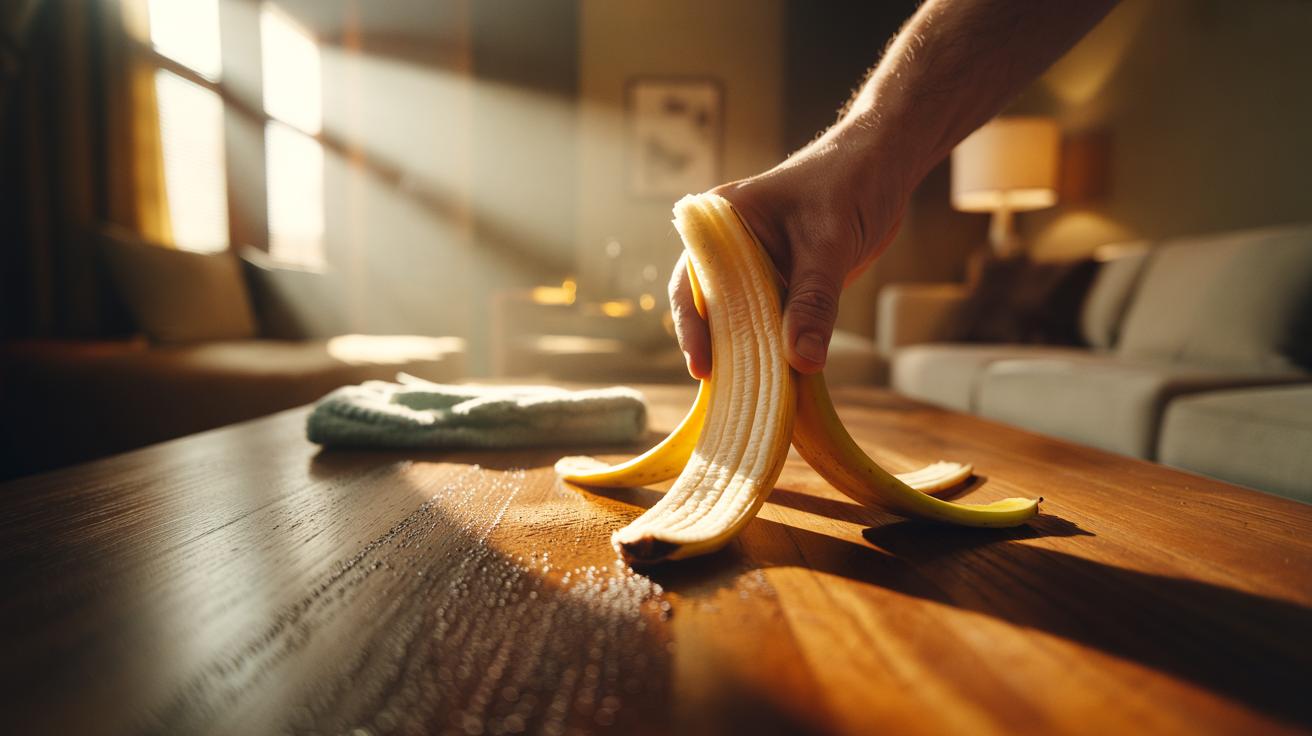
Set a timer. You only need a peel and two cloths. First, dust lightly with a dry microfibre to remove grit that could scratch. Take a fresh banana peel and fold it inside‑out. Use gentle circles over the surface, then stroke with the grain to even the film. Work in postcards-sized sections. Ten to twenty seconds per area is enough. The peel should feel slightly slick, not wet. If it drags, use a fresher patch of peel. Always test on a hidden spot first to confirm the finish plays nicely with the natural waxes.
Immediately swap to a clean, soft cloth and buff. Press lightly, then increase pressure to warm the waxes and level them. Watch the haze turn to sheen. Corners and carvings need only a touch; do not pack residue into grooves. If you’ve overapplied, a barely damp cloth will thin the film, followed by a final dry polish. The non‑negotiable step is the dry buff. That’s what prevents stickiness, stops dust from clinging, and keeps the finish crisp rather than greasy.
Safety, Suitability, and Smart Tips
Most sealed woods are fair game: dining tables, sideboards, bed frames, stair rails. Unfinished timber or heavily waxed antiques are not. Sugar plus open grain equals potential residue. If in doubt, a patch test under a chair or inside a cabinet door tells you everything. Keep peels away from inlays and open end‑grain where absorption is unpredictable. Wipe off promptly from glass, mirrors, and metals, which don’t need this treatment. Never use on keyboards or electronics—sugars and moisture are unhelpful there.
| Surface | Suitability | Notes |
|---|---|---|
| Varnished/Polyurethane furniture | Good | Quick shine; buff thoroughly to avoid tack. |
| Oiled or waxed finishes | Conditional | May deepen tone; test first and buff longer. |
| Unfinished/raw wood | Poor | Absorbs sugars; risk of blotches and residue. |
| Veneer or lacquer | Good | Use light pressure; avoid edges of lifting veneer. |
Store peels in the compost, not on the table. Work with fresh fruit; older peels can be too soft and syrupy. A final touch: a barely scented microfibre leaves no odour, preserving the furniture’s natural character. If you feel any drag after buffing, you’ve left too much on—buff again. Done right, the finish feels clean, not coated.
Costs, Sustainability, and When to Choose Commercial Polish
This trick appeals to thrifty pragmatists and sustainability purists alike. You’re upcycling kitchen waste to do what premium sprays promise: knock back dust, revive sheen, and leave a light protective layer. Cost per use? Effectively pennies, since the peel is a by‑product. There are also benefits for indoor air quality. Low-VOC and plant‑based, it avoids the punchy solvents found in some aerosols. Small homes and households with children or pets appreciate that gentleness. It’s not a miracle varnish, but it is practical maintenance.
Sometimes you still need the heavy hitters. Water rings, heat marks, cloudy lacquer, white bloom in shellac, or significant scratches call for specialist products—beeswax pastes, restorative oils, or professional refinishing. High‑traffic dining tables might prefer a monthly wax rather than ad‑hoc peel sessions. Treat this as a maintenance hack that extends the interval between deeper polishes. For a deluxe finish, follow your banana‑buff with a whisper of beeswax, then a firm, dry polish. That’s a one‑two combo: quick, clean, and convincingly glossy.
In a world of complicated cleaning aisles, the banana peel is disarmingly simple. It fills tiny flaws, shifts dust fast, and leaves a friendly, plant‑based gleam that suits modern flats and character homes alike. Keep it for touch‑ups, not overhaul. Always test, always buff dry, and always compost the evidence. Next time your coffee table looks weary and guests are on the way, will you reach for a spray—or try the peel and see how much shine two minutes can buy?
Did you like it?4.5/5 (22)