In a nutshell
- ⚡ Dryer sheets use anti-static agents and mild surfactants to loosen and lift soap scum; positively charged quaternary ammonium compounds neutralise residue clinging to glass.
- 🧽 Quick method: steam or warm the glass, wipe with a damp (ideally used) dryer sheet using light pressure, then rinse, squeegee, and buff with a microfibre cloth.
- 🧪 Know the limits: heavy limescale needs white vinegar or a descaler; test on coated glass, and never mix bleach with acids.
- 📊 Comparison: dryer sheets are fast and low-cost for everyday haze; bicarbonate of soda helps on grime; vinegar targets minerals; commercial descalers tackle stubborn scale.
- 🚿 Keep glass clear longer: daily squeegee, a light neutral spray, good ventilation, periodic glass sealant reapplication, and consider a water softener.
It sounds like a TikTok myth, yet it’s the sort of low-tech trick that makes a professional cleaner nod in approval: a simple dryer sheet can wipe away cloudy shower doors in minutes. The secret lies in the sheet’s anti-static chemistry and soft, non-woven fibres that grab at soap scum and haze. Used right, it’s quick, cheap, and oddly satisfying. There are limits, of course. Heavy limescale still needs a targeted acid. Coated glass requires caution. But for everyday build-up, one dampened sheet can shift the film and leave a slick shine. Always finish by rinsing and drying the glass to prevent residue.
Why Dryer Sheets Work on Soap Scum
Soap scum is a stubborn mash‑up of fatty soap residues and minerals from hard water, essentially calcium and magnesium stearates. This film clings to glass because it’s slightly hydrophobic and electrostatically “sticky”, attracting lint and dust. Enter the dryer sheet. It’s impregnated with anti-static agents and mild surfactants that change how the film behaves on the surface. Dampen the sheet and its cationic compounds loosen the bond, emulsify the greasy fraction, and reduce the static charge that helps scum hang on. The sheet’s fibres add a gentle, micro-abrasive effect. Not sanding. Just enough to lift the grime.
The chemistry is quietly clever. Many sheets use quaternary ammonium compounds (quats) that carry a positive charge. Glass and scummy residues tend to hold negative charges in patches, so the quats neutralise that attraction and “unstick” the film. Meanwhile, softeners and lubricants help the wipe glide, preventing scratches while increasing contact. Add warm water and you kick-start surfactant action, encouraging the residue to break and rinse. Test first in a corner if your shower panel has a factory protective coating or aftermarket glass sealant, as dryer-sheet additives can dull some treatments.
Step-By-Step: The Quick Wipe Method
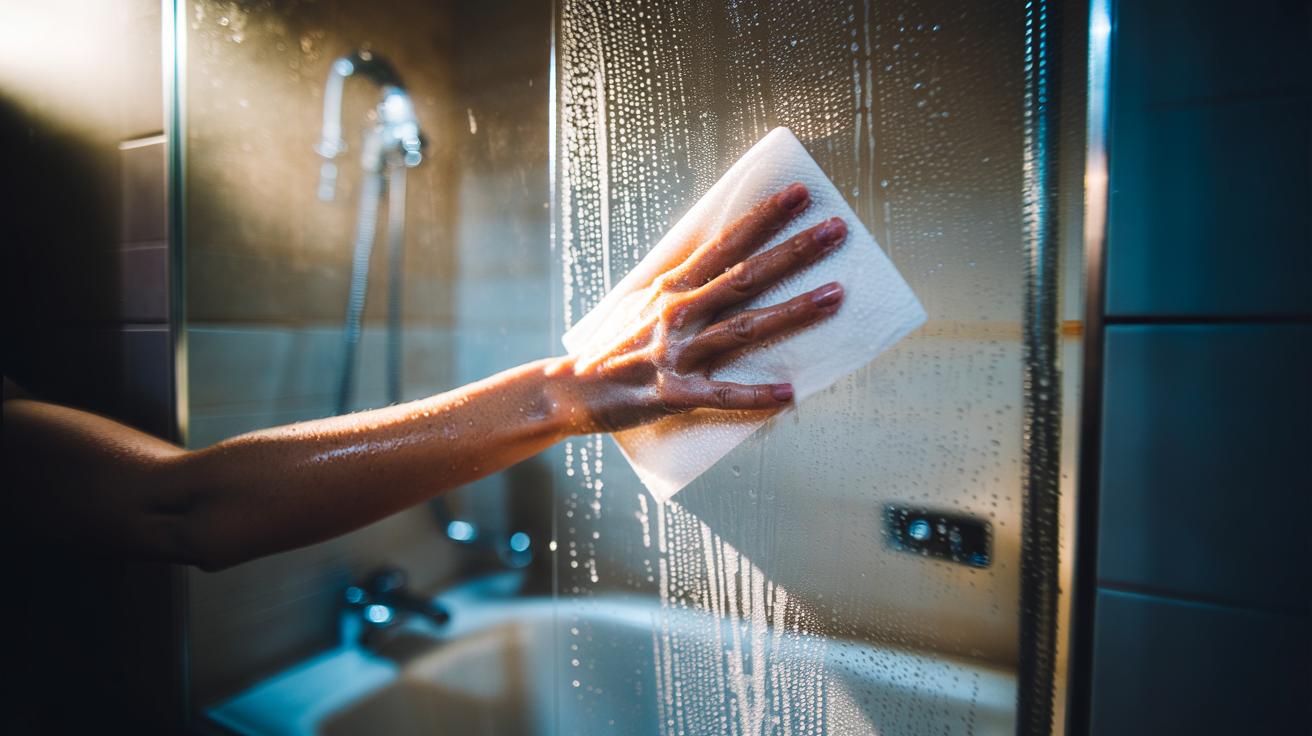
First, run the shower hot for a minute to fog the glass, or splash on warm water. Steam softens scum and makes the wipe easier. Take a used dryer sheet if you have one; it’s slightly less soapy yet still effective, cutting fragrance and residue. Lightly wet the sheet. Start with small circles on cloudy zones, then switch to long vertical passes to chase drips. Corners and door edges hold more film, so spend an extra 20 seconds there. Keep pressure light—let chemistry do the work. If the sheet snags grit, stop and rinse the panel before continuing.
Now the crucial bit: rinse thoroughly, top to bottom. Any leftover softeners can smear or grab dust later. Squeegee the panel, then buff with a clean microfibre cloth to a squeak. Tough spots? Fold the sheet and make a fresh face, or briefly park a damp sheet over the stain for 60 seconds and wipe again. For acrylic enclosures, keep your touch featherlight to avoid micro-marring. Always finish by rinsing hardware and seals as fragrances and oils can sit in crevices. Dispose of the sheet responsibly, or rinse and reuse it for taps and glass shelves.
How It Compares With Other Cleaners
Not all haze is created equal. Dryer sheets excel at everyday film and dust‑magnet smearing, but chunky limescale demands an acid such as white vinegar or a specialist descaler. If smells are an issue, used sheets tone down fragrance while retaining enough surfactant to work. For eco purists, bicarbonate of soda offers grit without chemicals, though it needs more elbow grease. Never mix bleach with vinegar or acidic products—dangerous fumes can form. Here’s a quick comparison to help you choose the right tool for the job.
| Method | Time | Cost | Best For | Cautions |
|---|---|---|---|---|
| Dryer sheet (damp) | 2–5 minutes | Very low | Light to moderate soap scum, haze | Rinse well; check coated glass |
| White vinegar spray | 5–10 minutes dwell | Low | Mineral limescale, water spots | Avoid on stone; don’t mix with bleach |
| Bicarbonate of soda paste | 10 minutes | Low | Grimy corners, grout smears | Rinse thoroughly; gentle abrasion |
| Commercial descaler | 5–8 minutes dwell | Medium | Heavy scale, etched spots | Ventilate; follow label strictly |
As a rule, start mild and escalate. The dryer sheet hack tackles the most common, cosmetic mess with minimal fuss. If droplets still ghost the glass after wiping and rinsing, you’re looking at mineral deposits—switch to an acid step, then return to the sheet or a neutral cleaner for shine. Think layers: dissolve minerals first, then degrease and de-static the surface.
Beyond the Hack: Keeping Glass Clear Longer
Once you’ve won back your sparkle, protect it. Teach the household a 10‑second ritual: squeegee after the last shower of the day. It sounds fussy. It isn’t. Those quick passes interrupt the cycle that builds soap scum and limescale. A daily neutral spray—distilled water with a drop of dish soap—can also reduce spotting without overwhelming fragrance. If your area has hard water, a small water softener cartridge on the shower feed or a whole‑house system cuts the problem at the source.
Sealants help, too. A quality glass sealant or automotive‑grade hydrophobic coating makes water bead and roll off, starving scum of a foothold. Check compatibility: some products dislike quats or strong acids. Reapply sealants as directed, and avoid abrasive pads that can strip them prematurely. For households sensitive to scents, choose unscented sheets or swap the hack for vinegar on mineral days and a neutral glass cleaner on others. Ventilation matters: keep the bathroom fan running during and after showers, then crack the door to purge humidity. Dryer sheets can win the battle; smart habits win the war.
Used with a light touch and a good rinse, a humble dryer sheet offers a fast route to clear, camera‑ready glass, harnessing anti-static chemistry to lift stubborn soap scum with surprising ease. It’s not magic, just smart surface science and a forgiving applicator. Pair the trick with a squeegee routine and occasional targeted descaling, and your shower will stay bright far longer between deep cleans. Will you try the dryer sheet wipe this week and track how long the clarity lasts compared with your usual routine?
Did you like it?4.5/5 (20)