In a nutshell
- 🧼 Bicarbonate of soda (baking soda) is a mildly alkaline cleaner that loosens acidic residues, offers gentle abrasion, and acts as a powerful odour neutraliser while boosting detergent performance.
- 🧪 Use a 3:1 paste (bicarb:water) for pre-treating stains, or a short soak at 4 tbsp per litre; blot first, apply gently with a soft brush, and always spot-test hidden seams.
- 🧥 Stain tactics: for grease, dry-sprinkle then paste; for protein stains (blood/dairy), rinse cold first; for mud/grass, let dry, brush off, then paste; for sweat/deodorant, a 30-minute paste lifts build-up.
- ⚠️ Safety: limit contact on wool/silk, be gentle on dark saturated colours, avoid mixing with vinegar or using alongside chlorine bleach, and use moderation in the machine.
- 📋 Quick-reference ratios and times help prevent set-in stains; this method is budget-friendly, widely available in UK shops, and kinder to everyday fabrics.
Every wardrobe has victims. The coffee dash before a commute, the tomato splash at lunch, the muddy sprint after the bus. Many of us reach for pricey stain removers, then grimace at the bill and the results. Yet laundry experts quietly point to a single, inexpensive hero already in your cupboard: bicarbonate of soda (often labelled as baking soda). This humble powder doesn’t just deodorise fridges; it tackles some of the most awkward marks on everyday fabrics, and it does so gently. Used right, it’s thrifty, effective, and kinder to clothes. Used wrong, it can disappoint. Here’s how to get it right, every time.
Why Bicarbonate of Soda Works on Stains
Think chemistry, not magic. Bicarbonate of soda has a mildly alkaline pH that helps loosen acidic residues from coffee, tea, and sweat, while encouraging light saponification—turning trace fatty acids from oils into soap-like compounds that rinse away. Its fine particles also add a whisper of gentle abrasion, lifting surface grime without scouring fibres. Crucially, it’s an excellent odour neutraliser, binding with acidic scent molecules so that clothes smell genuinely fresh rather than perfumed. It lifts residues without bleaching dyes or roughing up fabric like harsher powders can.
There’s more: bicarbonate softens water slightly, helping detergents work better during the main wash and preventing mineral films that dull colours. Because it doesn’t contain optical brighteners or chlorine, it’s friendlier to most coloured garments and everyday cottons. Used as a pre-treat paste or a short soak, it creates an environment that persuades stains to let go before you even press “start” on the machine. That’s why households and professional launderers alike keep it nearby. Simple. Reliable. Cheap. A rare trifecta in laundry care.
How to Use It on Common Stains
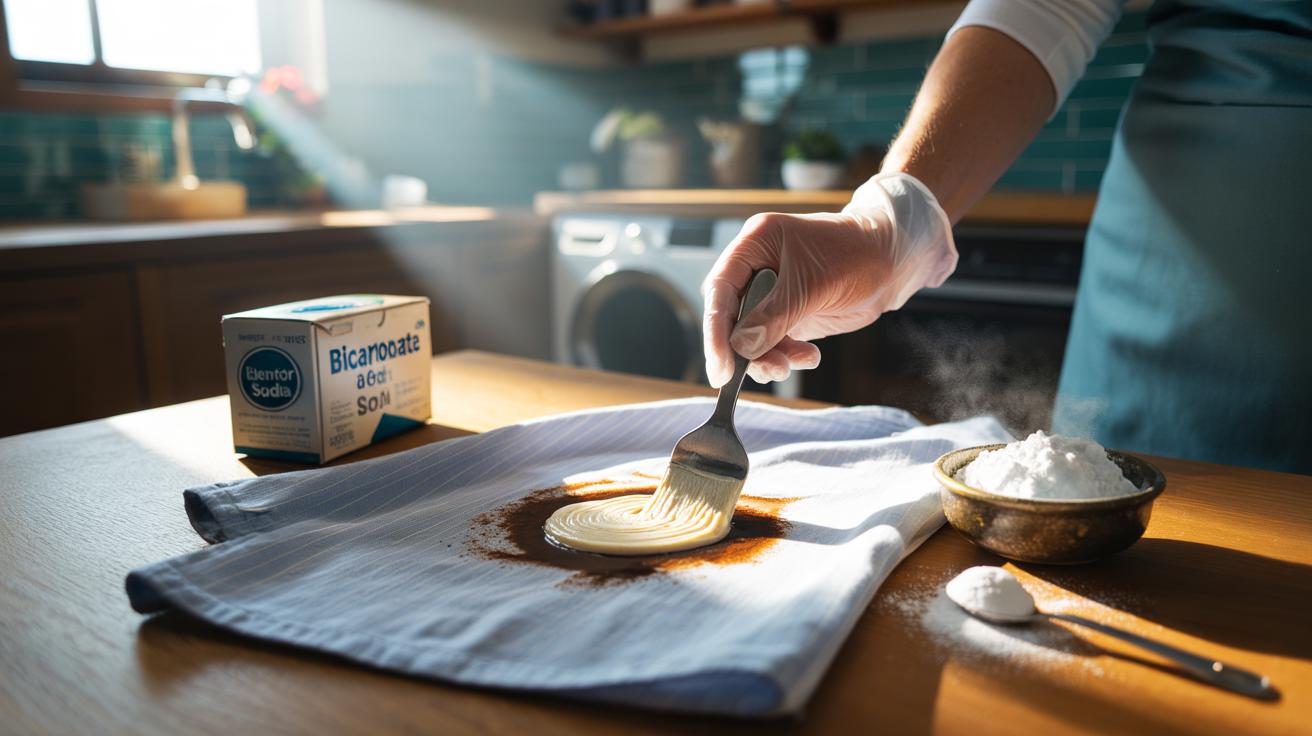
Start with the basics. For collars, underarms, coffee drips, and general grime, mix a paste of 3 parts bicarbonate of soda to 1 part cool water. Spread over the stain with a soft toothbrush. Leave for 15–30 minutes, then rinse and launder as normal. For larger problem areas—sports kit or school uniforms—stir 4 tablespoons into 1 litre of cool water, submerge the garment for 30–60 minutes, rinse, then wash. Always test on a hidden seam before treating the whole piece.
Grease spots from chips, salad dressing, or bike chains? Sprinkle dry bicarbonate directly to the patch and tap gently; it acts as a blotter, pulling oil from fibres. After 10 minutes, brush off the powder, apply a fresh paste, wait another 15–20 minutes, then launder. Mud and grass need patience: let mud dry completely, crumble it away, then use the paste and a soft brush in short strokes from the outside in. For sweat and deodorant marks, a 30-minute paste rest usually does the trick, reviving dingy whites and bright colours alike.
Protein stains—blood, baby spit-up, dairy—prefer cold. Rinse with cold water first, then apply a bicarbonate paste and leave for up to 30 minutes before washing. Never use hot water on fresh protein stains, or you risk setting them permanently. If a shadow remains after washing, repeat the pre-treat cycle rather than scrubbing aggressively. Slow and steady saves the fabric—and your favourite shirt.
Safety And Fabric Caveats
Bicarbonate of soda is gentle, but not universal. Wool, silk, and other protein-based fibres can dislike prolonged alkalinity, becoming rough or losing sheen. For these, limit to a very brief spot test and a quick rinse—or choose a enzyme-based delicate cleaner instead. When in doubt, read the care label and test first. Dark, highly saturated colours can sometimes show lightened patches if you rub too hard. Treat softly, dab rather than grind, and keep dwell times modest. Metallic trims may tarnish if left in wet alkaline conditions, so work around buttons and buckles.
In washing machines, moderation matters. A tablespoon in the drum can help neutralise sour odours and reduce musty build-up, but heaping scoops may leave residue in seals and dispensers. Keep it separate from chlorine bleach cycles, and don’t combine with vinegar in the same pre-treat step; the fizz is satisfying but neutralises cleaning power. Finally, remember that old stains oxidise. Bicarbonate improves many, yet it’s not a time machine. Two rounds of gentle treatment usually beat one aggressive attack.
Quick Reference And Mixing Ratios
Clip-and-keep guidance makes life easier on rushed mornings. Use these ratios and times as a starting point, adjusting slightly for fabric thickness and stain age. Less is more: short contact times, gentle brushing, thorough rinsing.
| Stain Type | Method | Ratio | Time |
|---|---|---|---|
| Coffee/Tea | Paste, light brush | 3:1 (bicarb:water) | 20–30 mins |
| Grease/Oil | Dry sprinkle, then paste | Cover dry; then 3:1 | 10 mins + 20 mins |
| Sweat/Deodorant | Paste pre-treat | 3:1 | 30 mins |
| Mud/Grass | Dry, brush, paste | 3:1 | 15–25 mins |
| Protein (Blood/Dairy) | Cold rinse, paste | 3:1 | 20–30 mins |
| General Soak | Short presoak | 4 tbsp per litre | 30–60 mins |
Blot first, then treat—especially with liquids. Work from the edge toward the centre to prevent rings. Rinse thoroughly before the main wash so loosened soils don’t resettle. And remember: cool water is your friend for most pre-treats, while gentle handling protects weaves and knits. Used this way, bicarbonate becomes a quiet powerhouse in your laundry routine.
One ingredient, many wins. With bicarbonate of soda you can dislodge fresh coffee, calm sweaty collars, and freshen gym kit without splurging on gimmicky sprays. It’s budget friendly, fabric kind, and widely available in UK supermarkets. The key is technique: good ratios, short contact times, and a light touch. Treat promptly and test first, and most “ruined” favourites get a second life. Which stubborn stain will you challenge with a spoonful of bicarb this week, and what fabric are you brave enough to rescue first?
Did you like it?4.5/5 (22)