In a nutshell
- 🌱 Compost tea is a living brew that amplifies soil microbes, driving nutrient cycling, improving soil structure, and helping with disease suppression for faster, sturdier growth.
- 🔧 Brew safely: use mature compost and dechlorinated water with vigorous aeration, keep temperature at 15–24°C, brew time 24–36 hours, and prioritise strict sanitation; if it smells sour, discard.
- 🌿 Apply smartly: Root drench at planting and every 2–4 weeks; for foliar spray, dilute 1:10–1:20 at dawn or dusk, strain well, and adjust by crop; frequency depends on plant vigor and season.
- 📈 UK growers report cumulative results—thicker stems, deeper colour, livelier lawns—when tea complements mulching and good soil care, boosting overall resilience without acting as a silver bullet.
- ⚠️ Mind pitfalls: avoid manure-heavy compost for food safety, skip heavy sugars, never store tea—use fresh—and reject anaerobic brews; when in doubt, add it to the compost heap, not crops.
Across Britain’s plots and patios, a quiet brewing revolution is underway. Gardeners are making compost tea—a lively infusion of mature compost and oxygenated water—and swearing by faster growth, deeper colour, and sturdier plants. The idea is simple yet potent: multiply beneficial microbes, then deliver them straight to the root zone or foliage. It’s not witchcraft. It’s ecology in a bucket. Allotmenteers whisper about bumper cucumbers; lawn obsessives report richer greens; rose growers note fewer powdery mildew scares. Skeptics remain, citing mixed trials, but a wave of evidence from practical plots is cresting. Healthy soil, not bottles, grows gardens. The UK’s green-fingered are listening—and brewing.
The Living Elixir: What Compost Tea Does for Soil and Plants
At the heart of compost tea lies the soil food web. Aerated brewing wakes dormant bacteria, fungi, protozoa, and nematodes that drive nutrient cycling. They release enzymes that pry nutrients from mineral and organic matter, delivering bioavailable nitrogen, phosphorus, and trace elements right where roots forage. Fungal hyphae help aggregate soil particles, improving structure, aeration, and water-holding. In containers, this can be transformative; in heavy clay, it can be liberating. Many growers report quicker root establishment and sturdier transplants when using a gentle tea root drench. Life begets life: inoculate the rhizosphere and plant resilience often follows. The effect is subtle at first, then unmistakable as growth accelerates.
There’s also a protective edge. Some teas enhance disease suppression by occupying leaf and root surfaces before pathogens arrive, a kind of microbial crowd control. A well-balanced brew can shift the soil community towards fungi that favour perennials and woody plants, or bacteria that boost annual veg, depending on your compost. Humic and fulvic compounds in the extract aid micronutrient chelation and buffer pH swings, smoothing out stress spikes in spring cold snaps or summer dry spells. It’s not a silver bullet, nor a high-analysis fertiliser. Think of compost tea as a living amendment that complements, not replaces, good soil management.
Brewing It Right: Safe, Aerated, and Repeatable
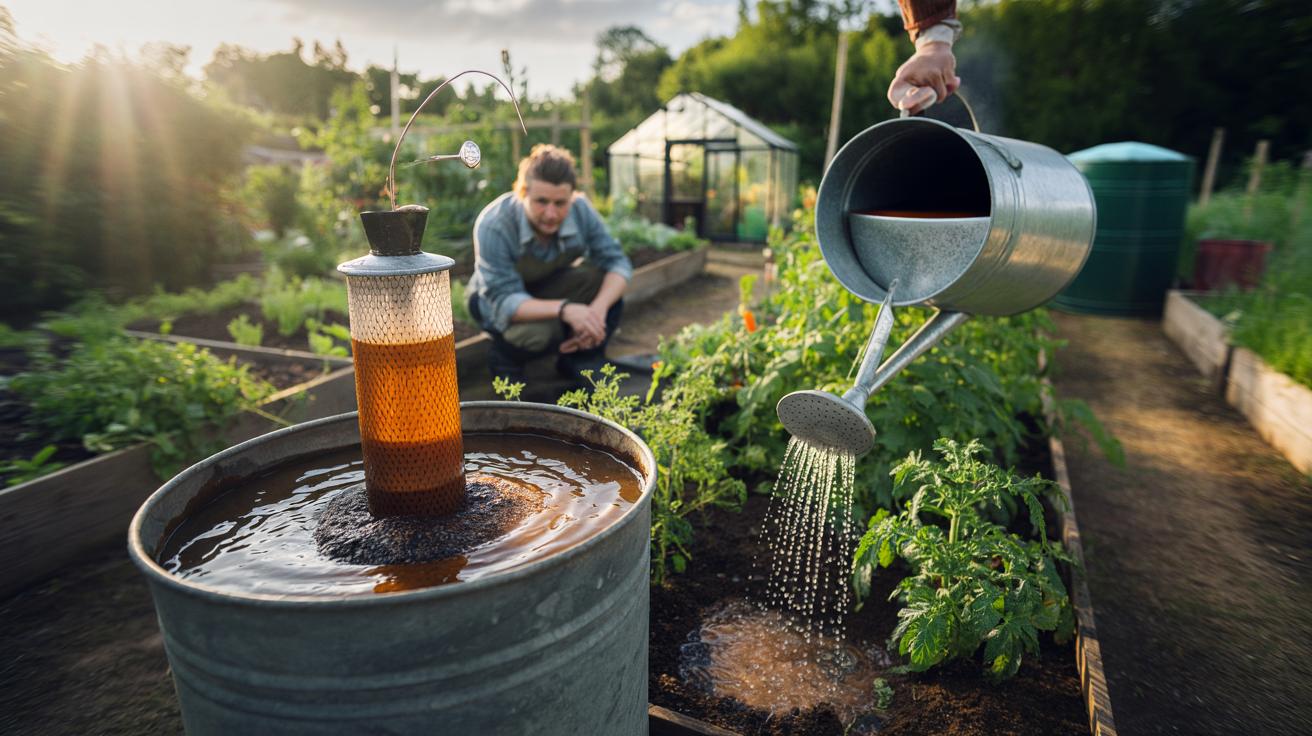
Consistency starts with ingredients and oxygen. Use mature, fully cured, plant-based compost that smells like woodland, not ammonia. Fill a clean bucket or brewer with rainwater or dechlorinated tap water, add a mesh bag of compost (roughly 1 part compost to 10 parts water by volume), and supply vigorous aeration using an aquarium pump and air stones. Keep temperatures between 15–24°C and brew for 24–36 hours. The aroma should be fresh and earthy; stop immediately if it turns sour. Strain well, apply promptly. Use it fresh; don’t store. Clean everything afterwards. Treat sanitation seriously to avoid brewing the wrong biology, and avoid manure-heavy composts for food safety on salad crops.
Additives are optional, not obligatory. A pinch of kelp or humic extract can nudge diversity; sugary feeds risk runaway bacterial blooms in inexperienced setups. Aim for balance, not froth for froth’s sake. For soil drenches, many gardeners use tea straight or diluted 1:5. For foliar sprays, go lighter—1:10 to 1:20—preferably at dawn or dusk to protect microbes from UV and to reduce leaf scorch. If in doubt, test on a few leaves first. Safety note: avoid foliar applications on edible leaves immediately before harvest; give a reasonable interval. The goal is repeatable, oxygen-rich brewing that tilts the microbial deck in your favour.
| Parameter | Recommended Range/Notes |
|---|---|
| Compost Source | Mature, plant-based, fully cured; fresh woodland aroma |
| Compost:Water | Approx. 1:10 by volume |
| Aeration | Continuous, vigorous bubbling across the surface |
| Temperature | 15–24°C |
| Brew Time | 24–36 hours; stop if odour turns sour |
| Additives | Optional kelp/humic; avoid heavy sugars |
| Application Dilution | Drench 1:1 to 1:5; foliar 1:10–1:20 |
| Frequency | Every 2–4 weeks during active growth |
| Storage | Do not store; use within 4–6 hours |
Results in the Border: What UK Gardeners Report
From Cornish polytunnels to Yorkshire allotments, field notes share a thread. Tomatoes put on thicker stems. Courgettes shrug off early stress. Roses hold foliage longer into autumn. On compacted lawns, repeated tea drenches paired with gentler mowing have delivered springy swards that bounce rather than bog. Container growers love the way tea wakes tired potting mixes, especially when paired with a light top-dress of compost. The effect is rarely explosive. It’s cumulative. Week by week, plants behave as if the handbrake has been released. Colours deepen; watering intervals stretch; transplant sulks shorten.
Evidence from formal trials is mixed—method matters, as does compost quality and baseline soil biology. Yet practical gardeners aren’t waiting for perfect papers. They’re iterating: small batches, careful notes, side-by-side beds. Many stress one lesson above all: compost tea is not a rescue for poor husbandry. It amplifies good decisions—diverse compost inputs, mulching, gentle cultivation—while softening the edges of drought, pH wobbles, and disease pressure. Used judiciously, it becomes part of a resilient toolkit rather than a headline act. That, perhaps, is why it sticks.
When and Where to Use It for Maximum Effect
Timing magnifies benefit. Apply a root drench at planting or transplanting to coat roots and kick-start the rhizosphere. Repeat every 2–4 weeks during active growth, pausing in cold snaps when microbes and roots are sluggish. Foliar applications shine during mild, still evenings when leaves are dry and stomata receptive. Avoid blasting midday in bright sun. In beds recently amended with quality compost, little and often works; in tired soils, begin weekly for a month, then taper. Lawns love a light spray after mowing. Greenhouses appreciate it after heavy feeding to buffer salt stress.
Match tea to plant goals. Annual veg often prefer a bacteria-leaning brew; perennials and shrubs respond to a bit more fungal presence—start with woody compost fractions. Always strain finely for sprayers, and keep nozzles clean. Beware pitfalls: anaerobic brews can set you back with odour and potential pathogens. If it smells wrong, it is wrong. When in doubt, pour it on the compost heap, not the crop. Finally, remember the driver is diversity. Rotate compost sources—leaf mould, garden compost, a touch of well-aged bark—to keep your microbial cast broad and adaptable.
Compost tea’s magic isn’t mysticism; it’s biology, harnessed and applied with care. In a gardening era seeking lower inputs and higher resilience, this living brew offers a nimble, low-cost edge that pairs beautifully with mulches, diverse composting, and thoughtful watering. Results aren’t uniform, yet the pattern is encouraging: more life below, better growth above. UK growers are experimenting, sharing, refining. The kettle is on, the air pump hums, and the borders respond. Will you set up a small side-by-side trial this season and see what a carefully brewed compost tea does in your own soil?
Did you like it?4.7/5 (25)