In a nutshell
- 🧅 Half an onion leaves a thin hydrophilic film that spreads condensation and clears foggy glass in seconds by lowering surface tension.
- 🔬 Onion juice contains sulfur compounds plus sugars/acids that act like mild surfactants, creating a temporary anti-fog layer lasting hours to a couple of days.
- 🛠️ Safe use: clean glass, swipe lightly, wait 30–60 seconds, then buff thoroughly; avoid sensors, tints, and the primary windscreen view—safety first.
- ⚖️ Alternatives compared: potato (starches), diluted washing-up liquid (surfactants), shaving foam (film-formers), and commercial sprays; onion is cheap, natural, and quick but may smell if overapplied.
- 🚗 Troubleshooting and limits: odour fades after buffing; streaks mean excess juice; test on special coatings; for cars, prioritise demisters/ventilation and use onion only as a cautious stop-gap.
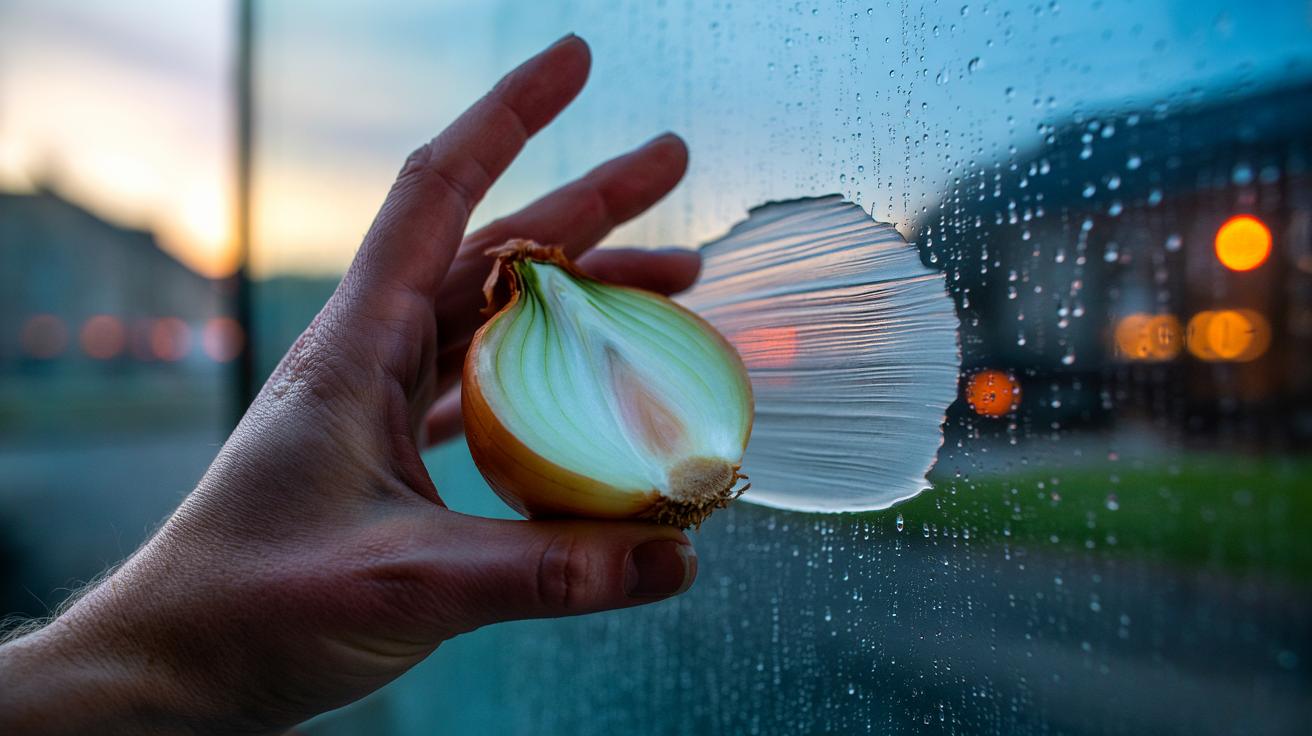
There’s a homespun trick doing the rounds in British kitchens and car parks alike: rub half an onion over fogged glass and watch it clear in seconds. It sounds like folklore, yet chemistry backs it up. The onion’s juices create a microscopically thin, hydrophilic film that changes how water behaves, making condensation spread and evaporate rather than bead into cloudy mist. It costs pennies. It’s quick. And it uses nothing synthetic. Still, there are caveats and best practices. Visibility is safety, so you must apply it correctly and conservatively. Here’s how the humble onion turns glass crystal clear—and how to use it without turning your windscreen into a salad bowl.
Why an Onion Works on Foggy Glass
Onions brim with sulfur compounds—notably thiosulfinates and traces of the infamous propanethial S-oxide—along with mild acids, sugars, and polysaccharides. When you wipe a freshly cut onion across glass, these molecules leave a whisper-thin coating. That coating is slightly surfactant-like, lowering the surface tension of water droplets. Instead of forming millions of tiny beads that scatter light and look like fog, moisture spreads into a transparent sheet. The result: clarity. This simple change in water behaviour makes fog vanish astonishingly fast.
There may be a second effect. The sugars and organic acids in the juice can bind faintly with the glass surface, improving “wetting” just enough for mist to slide away. In essence, you’re crafting a temporary anti-fog layer without polymer additives. It won’t last forever—hours to a couple of days at best, depending on humidity—but it’s remarkably effective for bathroom mirrors, spectacle lenses you’re not wearing, camera filters you’re not shooting through immediately, and interior windows. Use common sense with car windscreens: apply conservatively, buff thoroughly, and never smear your direct sightline.
Step-By-Step: Using Half an Onion Safely
Preparation matters. Choose a fresh, firm onion. Halve it cleanly to expose a wet, even face. Ensure the glass is free of grease and dust; a quick wash and dry helps the film grab uniformly. Now, with the cut side, swipe lightly across the fog-prone area in overlapping passes. No pressing, no drenching. You want a near-invisible sheen, not streaks. Leave it for 30–60 seconds, then buff with a lint-free microfibre cloth until the glass looks dry and crisp. Done right, you’ll see no obvious residue—only mist that refuses to stick.
Where and when? Bathroom mirrors before a hot shower. Interior home windows on chilly mornings. Side windows that fog at the kerb. With cars, be cautious: avoid camera lenses, sensors, and any tinted films. Test in a corner first. Keep the application below eye level and away from the primary view through the windscreen. Never apply anything that reduces visibility while driving. If you notice streaks or odour, buff longer. A final pass with a barely damp cloth, followed by a dry polish, can tame any lingering onion scent without stripping the anti-fog effect.
How It Compares to Other Anti-Fog Tricks
Plenty of quick fixes compete with the onion. Starch-rich potato rubs also leave a hydrophilic film; a dab of diluted washing-up liquid works as a classic surfactant barrier; shaving foam creates a longer-lived coating but can smear; commercial anti-fog sprays are convenient, pricier, and vary in durability. The onion sits in the middle: cheap, immediate, biodegradable, with decent—but not permanent—performance. Its main drawback is the mild odour and the need for careful buffing.
| Method | Key Action/Compounds | Pros | Cons | Best Use |
|---|---|---|---|---|
| Half an Onion | Sulfur compounds; hydrophilic film | Natural, fast, cheap | Odour; needs good buffing | Mirrors, side windows |
| Potato | Starches create hydrophilic layer | Common, mild residue | Can haze if overapplied | Bathroom mirrors |
| Washing-up Liquid (dilute) | Surfactants reduce surface tension | Reliable, controllable | Visible streaks if heavy-handed | Lenses, windows |
| Shaving Foam | Film-forming agents | Longer-lasting | Messy; fragrance | Gym mirrors, visors |
| Commercial Spray | Polymer/Surfactant blends | Convenient; designed for optics | Cost; mixed longevity | Glasses, camera gear |
For car interiors, your best baseline remains proper ventilation, air-con, and a clean glass surface. That said, a judicious onion buff on the lower corners can help on damp mornings. Think of it as a stop-gap, not a substitute for demisters.
What the Science Says About Smell, Streaks, and Safety
Does it pong? Briefly. The volatile organosulfur molecules fade fast once buffed and exposed to airflow. If odour persists, a light wipe with a cloth barely misted with water or a 1:10 white-vinegar solution will tame it without stripping the hydrophilic layer entirely. Streaks result from too much juice. Less is more: apply sparingly, then polish until you can’t see where you’ve been. On coated or speciality glass—anti-reflective lenses, hydrophobic car coatings—test on a hidden edge. Some coatings may reject or blotch with any household film.
Safety-wise, the concern isn’t toxicity—it’s clarity. Onions are food-safe; the glass isn’t harmed. But any film can scatter headlights if smeared. If you can see a trace, keep buffing. If you’re dealing with heavy fogging in a vehicle, fix the cause: wet mats, poor circulation, or a failing cabin filter. The onion trick excels in contained, predictable settings—mirrors before a shower, windows ahead of the school run—where a quick, crystal-clear finish beats waiting for the room or car to warm up. Used with restraint, it’s a tidy, eco-friendly addition to your anti-fog toolkit.
Half an onion won’t change the weather, but it can change how water behaves on glass, trading milky mist for clarity in a single swipe. The chemistry is simple, the cost negligible, and the control is in your hands. Apply lightly, buff patiently, and keep safety front and centre, especially on the road. If a vegetable can double as a surface-tension hack, what other pantry staples are hiding plain-sight solutions to daily niggles—and which one would you test next?
Did you like it?4.5/5 (22)