In a nutshell
- 🍋 A fresh lemon slice can make taps shine in ~30 seconds as its citric acid rapidly breaks down stubborn limescale and lifts soap scum.
- ⚗️ Science: citric acid dissolves calcium carbonate (fizzing CO₂) and chelates calcium with citrate, stopping scale from re-forming on drying.
- 🧽 Quick method: cut lemon, rub over crusted areas, wait 15–30 seconds, rub again, rinse, then buff dry; use slices/soaks for aerators and add a pinch of salt for gentle abrasion on stainless.
- 📊 Options compared: fresh lemon or bottled juice for light scale; a 5% citric acid solution for heavier deposits; vinegar works but citric often performs better on carbonate-rich scale.
- ⚠️ Safety and limits: avoid use on marble/limestone and delicate or damaged finishes, never mix with bleach, and reserve dedicated descalers for deeply entrenched build-up.
Britain’s hard water leaves a tell-tale crust: chalky rings around taps, a dull film on chrome, powder in aerators. It looks stubborn, even permanent. Here’s the twist. A fresh lemon slice can make a tap shine like new in around 30 seconds. The trick isn’t folklore. It’s chemistry you can watch fizz in real time. The fruit’s natural citric acid targets limescale—the calcium carbonate residue that rides our pipes from limestone aquifers—breaking it down and loosening grime in one sweep. It’s cheap, biodegradable, delightfully scented. And if you’re wary of harsh chemicals in a family kitchen, the fruit bowl suddenly doubles as a cleaning caddy.
Why Lemon Works on Limescale
At the heart of the tap’s chalky bloom lies calcium carbonate, the mineral skeleton of limescale. Lemon contains citric acid, a weak organic acid with a potent one-two punch: it provides hydrogen ions to dissolve carbonate, releasing a flurry of tiny CO₂ bubbles, and it chelates free calcium, binding the metal so it can’t re-form as scale. That fizz you see? It’s the carbonate going, quite literally, up in smoke—or at least into the air. The reaction is fast on thin deposits, especially on smooth chrome where scale has little to cling to.
There’s also a cosmetic bonus. Lemon’s natural oils leave a light sheen once buffed, and its acidity lifts soap scum that dulls reflective finishes. Because citric acid is food-safe and biodegradable, the method suits kitchens and bathrooms where children and pets roam. Still, it is real chemistry: pH sits near 2, which is brisk enough to cut scale but gentle enough for most modern tap finishes when used briefly and rinsed. Think of it as a pocket descaler in the fruit bowl.
How to Make a Tap Shine in 30 Seconds
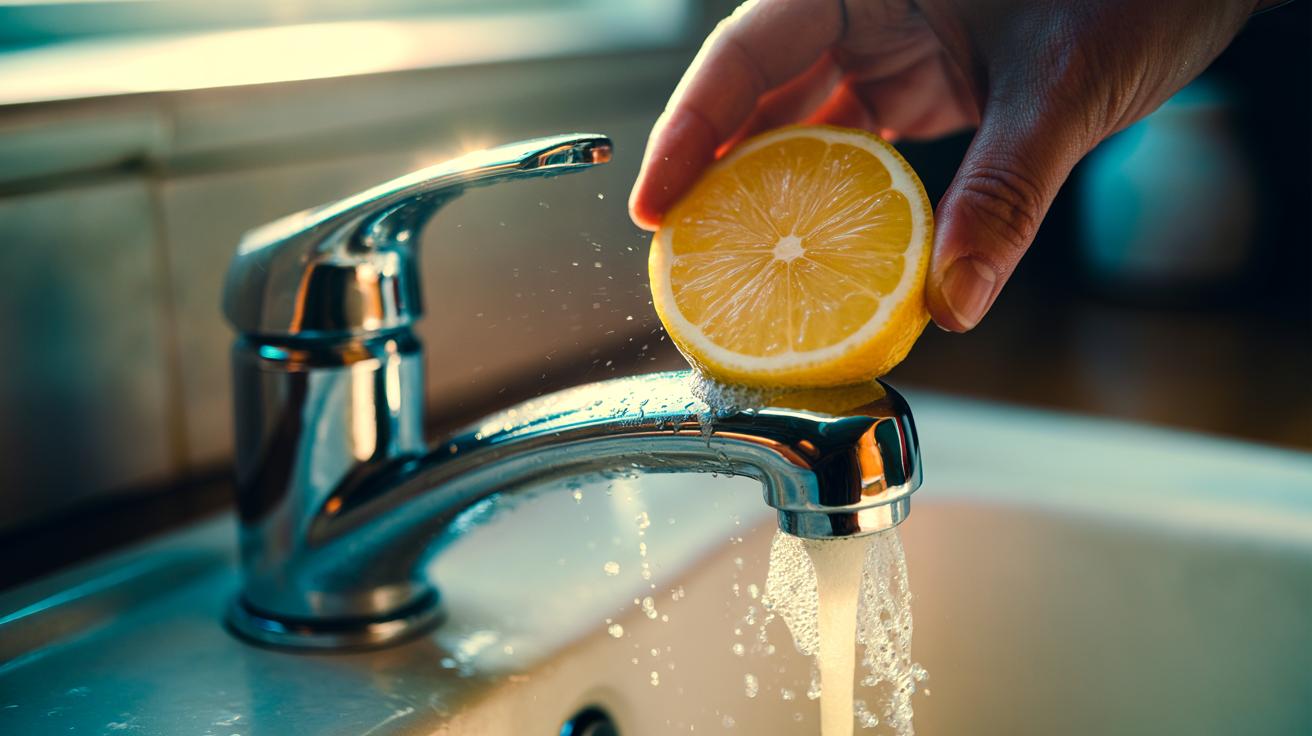
Cut a juicy lemon in half. Press the cut face to the tap and rub slowly, letting juice wet every scaled edge: spout, base, handle stems. Target the white crust and the water spots. Wait 15–30 seconds—just enough contact for the fizzing to work. Now rub again with the lemon to wipe away softened residue. Rinse with warm water. Finally, buff with a dry microfibre cloth. The chrome pops. On light to moderate scale, the turnaround is often under half a minute.
For crevices, wedge a slice over the spout like a cap so juice sits against the limescale lip, or twist a lemon-damp cotton bud into seams. Stubborn aerator ring? Unscrew it and swab with lemon, or soak it separately for a few minutes. A pinch of table salt on the cut face adds gentle abrasion for matte stainless fixtures—skip this on delicate plated taps. Always test on an inconspicuous spot. Avoid prolonged contact on natural stone surrounds. And remember to rinse thoroughly; leaving acids to dry can spot certain finishes. Buffing is your final, gleaming flourish.
Science in the Sink: Citric Acid vs. Calcium Carbonate
The chemistry is elegantly simple. Hydrogen ions from citric acid meet carbonate in limescale, producing dissolved calcium, water, and carbon dioxide: that visible fizz. Then citrate, the deprotonated form of citric acid, acts as a ligand, gripping calcium in solution. This complexation keeps the mineral from redepositing as the surface dries. Increase concentration, warmth, or contact time and the reaction quickens; reduce any of the three and it slows. On thin scale, a juicy slice supplies plenty of acid for a rapid, cosmetic clean. Thick, aged deposits may need longer soaks or repeat passes.
Here’s a quick guide to sources and use times you can deploy at the sink:
| Source | Approx. Acid Strength | Typical Contact Time | Best For |
|---|---|---|---|
| Fresh lemon slice | Citric acid 5–8% | 15–60 seconds | Light scale, daily shine |
| Bottled lemon juice | Similar to fresh | 1–3 minutes (soak with paper) | Edges, flat bases |
| Citric acid powder (5% solution) | Controlled strength | 10–30 minutes | Heavy scale, aerators |
| White vinegar (for comparison) | Acetic acid ~5% | 10–30 minutes | Soap film, mild scale |
Citric acid typically outperforms vinegar on carbonate-heavy deposits because it both acidifies and chelates. That dual role is why the lemon trick feels almost instant.
Common Pitfalls and When Not to Use Lemon
Acids and sensitive surfaces don’t always mix. Skip lemon on marble, limestone, and travertine countertops or splashbacks; acid etches them permanently. Be cautious with vintage taps, thin chrome plating, or chipped finishes where base metal is exposed. Don’t soak rubber gaskets or decorative inserts for long periods. If you’ve used bleach in the sink, rinse thoroughly and wait—never mix acids with bleach. A quick test patch can save a costly finish.
When scale is cemented on—years in a hard-water belt such as the South East—a slice may be the warm-up. Unscrew the aerator and soak it in a 5–8% citric acid solution for 20–30 minutes, then brush and rinse. For kettle-grade crust around bases, wrap a citric-soaked paper towel as a poultice and leave for 10 minutes before buffing. If deposits still resist, reach for a dedicated descaler formulated for chrome, following the label precisely. The lemon remains a nimble daily or weekly maintenance trick, keeping the worst at bay and reducing your reliance on harsher chemistry.
There’s something cheering about a fix that smells like summer and works like a lab reaction. The lemon slice method is fast, inexpensive, and low-impact, especially suited to UK homes where hard water nibbles at gleam and turns shine to chalk. Use it for routine spruce-ups, save the stronger stuff for once-in-a-while deep rescues, and protect sensitive stone and old finishes with care. Small, regular passes beat heroic scrubs every time. Will you try the 30‑second slice on your tap tonight—or experiment with a citric soak to reclaim a stubborn aerator first?
Did you like it?4.5/5 (23)