In a nutshell
- 🌿 Scientists identify the spider plant (Chlorophytum comosum) as a natural indoor purifier that reduces VOCs and NO2, offering a quiet, low‑cost boost to indoor air quality.
- 🔬 It works via leaf stomata and a potent rhizosphere microbiome that captures and breaks down pollutants, while leaves trap dust and subtly improve humidity.
- 🛠️ Practical use: place one medium plant per 8–10 m², cluster near sources (new furniture, printers), wipe leaves, water modestly, and remember ventilation first, plants second; spider plants are pet‑safe.
- ⚠️ Limits: effects vary with ventilation and load; plants are a complementary intervention, not a silver bullet—keep using extract fans and consider HEPA purifiers for rapid particle spikes.
- 🔭 What’s next: research is mapping high‑performing cultivars and bioactive pots to enhance pollutant breakdown, while easy propagation via pups scales benefits affordably.
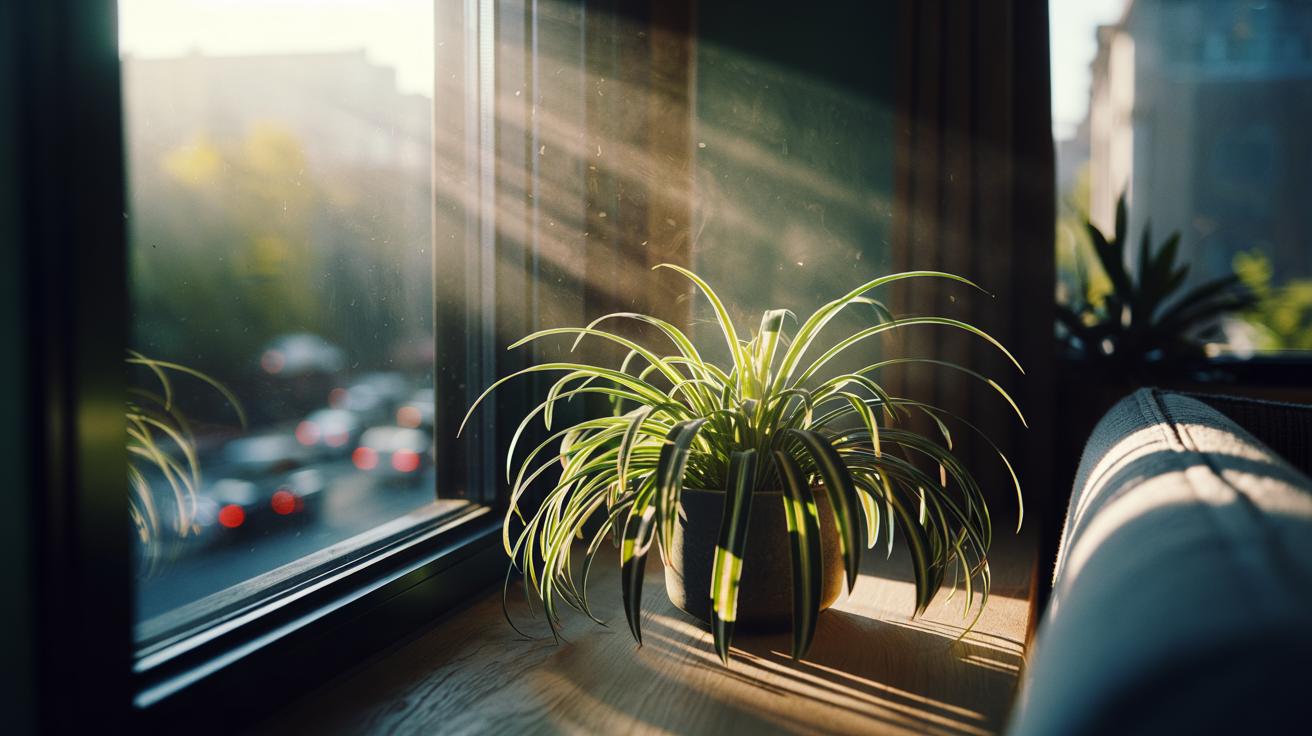
Shut windows against winter smog and you trap a cocktail of indoor pollutants. Open them and traffic fumes rush in. Into this everyday dilemma steps a quietly radical finding: a humble houseplant can clean the air you breathe. UK researchers, building on classic lab work and fresh real‑world trials, say the spider plant (Chlorophytum comosum) acts as a living filter for common toxins from paints, cleaners, and congested streets. It asks little. Water, indirect light, patience. No gadgets, no filters—just foliage. For households watching energy bills and wellbeing, the appeal is obvious: a low‑cost, nature‑based fix that softens rooms and, according to emerging data, softens the chemical load in them too.
What Scientists Found About the Spider Plant
In controlled chambers and office pilots, scientists observed that the spider plant can reduce traces of volatile organic compounds (VOCs) such as formaldehyde and toluene, and can trim levels of traffic‑related gases like nitrogen dioxide (NO2) under low‑ventilation conditions. The effect is modest compared with opening a window on a blustery day, yet meaningful when windows stay shut. Results echo the much‑discussed NASA studies from the late 1980s while updating them to everyday rooms rather than sealed boxes. UK and Australian teams have since reported measurable drops in NO2 in plant‑equipped offices, indicating that foliage plus potting microbiomes are doing real work beyond aesthetics.
The plant’s value lies in its simplicity and resilience. It thrives in British flats with weak winter light, propagates by pups, and is widely available. A single pot will not sterilise your home, but it can nudge the needle. Scaled up—clustered on shelves, near doorways, beside printers—the impact grows. Researchers stress this is a complementary intervention, not a silver bullet. Yet the balance is attractive: negligible running cost, tiny maintenance, and incremental air‑quality gains that accumulate hour by hour while you get on with life.
| Pollutant | Common Source | Spider Plant Action | Evidence Snapshot | Placement Tip |
|---|---|---|---|---|
| VOCs (formaldehyde, toluene) | Paints, furniture, cleaners | Leaf uptake and root‑zone microbial breakdown | Lab chambers and small office trials | Near new furniture or DIY areas |
| NO2 | Traffic infiltration, gas hobs | Adsorption and microbial conversion | Measured reductions at low ventilation | Hallways, kitchens (away from heat) |
| Ozone | Outdoor air, some devices | Surface reactions on foliage | Supported by exposure studies | Near air intakes, leaky windows |
| Fine particles | Dust, cooking | Passive deposition on leaves | Qualitative; best with regular wiping | By busy walkways, desks |
How a Living Air Filter Works Indoors
Plants move air. Through tiny pores called stomata, the spider plant draws gases in as it trades water and carbon dioxide. Some pollutants dissolve into the leaf’s moist interior; others encounter waxy surfaces rich in reactive sites. Down in the pot, a bustling rhizosphere microbiome—bacteria and fungi that cohabit with roots—metabolises captured chemicals, breaking complex VOCs into simpler, less harmful molecules. It’s a miniature treatment works running on sunlight and tap water. Unlike mechanical purifiers, the process doesn’t buzz, whirr, or need replacement cartridges. It’s quiet, continuous, and powered by daylight cycles.
Leaves do double duty. Their texture and micro‑ridges encourage particle deposition, snagging a fraction of airborne dust and soot. Wiping them with a damp cloth restores efficiency and removes what they’ve trapped. Transpiration slightly lifts humidity, often nudging overly dry winter rooms into a more comfortable range, which can ease dry throats and reduce static. The gains are subtle, not sensational. That subtlety matters: maintaining normal humidity avoids mould risks while smoothing indoor comfort. Meanwhile, every new pup you pot effectively expands the filtering network—more surface area, more stomata, more microbial partners working in concert throughout the day.
Crucially, the benefit is context‑dependent. In a small, tight flat beside a busy road, incremental removal of NO2 and VOCs is more noticeable than in a draughty cottage. Plants help most where ventilation is poorest and sources are steady. Think rental homes with sealed windows, classrooms during cold snaps, or home offices with constant printer use. There, the spider plant’s slow, dependable metabolism becomes a quiet ally.
Practical Tips for Homes, Schools, and Offices
Start small. Place one or two spider plants in the rooms you use most—kitchen diners, bedrooms, and home offices—then cluster additional pots if you like the effect. A workable rule of thumb for a subtle improvement is one medium plant per 8–10 m², grouped where pollutants gather: near doorways that face traffic, beside newly assembled furniture, or in corridors that funnel air. Ventilation first, plants second: air a room when outdoor conditions are favourable, then let foliage maintain gains when windows close. In schools, a bank of pots at the back of the classroom doubles as a living science lesson and a calm visual anchor.
Caring is simple. Bright, indirect light is ideal; avoid scorching south‑facing windows. Water when the top centimetre of compost feels dry. Overwatering invites mould, which undermines the goal. Feed lightly in spring and summer. Wipe leaves monthly to remove deposited dust and restore lustre. Spider plants are non‑toxic to pets, though cats sometimes nibble the arching leaves—place out of reach if necessary. Use breathable pots and a peat‑free, well‑draining mix. Combine with other tolerant species—peace lily, pothos—to diversify the microbial community and extend the range of VOCs addressed without complicating care routines.
Be strategic in offices. Position plants near printers and meeting rooms, not just receptions. Rotate pots through newly decorated areas for the first few weeks. For facilities managers, low‑maintenance groupings on shelves or mobile trolleys simplify watering and cleaning. Pair with regular CO2 and humidity checks to balance comfort and cognition. Think of plants as part of an indoor air toolkit, alongside extraction hoods, door seals, and behaviour change. Small, practical steps, repeated, build healthier spaces.
The Limits, Caveats, and What Comes Next
It’s tempting to declare victory and turn your living room into a jungle. Caution is wiser. While studies demonstrate reductions in VOCs and NO2, the magnitude varies widely with room size, ventilation, and pollution load. A gust through an open window can outperform a dozen pots in minutes. That doesn’t make the plant redundant—it defines its role. Spider plants are supplements, not substitutes. Keep using extract fans when cooking, crack windows away from rush‑hour peaks, and tackle sources at their root: low‑emission paints, fragrance‑free cleaners, well‑serviced boilers.
Healthwise, benefits are indirect yet sensible: fewer irritants, calmer humidity, and a visually soothing green presence linked with reduced stress. There are caveats. Overwatered pots may elevate mould spores. Highly sensitive allergy sufferers should introduce plants gradually and keep surfaces pristine. Accredited HEPA purifiers still excel at rapid particle removal during smoky or high‑pollen days, and nothing replaces outdoor air when it’s clean. Yet plants bring a unique proposition: passive, continuous mitigation with co‑benefits—education, wellbeing, and a touch of beauty on grey mornings.
Research is accelerating. Scientists are mapping which cultivars host the most efficient root microbiomes, and how potting mixes, light spectra, and benign inoculants boost pollutant breakdown. Expect smarter plant‑and‑planter pairings, maybe even “bioactive” pots that supercharge rhizosphere chemistry. In the meantime, the evidence supports a simple, democratic step. Add a spider plant, keep it thriving, and let time and leaves do the quiet work of cleaning.
In an age of tight homes and tighter budgets, the discovery feels refreshingly ordinary: a plant you can buy for a few pounds may help your family breathe a touch easier while softening the edges of daily life. It won’t replace ventilation systems, yet it will shoulder a small share of the burden without noise or fuss. The greenest technologies often start on a windowsill. As winter nights draw in, will you give the humble spider plant a place in your routine—and if you already have, what changes have you noticed in the air you live in?
Did you like it?4.6/5 (29)