In a nutshell
- 🧪 The science: tea’s tannins (plant polyphenols) subtly darken worn zones, boost grain contrast, and freshen haze with mild acidity, acting like a gentle glaze on aged oil, wax, or shellac finishes.
- ⚡ Five-minute method: brew black tea, wring to barely damp, patch test, wipe lightly along the grain, then buff immediately; use minimal liquid and repeat once if needed for a deeper tone.
- 🪵 Best matches: high-tannin woods like oak, chestnut, and walnut respond strongly; pine shows milder change. Black tea works best; green or herbal blends deliver little effect.
- ⏳ Results and care: expect a warmer colour, softened scuffs, and clearer grain for weeks; maintain with dry dusting, quick buffs, and occasional clear paste wax to lock in the refreshed look.
- ⚠️ Key cautions: avoid soaking, fragranced blends, and delicate or water-reactive finishes; watch iron hardware (possible darkening), be gentle on veneers, and consult a conservator for valuable unsealed antiques.
It sounds like a hack. It’s also grounded in chemistry. A humble tea bag can brighten tired timber and soften scuffs in minutes, lending a gentle, lived-in glow rather than a garish shine. The secret lies in tannins, plant-derived polyphenols that tone colour, tighten grain visually, and boost contrast in the figure. For homeowners wary of harsh solvents, it’s a low-risk, low-cost tweak that can bridge the gap before a full refinish. Work briskly and lightly and you can revive a bedside table, chair arm, or drawer front in roughly five minutes. Not magic. Just a smart interaction between tea, wood, and light.
The Science Behind Tea’s Tannin Tonic
Wood is a complex matrix of cellulose, lignin, and its own tannins. When you wipe a diluted tea solution across an old surface, additional tannins nestle into micro-abrasions, subtly darkening pale wear zones and visually flattening hairline scratches. The effect is modest yet noticeable: a warmer colour, improved grain definition, and reduced chalkiness in sun-faded spots. Because tea is mildly acidic, it can also lift a thin film of grime, the way astringents freshen skin. That slight acidity helps the surface look crisper and less dull.
Different woods respond differently. High-tannin species like oak, chestnut, and walnut show stronger tonal changes than pine or spruce, which contain fewer natural phenolics. Pre-existing finishes matter too. On well-cured oil or shellac, tea acts like a gentle glaze, sitting in micro-valleys. On tired wax, it can re-liquefy residues and buff to a mellow sheen. On water-reactive finishes, though, moisture can cause cloudy “blush”. That is why the golden rule is restraint: minimal liquid, quick application, swift buffing.
What about longevity? Those extra tannins don’t form a new film; they tint and tidy. Expect an optical refresh, not structural repair. The look usually holds for weeks, longer if dusted and buffed occasionally. Think of it as a tint-and-buff for timber between deeper treatments.
A Five-Minute Method for Dull Wood
Prepare one ordinary black tea bag. Pour freshly boiled water into a mug, dip for 30–45 seconds, then remove and let cool until warm, not wet and streaming. Wring the bag so it’s just damp. Do a patch test in a hidden corner first and wait a minute to judge colour and any finish reaction. Dust your piece thoroughly; grit will scratch. Lay a clean, lint-free cloth nearby for immediate buffing. Distilled water is preferable if you’re in a hard-water area to avoid mineral speckling.
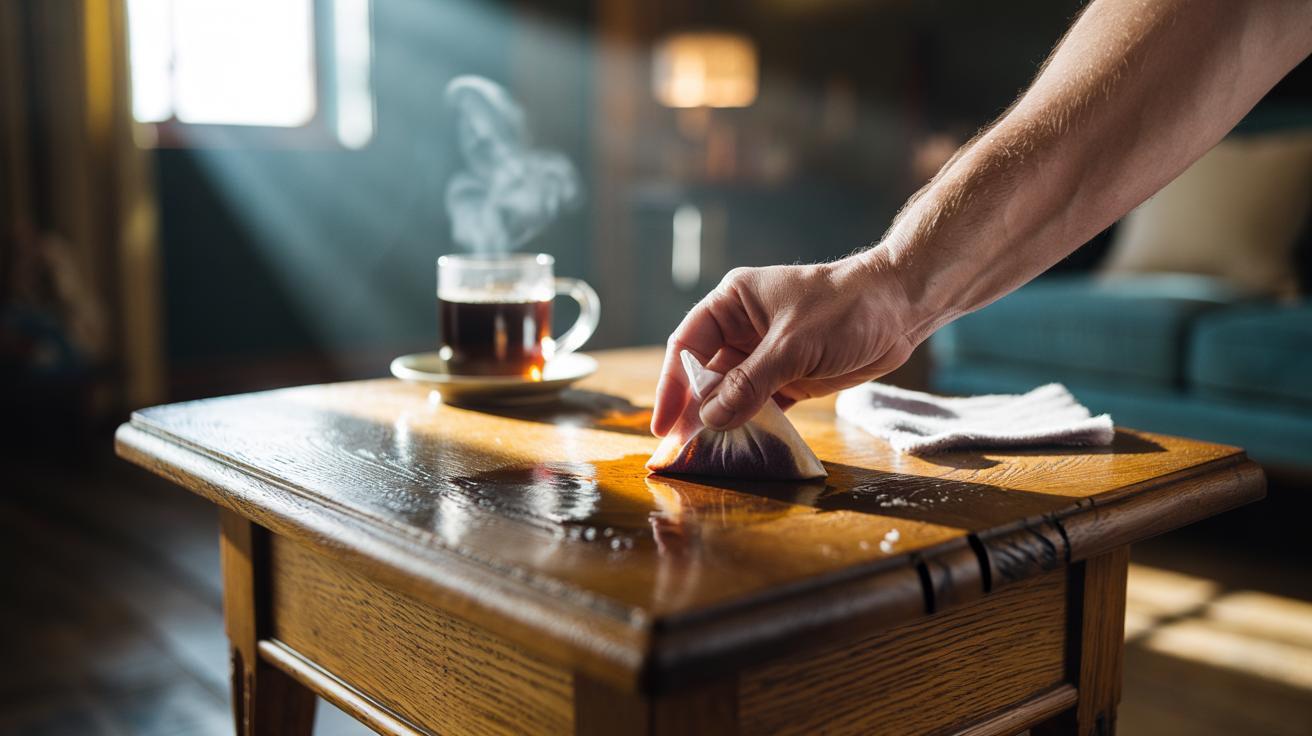
Sweep the warm bag along the grain in overlapping passes. Use light pressure. You are tinting, not mopping. Target worn zones first: edges, handles, chair arms. If the bag dries, redip briefly, wring hard, continue. Within a minute, switch to the cloth and buff briskly. This removes excess moisture, evens the glaze, and pops the sheen without stickiness. For rougher patches, dab, count to ten, then buff; the micro-soak deepens tone.
Never soak the surface, and never leave tea sitting on corners or veneer seams. Total time, including patch test and buff, often comes in under five minutes for a small tabletop or cabinet door. If you want a shade deeper, repeat once after ten minutes of drying.
What Works, What Doesn’t, and Why
Tea excels on solid wood with oil, wax, or aged shellac. It is less predictable on soft, cloudy lacquer or poorly cured polyurethane, where moisture can bloom white marks. Veneers are fine if edges are sealed, but be delicate: loose edges can wick liquid and lift. Hardware matters. Contact between tea’s tannins and iron can darken spots, so dry around nails, hinges, and screws promptly. Sun bleaching? Tea can warm the tone, though it won’t fully erase UV lines. For sticky silicone polishes, clean first; tea won’t cut silicone.
| Tea Type | Approx. Tannin Level | Likely Effect on Wood | Colour Bias |
|---|---|---|---|
| Black tea | High | Best quick refresh; stronger grain pop | Warm brown |
| Oolong | Medium | Softer lift; subtle evening | Amber |
| Green tea | Lower | Very mild brightening | Light golden |
| Herbal “teas” | Varies/low | Unreliable; often no effect | Depends on herbs |
A few strict cautions. Avoid raw, unsealed antiques of high value until a conservator advises. Don’t use on painted or limed finishes you wish to keep pale; tannins can muddy whites. Beware heat rings or water marks; test twice. And skip fragranced blends: oils and citrus can stain unpredictably. Keep it simple: plain, strong black tea, well wrung, fast buff.
Results, Durability, and Smart Aftercare
Expect a gentle transformation: surface haze reduced, grain contrast nudged upward, minor scuffs visually softened. On oak, warmth returns swiftly; the medullary rays seem bolder. Walnut gains depth where traffic had gone ashy. Pine looks tidier, though less dramatically changed. It’s an edit rather than a filter. If a piece still reads flat after one pass, repeat once—anything more tips into streaking.
How long will it last? In a typical home, the uplift sits happily for several weeks, occasionally months, depending on handling and dust. It fades gracefully rather than failing abruptly. Keep it going with gentle weekly care: a dry microfibre dust, then a quick buff using the same cloth you used initially. Every few weeks, a tiny touch of clear paste wax, well cured and then buffed, will lock in the improved optic without creating a sticky dust magnet.
Think of tea as a bridge, not a substitute for repair. Deep scratches, water ingress, lifted veneer, or flaking finish need proper restoration. But for weekend sprucing, especially before guests arrive, the tea bag trick delivers. Keep a saucer, one bag, and a cloth in your kit; with discipline about moisture and speed, you’ll coax character from tired timber in minutes.
In the end, a single, well-wrung bag of black tea can reset the look of old wooden furniture without fuss, fumes, or fancy kit. It’s tactile, thrifty, and rooted in the natural affinity between tannins and wood fibre. The technique won’t replace a refinish, yet it often delays one, buying time while preserving patina. If you try it this week, where will you start—oak sideboard, walnut chair arms, or that pine bedside that’s lost its glow?
Did you like it?4.7/5 (20)