In a nutshell
- 🍌 A banana peel can quickly polish and clean leather because its natural oils and waxy esters smooth scuffs and boost gloss, delivering a fast, cosmetic shine.
- 🧪 Key components: lipids fill micro-scratches, waxy esters aid buffing, mild acids loosen grime, while sugars add spread—but must be buffed to avoid stickiness.
- 🧴 How-to: test on a hidden spot, wipe gently in circles with the peel’s inner side (10–20 seconds), let sit briefly, then buff thoroughly with cotton; avoid suede, nubuck, and patent.
- ⚖️ Benefits and limits: it’s fast, low-cost, low-waste, ideal for emergencies; yet results are surface-level, can attract dust if unbuffed, and may mark very light leathers.
- 🛠️ Pro tips: keep a routine—brush, clean, condition, and wax periodically; rotate pairs, use cedar trees; treat the banana hack as a stopgap, not a replacement for proper care.
It sounds like folklore, yet it keeps surfacing in workshops and on commuter platforms: the banana peel wipe that turns dull leather into a quick shine. Low-cost, low-waste, oddly satisfying. A commuter’s hack for scuffed brogues before a meeting. A parent’s shortcut on school shoes. The trick relies on natural oils and soft plant waxes embedded in the peel’s inner flesh, which can momentarily restore depth and lustre. It’s not a replacement for full conditioning or resoling, but it’s fast and surprisingly effective when used correctly. Here’s how it works, when to use it, and how to avoid the classic pitfalls that turn shine into smudge.
What Makes Banana Peels Shine Leather
The inside of a ripe banana peel carries a cocktail of lipids, waxy esters, and polysaccharides. When massaged into smooth leather, these components behave like a light, temporary polish. Lipids fill microscopic scuffs, reducing light scatter so surfaces appear glossier; the faint waxes add slip for buffing. There’s also mild acidity and a trace of potassium salts that can help loosen superficial grime. The result is a quick, cosmetic lift rather than deep nourishment. Crucially, leather is skin—tanned, complex, and thirsty—so what looks shiny is often the result of micro-level smoothing rather than true restoration.
Scientists will debate the precise chemistry, but the user experience is clear: a short rub leaves a brighter toe cap and cleaner quarters in seconds. Because the peel is soft and slightly moist, it also acts as a gentle applicator, avoiding harsh abrasives. Still, residues can attract dust if you don’t buff thoroughly. Think of this as a journeyman’s trick, at home in a travel kit or desk drawer, best deployed between proper care sessions with a conditioner and quality wax.
| Component in Peel | Effect on Leather | Caveat |
|---|---|---|
| Lipids/Fatty Compounds | Fill fine scuffs; boost temporary gloss | Can leave film if overapplied |
| Waxy Esters | Enable easier buffing to a shine | Needs cloth buff to avoid tackiness |
| Mild Acids | Helps lift light dirt | Not a stain remover |
| Moisture/Sugars | Spreads oils evenly | Sticky if not wiped off |
Step-By-Step: The Quick Banana Peel Polish
Choose a ripe banana. Not black, not green—ripe. Peel it and reserve the inside for application. Always test on a hidden area first, such as under the tongue or along the heel edge. If the leather darkens unacceptably or feels tacky after a minute, stop. For suitable shoes, knock off loose dust with a dry cloth. You now have three tools: the peel’s inner side, a soft cotton rag, and a clean finishing cloth.
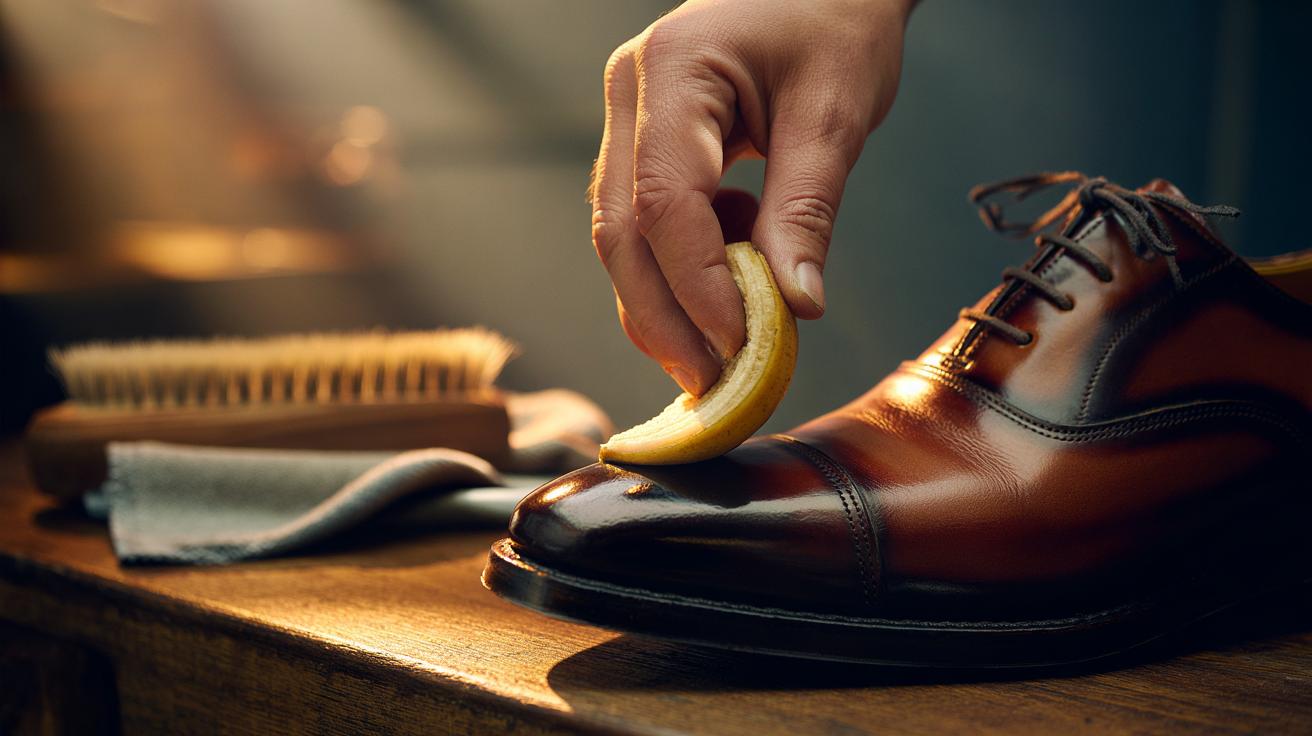
Rub the inner peel gently across the leather in small circles. Focus on toe and heel counters where scuffs collect. Keep pressure light; you’re smoothing, not saturating. Ten to twenty seconds per shoe is enough. The goal is a whisper-thin film of natural oils, not a smear. Avoid stitching channels and welts where residue can lodge. If you see specks of banana fibre, don’t worry; the next step solves it.
Let the film sit for 30 seconds. Then buff briskly with your cotton rag until the surface feels dry and slick. Finish with the clean cloth for an extra pop of shine. If desired, follow later with a true conditioner to replenish oils deeper in the hide. Never use this technique on suede, nubuck, or unfinished leather; it will stain and flatten the nap. On patent leather, results are minimal—use a damp microfiber instead.
Benefits, Limits, and When to Skip It
Speed is the main draw. This hack can rescue tired leather shoes in a lift lobby or newsroom corridor, buying you polish points when time is tight. It’s also a neat sustainability story: using a food scrap instead of a petrochemical-laden wipe. And cost? Negligible. For commuters and travellers, it’s a credible emergency shine. But let’s be candid about limits. Banana oils sit near the surface; they don’t penetrate the fibre structure like a dedicated conditioner with balanced pH and carefully chosen emollients.
There’s also the residue risk. Sugars can be sticky; unbuffed film grabs dust and dulls quickly. If you work in gritty environments or on rainy days, the temporary sheen may fade within hours. Colour safety matters too: very pale leathers show marks more readily, while deep browns and black hide them. If your shoes are museum-calibre or newly hand-patinated, skip the banana and reach for professional products. And remember, no household hack replaces proper cleaning, conditioning, and waxing on a monthly cadence for frequently worn pairs.
Care Tips From Cobblers and Conservators
Professionals tend to view the banana trick as a stopgap rather than a system. A cobbler will tell you: keep a routine. Brush after each wear to clear grit. Every few weeks, use a pH-appropriate cleaner, then a leather conditioner to restore lost oils, finishing with a thin wax for defence and high shine. The banana peel sits between steps, offering a cosmetic lift when presentation matters. If you do use it, treat it like you would a very light cream—sparingly and with follow-up buffing.
Conservators add a caution on accumulation. Over time, ad hoc household oils can build films that dust adheres to. The cure is simple: periodic, gentle cleaning to reset the surface. Rotate shoes to let them dry fully, use cedar trees, and avoid heat sources that drive out natural oils. For field kits, stash a small, tightly woven cotton cloth; it’s half the trick. And for longevity, pair hacks with quality—well-made shoes with stitched construction respond better to any care routine. Shine is theatre; structure is legacy.
Used smartly, the banana peel polish is a charming blend of science, thrift, and haste—an instant upgrade for dull mornings and last-minute dashes. Keep expectations sensible, keep your cloths clean, and keep up a real maintenance rhythm. That way, this plant-powered gloss enhances rather than replaces proper care. Next time you finish your breakfast and spot a scuff, will you reach for the peel, the tin of wax, or perhaps both to suit the day ahead?
Did you like it?4.4/5 (21)