In a nutshell
- 🧂 The bicarbonate sprinkle visually exposes mattress grime—grey, clumpy powder indicates organic build-up that dust mites thrive on, highlighting allergen risks without showing mites themselves.
- 🔬 It works by absorbing moisture, neutralising odours, and lifting debris; effectiveness hinges on contact time and a slow, thorough pass with a HEPA vacuum, not on bicarbonate alone.
- 🛏️ Method: strip the bed, sieve bicarbonate evenly, leave 3–12 hours, then vacuum slowly; wash bedding at 60°C to denature allergens and keep the powder dry for best results.
- 🛡️ Prevention: use a mite-proof encasement, keep bedroom humidity at 40–50%, vacuum monthly with HEPA, rotate and hot-wash protectors, replace pillows regularly, and avoid steam on memory foam.
- 🌬️ Outcome: cleaner air and calmer nights come from consistency—the sprinkle, HEPA hoovering, hot washes, and dryness combine into an integrated strategy that reduces mite load and odours.
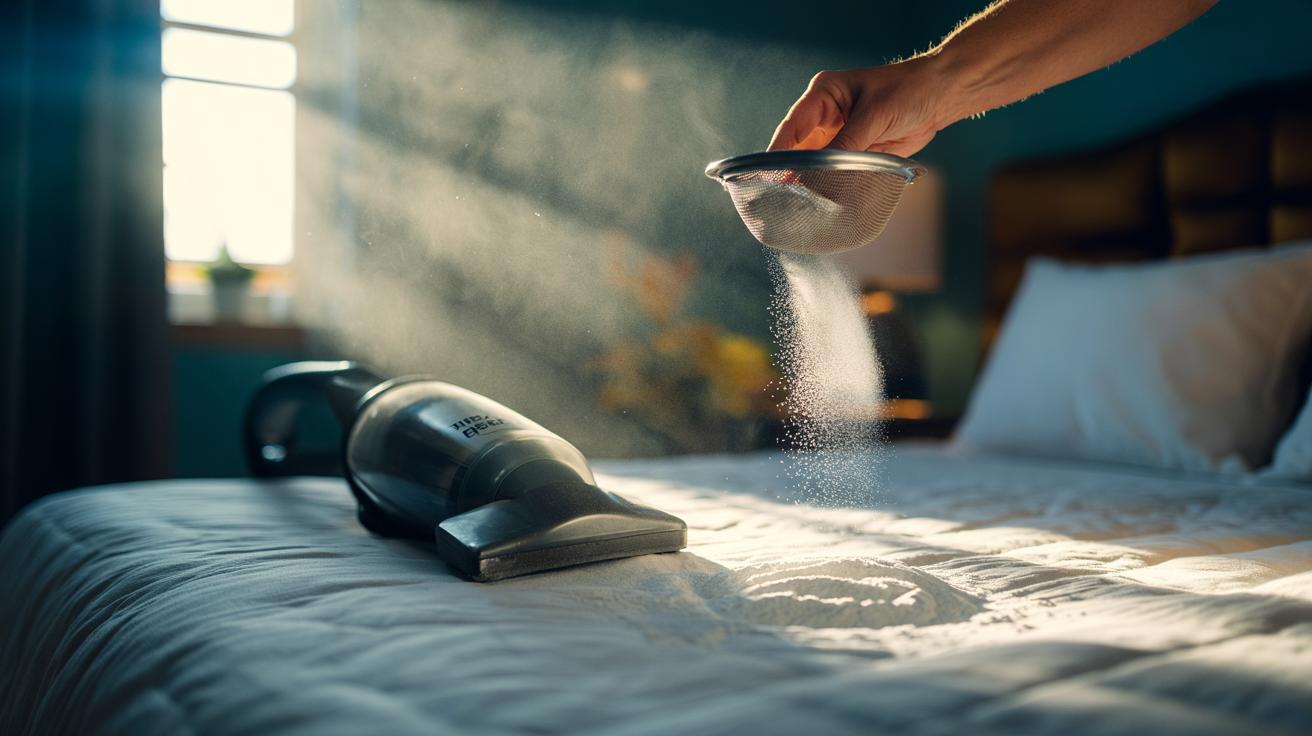
Strip the bed, scatter a layer of bicarbonate of soda, and wait. It’s a simple domestic ritual with a startling payoff: the powder comes up grey, clumpy, and vaguely musty, a tell-tale sign your mattress harbours a thriving ecosystem of skin flakes, oils, and, yes, dust mites. The so-called “bicarbonate sprinkle” has gone viral for a reason. It doesn’t just freshen. It reveals a problem, then helps solve it. In British homes where heating, humidity, and heavy bedding collide for much of the year, mattresses become microhabitats. No household is completely free of dust mites, but your maintenance routine determines how many you share the bed with. Here’s how a pantry staple helps you see the issue—and fix it fast.
Why Dust Mites Love Your Mattress
Your mattress is warm, dark, and full of food. Not crumbs—your skin cells. House dust mites feed on shed skin and thrive in humidity above 50%. British bedrooms, often heated overnight and buttoned up against draughts, create an ideal microclimate. Add sweat, body oils, and the occasional night-time spill and you have an absorbent sponge of nourishment. Where there is concentrated organic debris, there is almost certainly a high mite load. While mites are microscopic, their allergens—especially proteins in faecal pellets—are potent triggers for rhinitis, eczema, and asthma.
Mattress foams trap particles; every toss and turn sends a puff of allergen into the breathing zone. Regular hoovering helps, but can’t neutralise odours or shift moisture. That’s where bicarbonate of soda enters. It’s alkaline, porous, and thirsty. It lifts odours, draws moisture, and cuts through acidity that helps smells linger. The sprinkle doesn’t make mites visible, yet it exposes the problem by darkening as it absorbs grime. You see what your nose has suspected: a build-up that mites love. Think of it as a visual nudge to act, not a laboratory test.
The Bicarbonate Sprinkle: How It Works
Bicarbonate of soda—labelled as sodium bicarbonate—is a mild alkali with impressive household credentials. On a mattress, it performs three jobs at once. First, its fine particles wick moisture from the top layers, tipping the environment away from mite comfort. Second, it neutralises acidic odours created by sweat and body oils. Third, it acts as a carrier: when you hoover it away, you lift a surprising amount of loosened dust, dander, and mite debris. The darkened, clumpy powder you collect is not the mites themselves but the organic load they feed on.
There’s debate over whether bicarbonate directly kills mites. Some small studies suggest desiccation and high alkalinity can reduce populations with sufficient contact time, while others find effects are modest without mechanical removal. The consensus among cleaning scientists is pragmatic: contact time plus a robust HEPA vacuum matters more than fairy dust. Add a dry environment and protective encasements and you have a credible integrated strategy. For wary owners of memory foam, bicarbonate is kinder than wet cleaning, which can drive moisture deeper. Always patch test and avoid adding liquid cleaners to the powder; keep it dry so it can do its best work.
Step-by-Step Method: From Sprinkle to Fix
Start with a stripped mattress. Close windows if it’s damp outside; open them if the air is crisp and dry. Sieve bicarbonate evenly across the surface, aiming for a thin snow of powder rather than drifts. Massage gently with a clean, dry cloth to help the grains reach the upper fibres. Leave it to sit—longer is better—so it can absorb moisture and trap odours. While you wait, wash bedding at 60°C to denature mite allergens. Return with a vacuum fitted with a HEPA filter and a clean upholstery head. Slow, overlapping passes, edge to edge. Empty the canister outdoors.
What should you look for? Greyed powder with small clumps, a faint musty whiff, maybe a few darker streaks from body zones. This is your visual “proof-of-need” rather than proof-of-mite: evidence of the conditions mites adore. If the powder stays bright white, your mattress is likely cleaner than average, but repeat the routine monthly to keep it that way. For scent, a drop or two of tea tree or eucalyptus oil in the bedding wash—not mixed into the powder—adds freshness without wetting the mattress.
| Mattress Size | Bicarbonate Amount | Contact Time | Expected Observation | Vacuum Tip |
|---|---|---|---|---|
| Single | 150–200 g | 3–6 hours | Light grey powder, mild odour | Slow passes, 1–2 cm/s |
| Double | 200–250 g | 4–8 hours | Grey clumps in body zones | HEPA filter fitted |
| King/Super King | 250–300 g | 6–12 hours | Heavier clumping, stronger odour | Empty canister outdoors |
Make the Results Last With Smart Prevention
One sprinkle helps; habits win wars. Seal your mattress in a mite-proof encasement that zips fully shut. Wash pillow and duvet protectors at 60°C weekly and rotate two sets to keep it easy. Keep bedroom humidity between 40–50% with a dehumidifier in winter and regular ventilation in summer. Lower humidity means fewer thriving mites and lighter allergen loads. Vacuum the mattress surface monthly with a HEPA-equipped machine; do the bed base and surrounding carpet in the same session. Sunlight helps—air the duvet at a window on bright, dry days.
For spills, blot dry immediately and avoid steam on memory foam, which can push moisture deep. If allergies are severe, consider replacing old mattresses (eight to ten years is typical) and choose materials with breathable covers. Place the bed to avoid blocking radiators, which can create damp pockets. Replace pillows every two years; they’re allergen magnets. Finish with a calendar reminder: sprinkle, wait, hoover. Consistency outruns heroics, and clean air at night pays off in the morning.
A cheap tub of bicarbonate can expose the hidden grime that comforts dust mites—then help you eject it. The grey powder after a long contact time is your prompt to vacuum slow, wash hot, and keep the room dry. Layer that with encasements and HEPA filtration and you’ll notice fewer sneezes, calmer skin, better sleep. There’s no silver bullet, but there is a simple routine that works. Will you try the sprinkle this weekend—and what will the colour of your collected powder tell you about your mattress’s secret life?
Did you like it?4.6/5 (29)