In a nutshell
- 🧪 The science: egg white proteins (ovalbumin, ovotransferrin) form a transparent, semi-permeable film that stops fondant tack, with lysozyme offering a mild antimicrobial boost—a true “microscopic raincoat.”
- ⚡ Quick rescue: use pasteurised egg whites, whisk lightly, brush a whisper-thin coat, and let dry 10–15 minutes (low fan helps); avoid cornflour to prevent dulling and mottling.
- 🛡️ Safety and storage: choose British Lion or pasteurised whites, keep tools immaculate, discard leftovers, and store cakes cool and dry; if chilling, box and acclimatise to prevent condensation.
- 🌿 Alternatives and tweaks: swap in meringue powder (1:1 water) for shelf stability, try gum arabic for a glossier seal, or aquafaba for plant-based needs; strengthen soft fondant with CMC/tylose.
- 🎂 Pro finish: set room RH to 45–50%, pre-coat decorations, inspect under bright light, buff with a dry sponge for even lustre, and add a second micro-coat on edges and high-touch zones.
Fondant looks like satin and behaves like glue. On a humid Saturday in London, that can spell disaster for a meticulously covered wedding cake. The quickest fix hiding in plain sight? A brush of egg white. It’s fast, food-safe when handled properly, and wonderfully discreet. The proteins in egg white knit into a transparent film that dries touch-clean, restoring polish without altering colour. You don’t need heat guns or cornflour snowstorms. Just a clean brush, a ramekin of whites, and patience measured in minutes rather than hours. When deadlines loom and hands stick, albumen quietly saves the celebration.
The Science Behind Egg Whites and Fondant
Fondant turns sticky when ambient moisture migrates into its sugary matrix, plasticisers soften, and the surface becomes tacky. Egg white, or albumen, contains proteins such as ovalbumin and ovotransferrin that are brilliant at forming thin, flexible films. When you spread a micro-layer over fondant, water evaporates and the proteins align at the air–sugar interface, creating a semi-permeable skin. This skin dramatically reduces surface tack without leaving a visible residue. Because the film is protein-based, it lightly seals pores and moderates moisture exchange, giving you a silky, touch-dry finish that still breathes.
There’s a second, useful side-effect: lysozyme in egg white has mild antimicrobial properties, and the high-sugar, low–water activity of fondant is already hostile to many microbes. Together they offer a belt-and-braces defence for display cakes. The chemistry is simple but effective. Proteins denature, then bond, creating an elastic network that resists smearing and fingerprints. You’re not glazing; you’re engineering a microscopic raincoat. The result is a stable sheen rather than a wet shine, crucial under photography lights and nervous hands. For decorators, it’s science delivering a calm, confident finish on cue.
Quick Rescue Method for Fondant
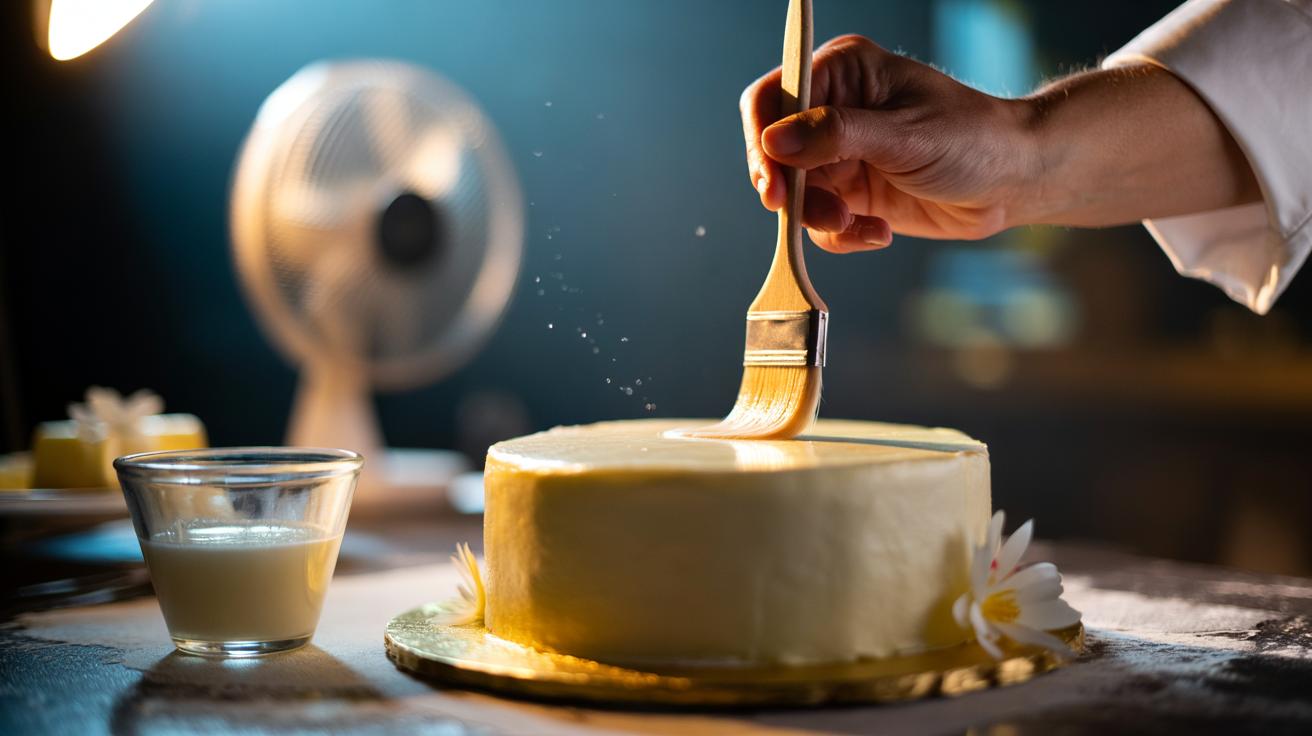
Start clean. Choose pasteurised egg whites from a carton, or British Lion-marked shell eggs if you’re coating a non-cut surface. Separate, then whisk lightly until just foamy; you’re not making meringue, only loosening the proteins for even coverage. Load a soft, food-safe brush, flick off excess, and paint the fondant in long, overlapping strokes. Aim for a whisper-thin layer—too little beats too much. A good rule: if you can see wetness, you’ve likely used too much. Allow 10–15 minutes at room temperature for the film to set. Draft-free conditions help it cure evenly.
Need a faster lock? Place the cake near a desk fan on low, not a warm blast. Once touch-dry, inspect from multiple angles under bright light. If you spot patches, dab with a barely damp brush and blend. For high-traffic areas—ribbon edges, corners, fondant figurines’ faces—add a second micro-coat. Resist the urge to powder with cornflour; it dulls the gloss and can create mottling. Egg white alone should deliver the finish. In a rush, this entire rescue takes less time than brewing a cuppa.
| Problem | Visible Sign | Egg White Action | Typical Wait |
|---|---|---|---|
| Humidity tack | Fingerprints, drag | Single thin coat | 10–15 min |
| Transport sweat | Dull, sticky film | Fan-assisted set | 8–12 min |
| Dusty patches | Blooming, streaks | Spot blend + buff | 5–8 min |
Safety, Storage, and Alternatives
Let’s talk safety. In the UK, British Lion eggs are vaccinated against salmonella; for extra assurance, use pasteurised egg whites in cartons, especially for products served to vulnerable guests or when the coated fondant will be eaten soon. Keep brushes scrupulously clean, and decant only what you’ll use. Discard leftovers; do not return used whites to the original container. Because the coating is ultra-thin and dries quickly, it’s low risk on display cakes. Store finished cakes cool and dry, not refrigerated unless the filling requires it; condensation can undo your work.
Prefer shelf-stable options? Meringue powder (dried albumen) rehydrated 1:1 with water offers the same protein film with nothing raw. Gum arabic in a weak solution makes a slightly glossier seal but can tighten too much on sharp edges. Plant-based decorators reach for aquafaba; it forms films, but less robustly, and may need two passes. If the fondant itself is over-soft, knead in a pinch of CMC/tylose for structure before finishing with egg white. Think of the coating as a topcoat, not a structural fix. Good prep plus a protein seal equals reliable polish.
Pro Tips for Wedding-Grade Finishes
Set the room first. A dehumidifier pulling to around 45–50% RH makes everything easier. Work on a turntable and finish the back first, so by the time you reach the front the film is already touch-dry. For detail work—sugar flowers, bows—paint components before assembly; you’ll handle less and smudge less. Always test on an offcut of fondant in the same colour to check sheen. For deep colours, the egg white film can intensify tone slightly; embrace the richness or dilute with a few drops of water for a softer look.
Photographers’ lights are unforgiving. Buff gently with a clean, dry makeup sponge after the coating sets to even the lustre without chalking. Keep a microfibre cloth for the board—clean borders elevate the whole piece. If you must refrigerate (for fresh cream or perishable fillings), box the cake, wrap the box in plastic to slow moisture exchange, and let it come to room temperature still boxed. Then crack the lid to acclimatise. This staging avoids sudden condensation and keeps that godly fondant finish intact. Rehearse the rescue a week before showtime, and the big day feels easy.
A humble ingredient, a newsroom deadline mentality, and a decorator’s eye: that’s the trio behind the fast egg white remedy. You’re deploying protein physics to solve a human problem—crowds, cameras, and time. The film you create is invisible, practical, and reassuring, turning sticky nerves into steady hands. It respects flavour, preserves colour, and keeps slices neat on the plate. When a celebration hangs on the finish, simple solutions win. Ready to test it on your next commission—or will you tweak the method with your own twist and report back on the results?
Did you like it?4.4/5 (30)