In a nutshell
- 🧪 The chemistry: citric acid lowers surface pH, chelates copper at PPO, and lemon’s ascorbic acid reverses quinones—together they halt enzymatic browning fast.
- 🍋 How to use: toss slices with 1 tsp lemon juice per apple or dip in 1 tbsp per 250 ml acidulated water; wait 60 seconds, pat dry, then refrigerate (~4°C) for all‑day freshness (about 6–10 hours).
- 🧊 Storage & varieties: use an airtight container with a paper towel; browning‑resistant apples like Honeycrisp, Ambrosia, Jazz excel, while Granny Smith may need an extra spritz; brief rinse reduces lemon taste.
- 🔁 Alternatives compared: ascorbic acid (neutral, 8–12 h), 0.5% salt water (rinse; 4–6 h), and honey water (6–8 h)—choose by flavour and occasion.
- 🛡️ Taste & safety: flavour stays bright, texture crisp; lemon lowers pH and discourages microbes but is not a steriliser—use clean tools and keep slices cold.
Open a lunchbox at 3 p.m. and the apple slices can look sorry for themselves, mottled brown and dulled by oxygen. There is a remedy so simple it feels like a cheat: a quick squeeze of lemon. The effect is immediate. The science is elegant. With its punch of citric acid and a dash of ascorbic acid, lemon juice slows the biochemical cascade that turns crisp, white flesh rusty. This is not a culinary myth but a measurable intervention that preserves colour, flavour and texture for hours. Here’s how the chemistry works, how to apply it at home, and what to expect in taste tests and safety terms.
The Chemistry of Browning and the Lemon Fix
When you slice an apple, you rupture cells and expose their contents to air. Enzymes known as polyphenol oxidase (often shortened to PPO) meet oxygen and phenolic compounds, creating brown, melanin-like pigments. The change is fast, visible within minutes, and it signals oxidation rather than spoilage. Stop that enzymatic handshake and you stop the browning. Lemon juice intervenes on three fronts. First, citric acid lowers the pH at the fruit’s surface; PPO is far less active in acidic conditions. Second, citric acid can chelate copper at the enzyme’s active site, hobbling its function. Third, lemon’s natural ascorbic acid (vitamin C) acts as a reducing agent, converting brown-forming quinones back to their colourless precursors.
The result is practical and visible. The slices stay pale for much longer, typically the length of a school day or a commute. There’s a side benefit: the acidic environment also discourages some microbes, helping preserve freshness without heat or additives. A few drops are enough to shift the chemistry decisively in your favour.
How to Use Lemon Juice for All-Day Freshness
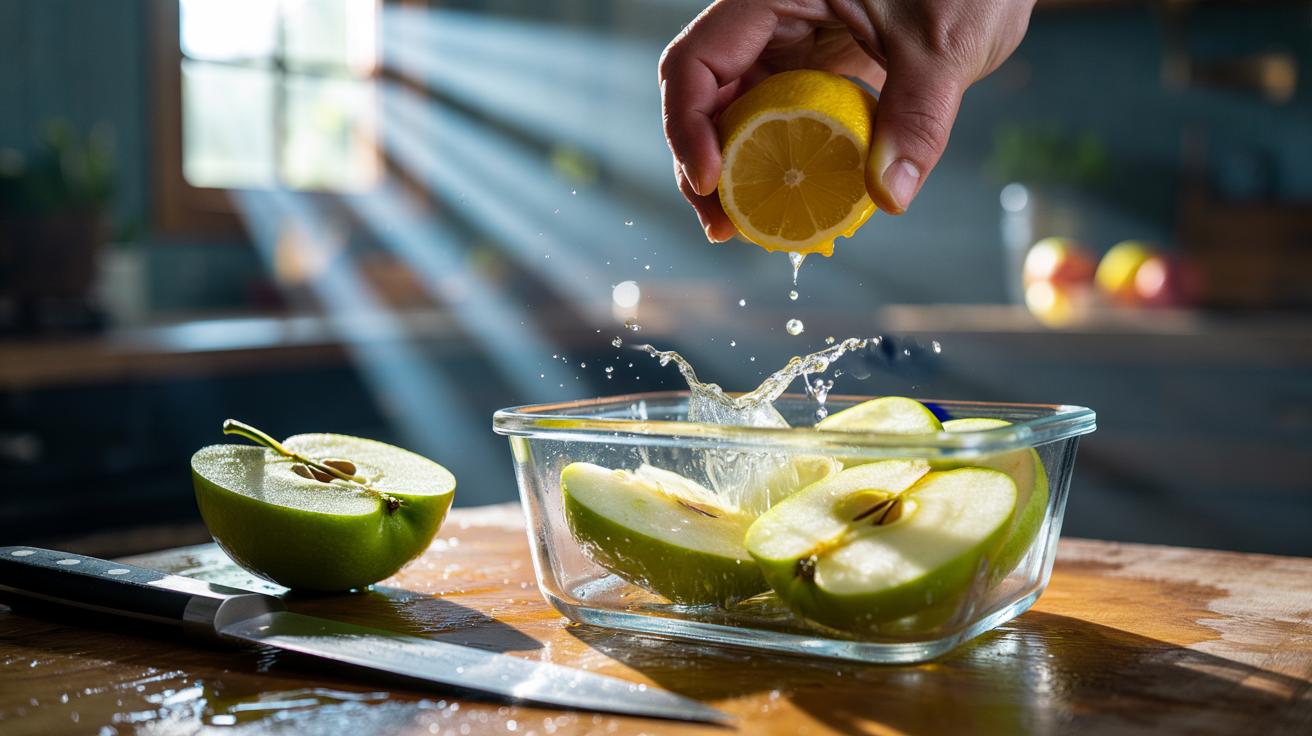
For most apples, a light coating works better than a soak. Toss slices with 1 teaspoon of fresh lemon juice per apple, or mist with a spray bottle until every cut surface glistens. Aim for an even film, not puddles. Leave for 60 seconds, then pat dry to prevent slickness. If you prefer a dip, make “acidulated water”: 1 tablespoon lemon juice per 250 ml cold water, 2–3 minute dip, drain and dry. The goal is full coverage without overwhelming the fruit’s natural sweetness.
Chill accelerates the benefit. Store treated slices in an airtight container, ideally with a sheet of kitchen paper to absorb condensation. Use varieties that resist browning—Honeycrisp, Ambrosia, Jazz—if available; high-phenolic cultivars like Granny Smith still respond, but may need an extra spritz. For platters, brush wedges just before plating, then refrigerate until service. Concerned about lemon flavour with delicate cheeses or dips? Rinse briefly under cold water after 5 minutes, then dry; the anti-browning effect largely remains because pH at the surface stays lower. Small dose, big payoff.
Taste, Texture, and Food Safety Considerations
Will your apple taste like lemonade? Not if you’re restrained. At the recommended ratios, the lemon brightens flavour without shouting. If you’re citrus-averse, swap in bottled ascorbic acid (vitamin C) sachets used for preserving fruit—mix at label strength and dip. A mild salt water bath (0.5%) for 2 minutes followed by a rinse also slows browning with minimal taste impact. Honey water (2 tablespoons per cup) works too, thanks to acid and antioxidants, though it adds sweetness. Tweak method and concentration to suit the palate and the occasion.
Texture matters. Properly treated slices remain crisp because the acid barrier acts quickly and you avoid long soaks. From a safety standpoint, lemon juice lowers surface pH, nudging conditions away from bacterial comfort zones, but it is not a steriliser. Use clean knives, fresh lemons, and keep the container cold. Watch for citrus sensitivity in young children. If prepping early morning for late afternoon, pair lemon treatment with refrigeration at 4°C. The combination is reliable. Acid plus cold is the home cook’s twin engine of freshness.
Comparing Anti-Browning Methods at a Glance
Different kitchens have different priorities. You might want absolute neutrality of taste for a cheese board, or maximum hold for catering trays. Here’s a simple comparison to help you choose quickly and confidently. Note that “duration” assumes airtight storage and refrigeration. In warm, dry air, any method will have shorter windows.
| Method | Typical Concentration | Approx. Duration | Taste Impact | Best Use |
|---|---|---|---|---|
| Lemon juice | 1 tsp per apple; or 1 tbsp per 250 ml water | 6–10 hours | Bright, subtle citrus | Lunchboxes, platters, meal prep |
| Ascorbic acid | Per packet instructions (often 1 tsp per cup) | 8–12 hours | Neutral | When flavour neutrality is key |
| Salt water | 0.5% (½ tsp per 250 ml), rinse after | 4–6 hours | Minimal if rinsed | Quick snacks, kids’ lunches |
| Honey water | 2 tbsp per 250 ml | 6–8 hours | Slight sweetness | Fruit salads, desserts |
If you want the simplest, most available solution, lemon still wins on access, speed, and price. For caterers or tastings where neutrality rules, ascorbic acid is the quiet professional. For the everyday home fridge, lemon plus cold storage remains the dependable standard that keeps apples looking like apples.
Lemon juice turns a fussy ingredient into a low-maintenance staple, keeping cut apples photo-ready and pleasant to eat long after the knife is washed. The mechanism is textbook chemistry, but the effect feels like kitchen magic, rescuing snacks, salads and cheese boards from the rust of oxidation. A minute of prep buys a day of freshness. That said, preferences differ: some chase neutrality, others welcome a citrus lift. Which method fits your routine—and what tweaks would make it truly effortless in your kitchen?
Did you like it?4.5/5 (25)