In a nutshell
- 🍋 Lemon zest releases potent terpenes—notably limonene and citral—that diffuse cleanly when gently simmered, delivering bright, nuanced room fragrance without synthetic fixatives.
- 🥣 Simple methods: low-heat simmer pot, radiator dish, passive stone or reed diffuser with a light carrier oil, and airy hydrosol mists for quick refreshes.
- ⚠️ Safety first: keep concentrations low, ventilate, and take care around pets, babies, and asthmatics; remember citrus oils can be phototoxic on skin and should never be left heating unattended.
- 🧪 Quality matters: choose cold-pressed citrus, check GC/MS data, store small bottles chilled to prevent oxidation and irritation; use fresh zest for best aroma.
- 🌿 Sustainable and thrifty: upcycle peel from cooking, prefer glass packaging, and blend lemon with herbs like rosemary or lavender for longer-lasting air care minus synthetic fragrances.
The clean, bright curl of lemon zest has a way of lifting a room before you even reach for the window latch. Simmer it gently and the kitchen turns into a sunlit grove; let it rest on a radiator and you catch little sparks of citrus all afternoon. This is scent as nature intended: aromatic molecules rising on steam, not a fog of synthetics. It’s an old trick, and it still works beautifully. In an age of plug-ins and aerosolised mystery blends, the humble zest-and-water method offers transparency, thrift, and a surprisingly sophisticated aroma profile that flatters small flats and big, rambling homes alike.
What Makes Lemon Zest So Potent
Scratch a lemon and the air answers. That instant brightness comes from terpenes in the rind—chiefly limonene and a whisper of citral—highly volatile compounds that leap into the air at room temperature and sprint when warmed. A gentle simmer does not boil them to oblivion; it chauffeurs them. Heat increases volatility, while water vapour ferries the aroma through the space, giving you a soft diffusion rather than a cloying blast. The result feels clean, not clinical, because the chemistry mirrors what happens on the tree in hot sun.
There is also complexity hidden in that yellow ribbon. Lemon peel carries tiny amounts of aldehydes and esters that add sparkle and a faintly sweet edge. These are the notes mass-market sprays often mimic with synthetic fragrances, but the real thing achieves balance without aggressive fixatives. Importantly, plant aromas are still “chemicals”—just naturally sourced—so efficacy comes without pretending nature is vague or mystical. The nose notices nuance: a faster opening, a graceful fade, and none of the plasticky tail left by some plug-ins. Short story? Lemon smells like lemon, then steps aside.
Think of simmered zest as a low-tech diffuser that respects both the fruit and the room. You can modulate strength by lid-on or lid-off, distance from the hob, or by adding a pinch of salt to raise the boil point slightly and slow evaporation. It’s responsive, tactile, and oddly satisfying.
Simple Methods to Perfume a Home Without Synthetics
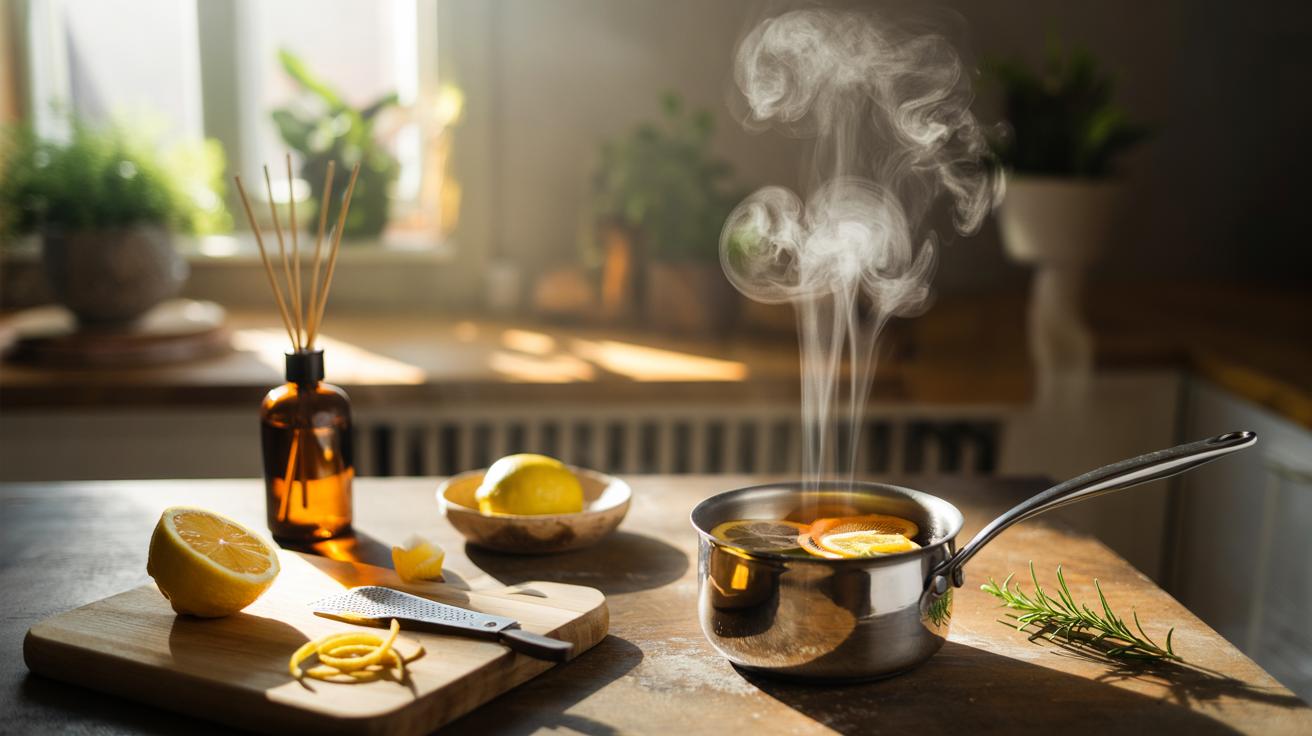
The classic is the simmer pot: a saucepan of water, a handful of lemon peel, and heat low enough to see only the occasional tremor. Ten minutes. That’s all. For a greener twist, add rosemary or bay; for warmth, a clove or two. Do not leave the hob unattended, and top up water before it drops. Prefer electricity-free? Set zest on a warm radiator in a shallow dish; the gentle heat lifts aroma slowly, and you avoid any kitchen steaminess.
If you keep essential oils at home, a few drops of cold-pressed lemon on a porous stone or unglazed ceramic works as passive diffusion. A DIY reed diffuser is equally simple: a small glass bottle, a light carrier oil such as sweet almond, and 15–20 drops of your chosen citrus per 100 ml, with rattan reeds to wick the blend into the room. For immediate freshness, try a lemon hydrosol in a fine mist bottle. It’s less intense than oil, beautifully ephemeral, and kind to fabrics when tested first.
Pets, babies, and asthmatics merit caution. Keep concentrated oils out of reach, ventilate well, and favour very low dilutions. Citrus can smell “gone” quickly due to olfactory fatigue; step into a different room and return to reset your senses. Pair lemon with grounding notes—cedarwood, a dab of lavender—to extend presence without overwhelming a small flat.
| Natural Material | Main Aroma Notes | Best Method | Key Caution |
|---|---|---|---|
| Lemon zest | Bright, sparkling, clean | Simmer pot, radiator dish | Never let pan run dry |
| Lemon essential oil | Zesty, sharp opening | Passive diffuser, reeds | May be phototoxic on skin |
| Hydrosol (lemon) | Light, airy, quick | Mist bottle | Store cool to prevent spoilage |
| Herbs (rosemary, bay) | Green, herbal backbone | Simmer pot blend | Strain to avoid bitterness |
Quality, Safety, and Sustainability When Using Natural Oils
All “natural” is not automatically better; it is simply traceable. Choose citrus oils that are cold-pressed from fresh peel and, where possible, supported by GC/MS analysis to confirm purity and oxidation levels. Oxidised lemon oil smells flat and can be irritating; buy smaller bottles, store in the fridge, and label the open date. Freshness is an invisible ingredient, but you can smell it instantly in citrus. If you’re pregnant, have respiratory concerns, or live with cats and dogs, check authoritative guidance on safe diffusion times and concentrations.
Sustainability sits in the details. Citrus peel is often a by-product of the juice industry; using zest or expressed oil can be a clever form of upcycling. Opt for glass over plastic bottles, and look for producers that trace fruit back to region and season. Hydrosols are water-based and often arrive from steam distillation; they carry a lighter footprint for everyday misting, provided you use them before their best-by date.
Cost matters too. A lemon costs pennies and produces zest for the pot and juice for supper. Small rituals—simmering on a Sunday, misting before guests arrive—build a signature home scent without a drawer of half-used aerosols. In choosing plant-based aroma, you’re not rejecting science; you’re editing the palette to what feels honest, breathable, and beautifully simple.
The old kitchen remedy, a pan and a peel, still outperforms many fancy gadgets because it respects how real aroma behaves: it rises, it travels, it fades with grace. With lemon zest at the centre and a few supporting botanicals, you can fragrance air cleanly, skip the synthetic fragrance haze, and set a mood that whispers rather than shouts. It’s thrifty, seasonal, and quietly modern. Home should smell like life, not a laboratory. What blend will you try first—pure citrus brightness, or a bespoke mix that captures your street, your season, your story?
Did you like it?4.4/5 (21)