In a nutshell
- 🧪 The deodorising power comes from sodium bicarbonate being amphoteric, plus surface-level adsorption that traps VOCs and wicks light moisture to silence smells at their source.
- 🛠️ Follow a precise routine: strip and vacuum, spot-treat stains, apply 100–200 g of baking soda, brush in, let it dwell 2–8 hours with airflow, then slow-vacuum with a HEPA machine.
- ⏱️ Results hinge on surface contact, patience, and environment: maximise coverage, aim for 40–60% relative humidity, and allow hours—not minutes—for neutralisation to complete.
- 🧼 Be mattress-smart: avoid saturating memory foam or using steam, use an enzymatic cleaner for biological accidents, and ensure complete drying before re-making the bed.
- 📅 Keep odours at bay with prevention—breathable protectors, rotation, ventilation—and recognise limits; for smoke, mould, or deep-set smells, professional help may be the most effective, cost‑saving option.
The simplest cupboard staple can rescue a tired bed. Sprinkle a cloud of baking soda and, within hours, the musty trace of sweat, spills, and night-time life vanishes. This is no folk tale. It’s chemistry meeting domestic pragmatism. Fine white crystals act like tiny magnets for smells, buffering acids and bases while soaking up stray moisture that feeds odour. It’s cheap, safe, and quietly effective. Yet success depends on timing, particle contact, and the fabric layers you’re treating. Used correctly, the approach is fast and dramatic. Used carelessly, the effect dulls. Get the basics right and you’ll restore freshness without fragrances, fuss, or costly professional visits.
Why Baking Soda Neutralises Mattress Odours
At the heart of the trick is sodium bicarbonate, a mild, amphoteric salt. That word matters: it can neutralise both acidic and basic molecules, which is exactly what many mattress smells are made of. Sweat acids, pet-related ammonia, stale food traces—each can be tamed by this adaptable powder. Beyond simple neutralisation, there’s another force at play: adsorption. The crystal surfaces attract and hold odour molecules, especially light volatile organic compounds (VOCs), keeping them from circulating in your bedroom air.
Think of every grain as a multi-faceted sponge. Not wet, but ready to host chemical guests. The particles also wick minor moisture, depriving microbes and mustiness of a breeding ground. Crucially, this is a surface game. The more contact between powder and fibres, the faster the effect. That’s why even coverage and patience—measured in hours, not minutes—make a visible difference to the result.
There’s a final, subtle mechanism. In the presence of mild acids, bicarbonate releases carbon dioxide while forming harmless salts, reducing sharp, pungent notes. Nothing perfumed here; just chemistry lowering the signal of smell at its source, leaving the mattress genuinely fresher rather than simply masked.
A Step-By-Step Strategy That Works in Hours
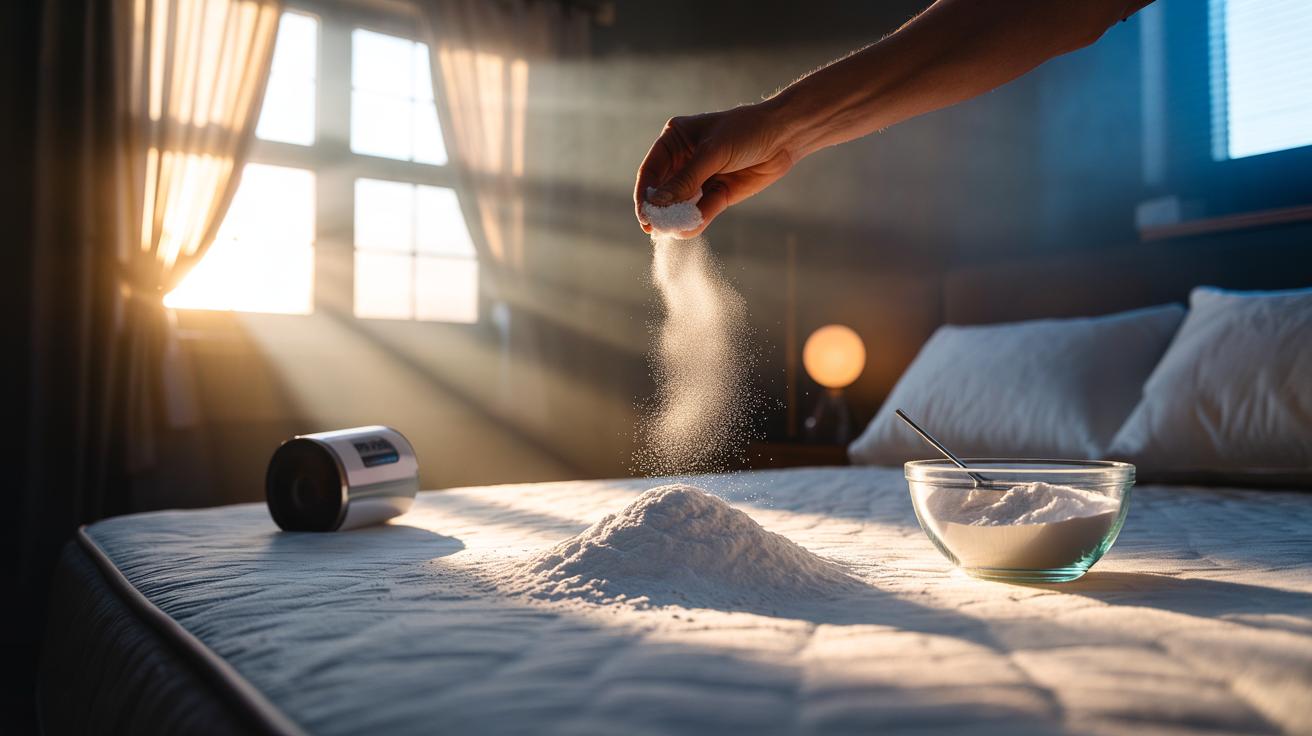
Strip the bed. Wash linen hot if the care label permits. With a clean upholstery attachment, vacuum the entire mattress slowly to remove grit that blocks powder contact. Lightly mist any obvious stains with a suitable cleaner (enzyme for urine, oxygen-based for food), then let dry fully. Now dust on a generous layer of baking soda—about 100–200 g per side for a double—paying attention to body zones. Massage it in with a soft brush so particles reach the fabric’s weave. Leave it undisturbed for 2–8 hours with windows cracked for airflow and, if possible, sunlight.
| Odour Severity | Amount of Baking Soda | Dwell Time | Notes |
|---|---|---|---|
| Light (stale air) | 50–100 g | 1–2 hours | Useful for weekly refresher |
| Moderate (sweat) | 100–200 g | 3–6 hours | Brush in for better contact |
| Strong (pets, spills) | 200–300 g | 6–12 hours | Treat stains first; repeat cycle |
Finish with a slow, methodical vacuum using overlapping passes; a HEPA machine captures fine residue. Flip or rotate the mattress and repeat on the other side if it’s two‑sided. Resist adding oils or perfumes; they can lock into foam and return as new odours. If smells linger, run another round the next day. The process is cumulative, and mattresses with thick comfort layers often need a second hit. For maintenance, a light monthly dusting keeps odour at bay without stripping your weekend.
The Science of Powdery Particles: Surface Area, Humidity, and Time
Powders work because of surface area. Grind a mineral into micro-particles and you multiply the contact zones where VOCs can be trapped or neutralised. Baking soda’s crystal habit creates edges and planes that welcome molecules, while tiny inter-particle gaps allow air to pass through, feeding the process. This isn’t absorption like a kitchen towel; it’s adsorption, intermolecular forces pinning smells to surfaces so they don’t reach your nose.
Humidity sets the tempo. At 40–60% relative humidity, particles stay free-flowing and active. Too dry and reaction rates slow; too humid and the powder clumps, reducing effective area. That’s why open windows and gentle airflow help, and why a dehumidifier can transform results in older, damp homes. Time matters too. Chemical neutralisation and vapour exchange take hours to stabilise. A quick 15‑minute dusting can freshen lightly, but deeper odours need a longer dwell to penetrate stitch lines and quilting channels.
There’s also pH at play. Sweat-derived acids are subdued as bicarbonate shifts the environment toward neutral, trimming the sharp edges of smell. The takeaway: maximise surface contact, manage humidity, and be patient—then the “hours” claim holds true.
Safety, Fabric Types, and When to Call a Professional
Different mattresses, different rules. Pocket‑sprung and hybrid models tolerate surface treatments well; you’re working on fibres and quilting. Memory foam and latex demand restraint. Never saturate foam with liquids, and never steam it; trapped moisture invites mould and permanent odour. Use dry methods first, spot‑treat stains sparingly, and ensure complete drying before re‑making the bed. Natural fibre toppers—wool, cotton—respond brilliantly to the baking soda routine, but keep them aired regularly to discourage mustiness.
For biological accidents, reach for an enzymatic cleaner targeted at urine or vomit, then apply the baking soda cycle once fully dry. Allergy sufferers should choose unscented detergents and finish with a HEPA vacuum to minimise fine dust. If smoke damage, extensive pet incidents, or visible mould are involved, the DIY route has limits. When odour permeates deep foam layers or a base is affected, professional hot‑water extraction of removable covers—or, in severe cases, replacement—saves time and health.
Prevention matters. Use a washable, breathable protector. Rotate the mattress seasonally. Ventilate the room daily. These small habits reduce the chemical workload required to keep odours at bay, letting the humble bicarbonate shine when you really need it.
Odours are stubborn storytellers, but they’re not invincible. Armed with a tub of baking soda, a vacuum, and a little environmental control, you can reset a mattress without fragrances or harsh solvents, often in a single afternoon. The chemistry is simple, the method forgiving, and the cost trivial compared with replacement. Treat the cause, not the symptoms, and the freshness lasts. How will you adapt this strategy to your routine—quick weekly refreshes, a monthly deep cycle, or a seasonal overhaul aligned with your bedding change?
Did you like it?4.5/5 (28)