In a nutshell
- 📱 Inside a soaked phone, capillary action spreads water into hidden pockets, accelerating corrosion; the critical first move is power off immediately, remove trays, avoid heat, and aim for controlled evaporation.
- 🌾 Rice is mildly hygroscopic and can reduce humidity in a sealed container, but it’s not a magic overnight cure; capacity and speed are limited, and rice dust may infiltrate ports.
- 🧭 Emergency steps: turn off, blot, brief fan time, then bury in uncooked white rice within a sealed container for 24–48 hours; inspect for lens fog and test once—seek professional cleaning after salty or sticky spills.
- 🧪 Better options beat rice: silica gel, molecular sieves, or a dehumidifier + airflow pull moisture faster and deeper; best practice is a sealed setup with strong desiccant and patience.
- ⚠️ Avoid common mistakes: don’t heat, don’t blast air, don’t charge a damp phone; IP68 isn’t real-world immunity, and rice dust can trigger moisture detection—back up data promptly once safe.
Some swear by the rice trick. Drop your smartphone, drown it in a sink or a storm puddle, and a bowl of grains seems to promise salvation by morning. It feels simple, folksy, and oddly scientific. In truth, the story is more tangled. Moisture moves in complicated ways inside a phone, and drying dynamics don’t always obey our hopes. Rice can help, especially when nothing else is within reach. Yet it’s not magic. Understanding what’s happening inside the device is the difference between revival and irreversible damage. Here’s how rice pulls water, why it sometimes fails, and the smarter steps that tip the odds in your favour.
What Actually Happens Inside a Waterlogged Phone
When a smartphone gets soaked, water doesn’t just sit politely on the surface. It slips under shields, along ribbon cables, into the speaker cavity, and around the battery wrapper through capillary action. That movement leaves behind dissolved salts and impurities, which accelerate corrosion. Minutes matter. Power still flowing through damp circuits triggers electrolytic damage that can etch tracks, pit solder joints, and short delicate components. Even if the phone looks dry outside, hidden pockets can stay wet for days.
The first decision is existential. Switch the device off immediately. Don’t test it. Don’t press buttons. Power off, remove case, eject SIM and memory cards, and dab away visible water with lint‑free cloths. Avoid heat guns or hairdryers; they drive moisture deeper and soften adhesives. Gentle gravity helps: angle ports downward, let droplets escape. If the water was salty or chlorinated, technicians sometimes flush vulnerable areas with high‑purity isopropyl alcohol to displace contaminants, but that’s a skilled step, not for guesswork.
At this stage, the goal is controlled evaporation coupled with absorption. Air alone will evaporate surface moisture, but trapped humidity lingers in the sealed spaces modern phones create for water‑resistance ratings. That’s where sorbents—materials that bind water—come in. Rice is one. Better ones exist.
Why Rice Absorbs Moisture—and Its Limits
Rice contains starch granules and micro‑porous structures that are mildly hygroscopic. In a closed container, grains reduce the surrounding relative humidity by absorbing vapour, which encourages water in the phone to evaporate and migrate outward. In short: rice can tug at the damp. It’s cheap, accessible, and safe for plastics and metals. That’s the good news. The bad news is capacity and speed. Compared with engineered desiccants, rice has a relatively low surface area and slower water uptake. It rarely pulls moisture out completely overnight.
Absorption depends on temperature, the amount of air in the container, and how thoroughly the phone’s ports are exposed. Thick cases reduce airflow. Rice dust can also creep into speaker meshes and USB‑C ports, creating new headaches. And if water has carried minerals into tiny solder gaps, removing vapour won’t reverse the chemical effects already under way. Rice is a passive helper, not a cure.
So, where does it work? In mild incidents—splashes, brief dunks in fresh water, quick retrievals—it can lower moisture sufficiently to permit a safe test boot after a day or two. In harsh cases—long submersion, saltwater, sugary drinks—its limited sorption and the corrosive contaminant load make rice a weak response without professional cleaning.
Step-By-Step: Using Rice as an Emergency Drying Method
First, remove power. Turn off the phone, unplug anything attached, and don’t charge it. Eject trays and gently shake out obvious water, keeping ports pointed down. Blot surfaces with a microfiber cloth. If you have them, place the phone near a fan for 20 minutes to encourage evaporation from crevices. Avoid vacuuming aggressively, which can stress seals.
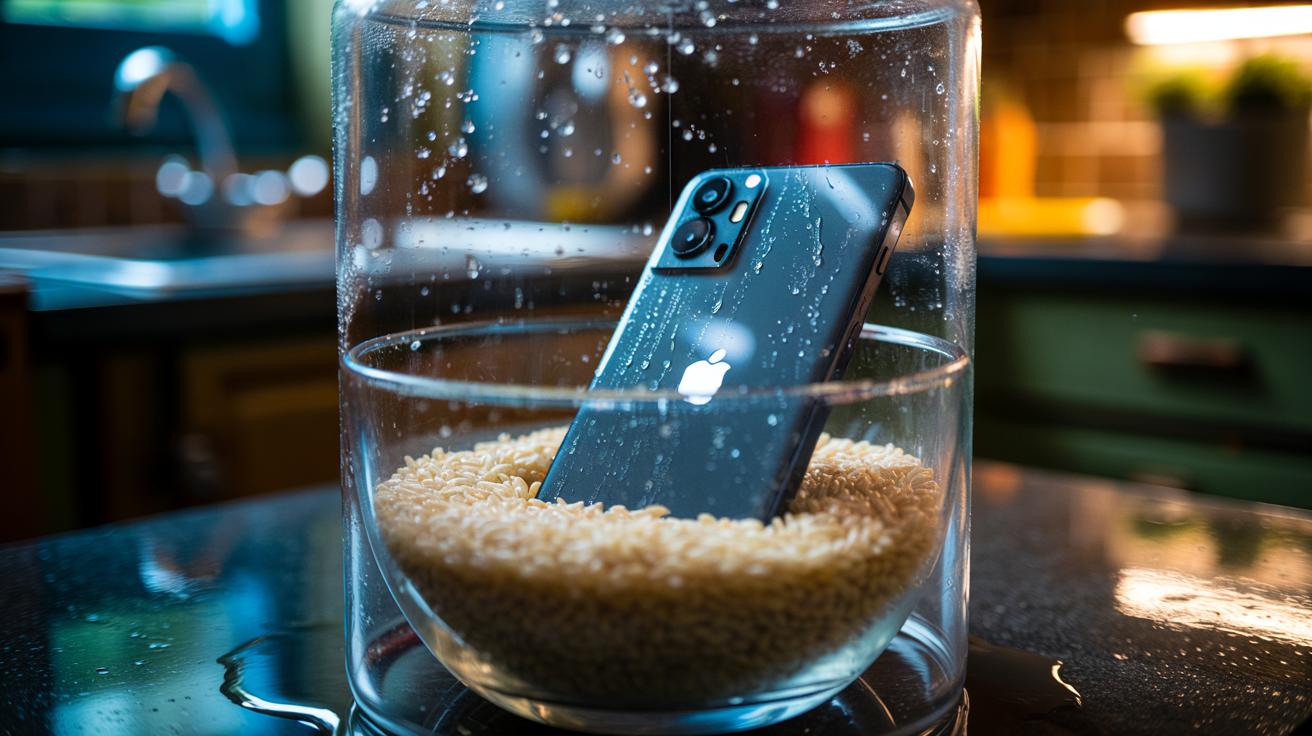
Now set up a makeshift desiccation chamber. Use uncooked white rice (less oily than brown). Pour enough into a clean container or zip bag to cover the device by at least a couple of centimetres. Bury the phone, keeping ports unobstructed if possible by creating small cavities. Seal the container to trap humid air near the grains, which speeds vapour capture. Patience counts more than optimism.
Wait at least 24 hours; 48 is safer. Replace damp rice if condensation is visible. When time’s up, inspect the device. No beading in lenses? No fog under camera glass? Try powering on only once. If it boots, test speakers, mic, and charging very gently. If it fails or cycles, power down and seek a repair shop for ultrasonic cleaning. And remember: if the liquid was salty, sticky, or contaminated, prioritise professional service regardless of rice time.
Better Alternatives: Desiccants, Airflow, and Time
If you can upgrade from rice, do. Silica gel packs, molecular sieves, and even a household dehumidifier in a small room outperform grains by a wide margin. These materials hold more water per gram and pull humidity lower, which accelerates evaporation from tight spaces. A breathable mesh bag filled with silica gel in a sealed food container around your phone is a smart kit to keep in a drawer. In cool, dry conditions, gentle airflow over several hours is also effective. The key is balance: strong air, low heat, and time.
For clarity, here’s a quick comparison.
| Drying Method | Absorption Speed | Effectiveness | Notes |
|---|---|---|---|
| Rice | Slow | Moderate | Cheap, dusty, limited capacity |
| Silica gel | Fast | High | Reusable, ideal in sealed containers |
| Molecular sieve | Very fast | Very high | Industrial grade, overkill for many |
| Fan + dry room | Medium | High | No dust risk, needs time |
Best practice pairs a strong desiccant with sealed containment and strict power‑off discipline. If you live by the coast or run outdoors in the rain, pre‑stocking silica gel sachets is the easiest insurance you’ll ever buy.
What Not to Do After a Dunk
Common mistakes destroy salvageable phones. Don’t heat it on a radiator or in an oven; adhesives soften, batteries hate heat, and steam moves deeper. Don’t blast compressed air into ports; pressure drives water under shields. Don’t poke with cotton buds; fibres snag in sockets. Never charge a wet device. Electricity plus moisture equals permanent damage. And while it’s tempting, repeated power‑on tests compound failure.
Also beware the false comfort of ratings. IP68 doesn’t promise real‑world survival in a river, hot tub, or a pint of cider. Those tests are laboratory‑clean, static, and time‑limited. Drinks add sugar; seawater adds salt; both accelerate corrosion that rice won’t remove. If cameras fog or speakers crackle after drying, stop using the phone and book a clean. Corrosion can advance invisibly for weeks.
Finally, mind the rice itself. Fine dust can lodge in a USB‑C port and confuse moisture detection. Wrap the handset in a loose, lint‑free sleeve before burying it, or choose sealed desiccant bags. When in doubt, data first: back up as soon as it’s safely alive. Then assess whether a battery replacement or board clean is sensible.
Rice can help, especially in a pinch, but it isn’t alchemy. Absorbing vapour is only part of the battle; stopping corrosion and avoiding electrical stress matter more. If you act quickly, pick the right drying method, and resist the urge to power on too soon, the odds improve dramatically. Think of rice as a stopgap, not a guarantee. What will you keep on hand—silica gel, a small fan, or a sealed container—so the next unexpected splash becomes a story, not a disaster?
Did you like it?4.6/5 (25)